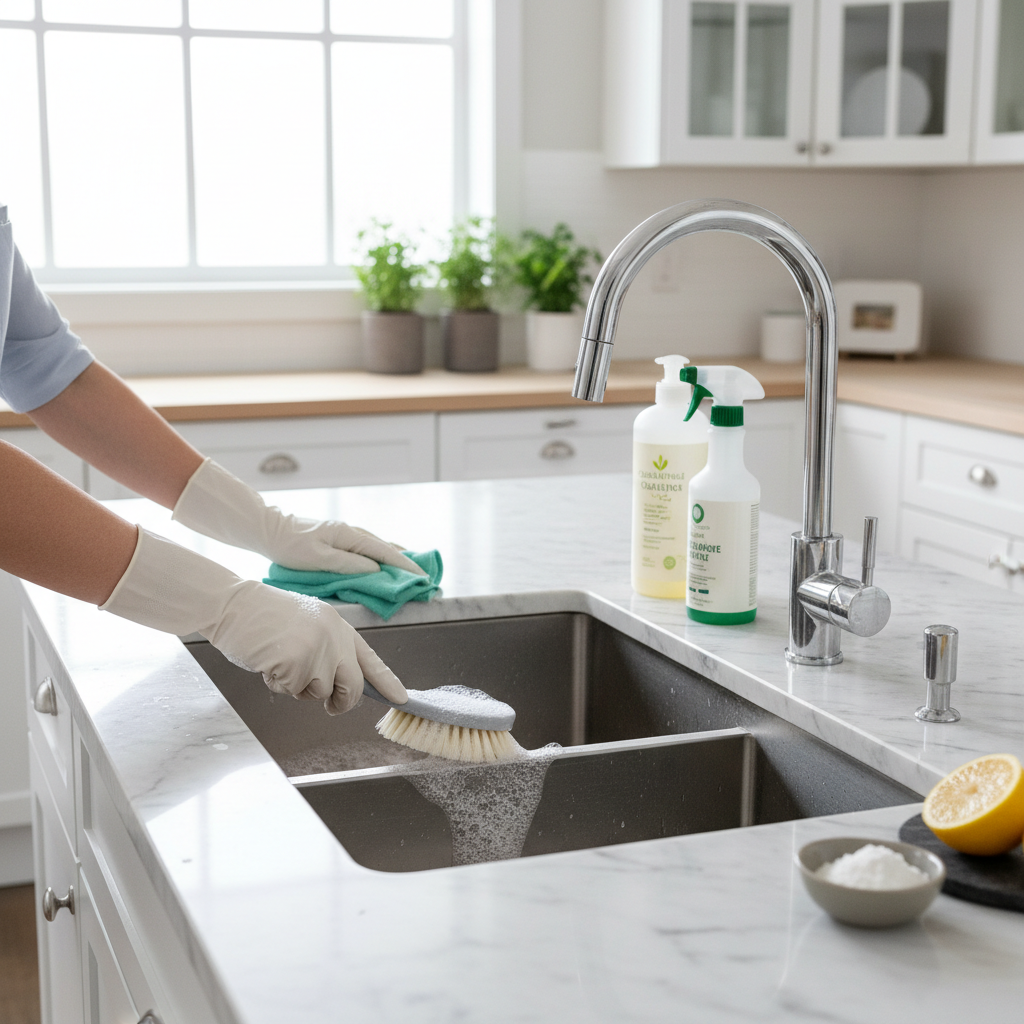
Your kitchen sink is arguably one of the hardest-working fixtures in your home. From washing dishes and rinsing produce to filling pots and cleaning up spills, it sees a lot of action every single day. Because of this constant use, keeping your kitchen sink clean isn’t just about aesthetics; it’s crucial for hygiene and extending the life of your sink. A sparkling, sanitized sink makes your entire kitchen feel cleaner and more inviting. But with different materials and common issues like stains, odors, and clogged drains, knowing the best way to clean your kitchen sink can feel a bit overwhelming. Don’t worry, we’re here to break it all down for you. This comprehensive guide will walk you through everything you need to know to achieve a spotless and fresh kitchen sink, no matter its material or condition.
Why a Clean Kitchen Sink Matters More Than You Think
Beyond just looking good, a clean kitchen sink plays a vital role in maintaining a healthy home environment. Think about it: food particles, grease, and water constantly flow through your sink. If not cleaned regularly, this can lead to several problems:
- Germ and Bacteria Growth: Your sink can harbor more bacteria than your toilet seat! Raw meat juices, unwashed produce, and leftover food scraps create a perfect breeding ground for harmful pathogens like E. coli and Salmonella. Regular cleaning helps eliminate these risks.
- Unpleasant Odors: Food debris trapped in the drain or on the sink surface can quickly start to decompose, leading to foul smells that can permeate your entire kitchen.
- Stains and Discoloration: Hard water, coffee, tea, and other food items can leave unsightly stains on your sink’s surface, making it look dingy and old before its time.
- Drain Clogs: Grease, food particles, and soap scum can accumulate in your drain pipes, eventually leading to slow drains or complete blockages, which can be costly and inconvenient to fix.
- Pest Attraction: Leftover food and moisture can attract unwanted pests like fruit flies, ants, and even cockroaches.
By making kitchen sink cleaning a regular part of your routine, you’re not just improving its appearance; you’re safeguarding your family’s health and preserving your home’s value.
Essential Tools and Cleaning Products for Your Kitchen Sink
Before you dive into cleaning, it’s helpful to gather your supplies. Having everything on hand will make the process more efficient. Here’s a list of common tools and cleaning agents you might need:
- Soft Sponges or Microfiber Cloths: Essential for scrubbing without scratching.
- Nylon Brush: Good for tougher spots and getting into crevices.
- Old Toothbrush: Perfect for detailed cleaning around faucets and drain edges.
- Rubber Gloves: To protect your hands from cleaning solutions and germs.
- Baking Soda: A natural abrasive and deodorizer.
- White Vinegar: An excellent disinfectant, deodorizer, and hard water stain remover.
- Dish Soap: For everyday grease and grime.
- Hydrogen Peroxide: A mild disinfectant and whitener.
- Rubbing Alcohol: Good for shining stainless steel.
- Lemon or Lime: Natural deodorizer and mild acid for stains.
- Bar Keepers Friend or Stainless Steel Cleaner (for stainless steel sinks): Specifically designed to clean and polish stainless steel without scratching.
- Bleach (diluted, for specific sink types and tough stains): Use with caution and always dilute.
- Mineral Oil (for cast iron or composite sinks): To restore shine and protect the surface.
- Colander or Strainer: To catch food debris before it goes down the drain.
Always remember to check the manufacturer’s recommendations for your specific sink material before using any strong cleaning agents, especially abrasive scrubbers or harsh chemicals.
Daily Maintenance: Keeping Your Kitchen Sink Clean with Minimal Effort
The secret to an always-clean kitchen sink is consistency. A few quick steps each day can prevent buildup and make deeper cleaning much easier.
- Rinse After Every Use: After washing dishes or rinsing food, give the sink a quick rinse with hot water to wash away food particles and soap residue.
- Wipe Down: Use a sponge or cloth with a little dish soap to quickly wipe down the sink basin and faucet. This prevents water spots and soap scum from building up.
- Remove Food Scraps: Always use a drain strainer to catch food debris. Empty it into the trash after each use.
- Dry the Sink (Optional but Recommended): If you have hard water, quickly drying your sink with a clean cloth after rinsing can prevent water spots and mineral buildup. This is especially beneficial for stainless steel sinks to maintain their shine.
These simple habits take less than a minute but make a huge difference in the long run.
Deep Cleaning Your Kitchen Sink: Step-by-Step Guide for Different Materials
While daily maintenance keeps things tidy, a weekly or bi-weekly deep clean is essential to tackle tougher stains, disinfect, and ensure your sink is truly sparkling. The method you use will largely depend on your sink’s material.
How to Clean a Stainless Steel Kitchen Sink
Stainless steel is popular for its durability and sleek look, but it can be prone to water spots and scratches. Here’s how to clean a stainless steel kitchen sink effectively:
- Clear the Sink: Remove all dishes, sponges, and drain stoppers.
- Rinse Thoroughly: Use hot water to rinse away any loose food particles.
- Apply Dish Soap: Squirt a generous amount of dish soap onto a wet sponge or cloth.
- Scrub with the Grain: Gently scrub the entire sink basin, following the grain of the stainless steel. Scrubbing against the grain can cause tiny scratches. Pay attention to the corners and around the drain.
- Tackle Tougher Stains:
- For water spots and light stains: Sprinkle baking soda over the wet sink and gently scrub with a soft sponge. Baking soda is a mild abrasive that won’t scratch.
- For rust spots: Cut a lemon in half, sprinkle it with baking soda, and rub it directly onto the rust. Let it sit for 5-10 minutes, then scrub and rinse.
- For stubborn stains or discoloration: Use a product like Bar Keepers Friend. Apply a small amount, rub gently with a damp cloth, and rinse thoroughly. Always test in an inconspicuous area first.
- Clean the Faucet and Handles: Use your sponge or an old toothbrush to clean around the faucet base and handles, where grime often accumulates.
- Rinse Completely: Rinse the entire sink and faucet with hot water until all soap and cleaning product residue is gone.
- Dry and Polish: This is crucial for stainless steel. Use a clean, dry microfiber cloth to wipe down the entire sink, drying it completely. For extra shine, you can apply a tiny amount of mineral oil or olive oil to a clean cloth and buff the sink, again following the grain. This also helps repel water spots.
How to Clean a Porcelain or Enamel Kitchen Sink
Porcelain and enamel sinks are beautiful but can be prone to chipping and staining. Gentleness is key here.
- Clear and Rinse: Remove items and rinse the sink.
- Gentle Scrub: Use dish soap and a soft sponge to clean the entire surface.
- Address Stains:
- For general stains: Create a paste with baking soda and a little water. Apply it to the stained areas and let it sit for 15-30 minutes. Then, gently scrub with a soft sponge and rinse.
- For tougher stains (e.g., coffee, tea): You can try a diluted bleach solution (1 part bleach to 4 parts water). Apply to the stain, let it sit for no more than 5-10 minutes, then rinse thoroughly. Never mix bleach with other cleaners, especially ammonia. Alternatively, for a non-bleach option, hydrogen peroxide can be effective. Apply it to the stain, let it sit, then scrub and rinse.
- For rust stains: A paste of cream of tartar and hydrogen peroxide can work wonders. Apply, let sit, then scrub and rinse.
- Clean Faucet and Drain: Use an old toothbrush for these areas.
- Rinse and Dry: Rinse thoroughly to remove all cleaning agents. Dry with a soft cloth to prevent water spots.
How to Clean a Composite (Granite, Quartz) Kitchen Sink
Composite sinks are durable and resistant to scratches and stains, but they can still benefit from regular cleaning.
- Clear and Rinse: Remove items and rinse the sink.
- Basic Cleaning: Use warm water and dish soap with a soft sponge or cloth to clean the entire surface.
- For Water Spots and Mineral Deposits:
- Spray the sink with a 50/50 solution of white vinegar and water. Let it sit for 5-10 minutes.
- Sprinkle baking soda over the vinegar solution and gently scrub with a soft brush or sponge.
- Rinse thoroughly with warm water.
- For Tougher Stains:
- Make a paste of baking soda and a small amount of water. Apply it to the stain and let it sit for a few hours or even overnight.
- Gently scrub with a soft brush or sponge and rinse well.
- For very stubborn stains, some manufacturers recommend a diluted bleach solution (check your sink’s specific care instructions).
- Clean Faucet and Drain: Don’t forget these areas.
- Rinse and Dry: Rinse completely and dry with a microfiber cloth to prevent water spots and enhance shine.
- Restore Luster (Optional): Some composite sink owners like to apply a small amount of mineral oil to a clean cloth and buff the sink after drying. This can help deepen the color and repel water.
How to Clean a Cast Iron Kitchen Sink
Cast iron sinks are heavy-duty and often coated with enamel. Treat them similarly to porcelain/enamel sinks, but be extra cautious about abrasives.
- Clear and Rinse: Remove items and rinse the sink.
- Gentle Cleaning: Use warm water and dish soap with a soft sponge.
- Stain Removal:
- For general stains: A baking soda paste (baking soda + water) is usually effective. Apply, let sit, then gently scrub and rinse.
- For rust stains: Avoid harsh abrasives. Try a paste of cream of tartar and hydrogen peroxide, or a commercial rust remover specifically safe for enamel.
- Clean Faucet and Drain: Use a soft brush or old toothbrush.
- Rinse and Dry: Rinse thoroughly and dry completely with a soft cloth to prevent water spots and rust.
- Protect (Optional): Some cast iron sinks benefit from a light coat of mineral oil applied with a soft cloth to help protect the enamel and maintain its sheen.
Tackling Common Kitchen Sink Problems
Beyond general cleaning, you might encounter specific issues that need targeted solutions.
How to Clean a Smelly Kitchen Sink Drain
A foul odor coming from your drain is usually a sign of trapped food particles and bacteria. Here’s how to freshen it up:
- Baking Soda and Vinegar Method:
- Pour 1/2 cup of baking soda down the drain.
- Follow with 1 cup of white vinegar.
- You’ll see fizzing and bubbling – this is the chemical reaction working to break down grime.
- Let it sit for 15-30 minutes (or even longer for stubborn odors).
- Flush with very hot water (or boiling water if your pipes can handle it).
- Ice and Salt (for garbage disposals): If you have a garbage disposal, grind a tray of ice cubes with a handful of rock salt. This helps to dislodge food particles and scour the blades. Follow with lemon or orange peels for a fresh scent.
- Clean the Drain Stopper and Strainer: These often accumulate gunk. Scrub them thoroughly with dish soap and an old toothbrush.
Dealing with Hard Water Stains and Mineral Buildup
Hard water leaves behind mineral deposits that look like white, chalky residue. Here’s how to tackle them:
- Vinegar Soak: For faucets and drain areas, soak a paper towel or cloth in white vinegar and wrap it around the affected area. Let it sit for 30 minutes to an hour (or longer for severe buildup). Then scrub with an old toothbrush and rinse.
- Baking Soda Paste: For flat surfaces, make a paste of baking soda and water, apply it to the stains, let it sit, then scrub and rinse.
- Commercial Descalers: If natural methods aren’t enough, look for a commercial descaler specifically designed for kitchen use. Always follow product instructions carefully.
Unclogging a Slow Kitchen Sink Drain
A slow drain is a warning sign that a clog is forming. Addressing it early can prevent a full blockage.
- Boiling Water: Carefully pour a kettle of boiling water down the drain. This can help melt grease and dislodge minor clogs.
- Baking Soda and Vinegar: As described above for odors, this method can also help break down minor clogs.
- Plunger: Fill the sink with enough hot water to cover the plunger cup. Create a tight seal with the plunger over the drain and plunge vigorously for 20-30 seconds.
- Drain Snake/Auger: For more stubborn clogs, a drain snake can be inserted into the drain to physically break up or pull out the blockage. You can buy a small hand-cranked one at most hardware stores.
- Chemical Drain Cleaners (Use with Caution): These can be effective but are harsh and can damage pipes if used improperly or too frequently. They are also not environmentally friendly. If you must use one, choose an enzyme-based cleaner, and always follow the directions precisely.
If you’re dealing with persistent clogs, it might be time to call a professional plumber. Similarly, if you’re thinking about selling your home, ensuring all your plumbing is in top shape is a good idea. A well-maintained home, including a spotless kitchen, can significantly impact its appeal to potential buyers. You can get an idea of your home’s current value by checking out our home valuation tool.
Preventative Measures: Keeping Your Sink Clean Longer
Prevention is always better than cure. Here are some tips to keep your kitchen sink cleaner, longer:
- Use a Drain Strainer: This is your first line of defense against clogs. Empty it regularly.
- Scrape Plates Before Rinsing: Scrape food scraps directly into the trash or compost, rather than letting them go down the drain.
- Avoid Pouring Grease Down the Drain: Grease solidifies in pipes and is a major cause of clogs. Pour cooled grease into an old container (like a tin can) and dispose of it in the trash.
- Run Cold Water with Disposal: If you have a garbage disposal, always run cold water while it’s operating and for about 30 seconds afterward to flush food particles completely.
- Regular Flushing: Even without a disposal, regularly flush your drain with hot water to help prevent buildup.
- Wipe Down After Use: Make the daily wipe-down a habit. It takes seconds and prevents major buildup.
- Address Stains Immediately: The sooner you tackle a stain, the easier it will be to remove.
The Bottom Line on How to Clean Your Kitchen Sink
A clean kitchen sink is a cornerstone of a clean kitchen and a healthy home. While it might seem like a chore, incorporating daily maintenance and a regular deep cleaning routine tailored to your sink’s material will keep it sparkling, hygienic, and free of odors and clogs. By understanding the best practices and having the right tools on hand, you can ensure your hardest-working fixture remains a shining asset in your home for years to come. Happy cleaning!