Types of Metal Roofing

Materials, Styles and Types of Installation

Gone are the days when builders would install asphalt shingles on 100% of their new construction residential properties. Today we see more and more metal roofs across North America and across varying climates – including warm weather states like Florida and California, as well as in cold weather states like Wisconsin and Vermont.

Updating an existing roof with a metal roof allows you to add value to your home and communicate your home’s style. While roof framing and pitch could dictate which type of metal material you ultimately choose, the product you install can bring the exterior of your home to an entirely new level.

Average Cost

The cost of materials for metal roofing products are typically slightly higher than asphalt roof shingles, on a per square foot basis. For example, the median price per square foot for a typical “three-tab” fiberglass, asphalt shingle is about $1.90/sf, while an upgraded “architectural” asphalt shingle typically costs closer to $2.75/sf.

If you compare these figures to metal, you’ll generally see a slightly higher price per foot. For example, basic, builder-grade metal roofing can cost as low as $3 per square foot, but higher end metals like copper can cost as much as $25 per square foot. That being said, most metal roofs you see today, and many of the styles covered below, are generally priced lower than $5 per square foot.

In addition, the labor cost to install a new metal roof is roughly $2.00 to $7.00 per square foot, depending on your local market and the type of metal roofing that’s being installed.

Types of Metal Roofs

Standing Seam Steel Roof

“Standing seam” systems have no exposed screws, making them the most weathertight and mostly maintenance-free. Standing seam is a good choice for luxury residential projects but often have higher labor costs for installation.

Standing seam products have become an elegant way to either add accent to a porch or patio, or for replacing entire roofs. They’re manufactured by numerous roofing companies and available in various colors.

Exposed Fastener Steel Roof

The most commonly used metal for residential properties and is typically available in 24 or 26 gauge steel panels. The higher the gauge number, the thinner the metal. Exposed fastener panels are available in various styles, such as:

  • Corrugated (3/4″ ribbed)
  • 3-foot wide exposed fastener
  • 5V Crimp

As with standing seam, exposed fastener roofs are available in various painted finishes. For example, a light silver color is popular in Florida while dark brown/matte black is often seen in Colorado and throughout parts of Arizona.

Aluminum Roofing

Aluminum roofing panels are a great, lightweight material for residential properties. It is very common in coastal markets in places like Florida, South Carolina, Louisiana, etc. The main benefit of aluminum roofing sheets is that they have a greater corrosion resistance versus steel roofing panels.

An aluminum roof typically cost more than a standard, metal roof described earlier in the article. Aluminum roofing panels are available for purchase in a painted finish or a primed finish that is paintable. The strength to weight ratio of aluminum is actually higher than many other types of metals, which results in strong product that weighs less than other material.

Copper metal roofing

Copper is another popular choice for residential accent and less commonly for entire roof replacements. Instead of gauges like steel, copper comes in ounces. 16-ounce copper is the most commonly used.

While copper is a great upgrade to a roof, it’s also quite expensive. That being said, once installed, it requires very little maintenance and has up to a 75 year lifespan.

Benefits of Metal Roofs

They Boost Energy Efficient

Metal roofs are an excellent choice for optimizing energy consumption. A recent study found that metal roofs offer a 40% reduction in energy costs in the summer. These roofs can run 40 to 50 degrees cooler than dark asphalt shingles.

They Increase Your Home Value

The upfront costs of installing metal roofing can be pricey but adding one could increase your home’s value by about 4% to 5%.

They’re Eco-Friendly

Metal roofs are 100% recyclable material and environmentally-speaking are a better option than asphalt.

Metal Roofs Last a Long Time

Metal roofs could last 2-3 times longer than asphalt. A metal roof will last about 40 to 70 years, versus asphalt roofs that last about 15 to 22 years.

They’re Elegant and Attractive

Metal roofs make your home stand out and provide a crisp, sharp look that gives it a gorgeous curb appeal.

Questions to consider with metal roofing

  • Does the material meet the building codes in your local area?
  • How heavy is this material and will it require additional framing?
  • What type of warranty is available?
  • Are multiple colors available?
  • Is special, ongoing maintenance required?
  • Does this material provide performance in extreme weather conditions?
  • What is the cost and lifespan?

Conclusion

Choosing the right roofing material for your home is crucial, and among the plethora of options available today, metal roofing materials stand out for their longevity, durability, and aesthetic appeal. Standing seam metal roofing, in particular, has become a popular choice among homeowners for its sleek appearance and unmatched performance. Standing seam metal roofs not only offer a contemporary look but also provide long-term protection against the elements. On the other hand, metal shingles, metal tile roofing, and metal panels offer a blend of traditional aesthetics with the advantages of metal durability. For those looking for an elegant touch, a copper roof might be the perfect fit, blending timeless beauty with endurance.

When comparing standing seam roofs to other roofing materials, it’s evident that they offer unique benefits in terms of maintenance, energy efficiency, and design versatility. While there are numerous roofing materials on the market, standing seam metal roof systems offer homeowners a sustainable and stylish choice that stands the test of time. So, whether you’re looking for the durability of metal panels, the refinement of a copper roof, or the distinctiveness of metal shingles, metal roofing materials provide options that can cater to varied tastes and requirements. Choose wisely, and your roof will not only protect your home but also elevate its curb appeal.

Discover the Best Washing Machine Cleaner to Boost Your Laundry Performance

A clean washing machine not only prolongs its life but also ensures that your clothes come out fresh and spotless. The buildup of dirt, grime, and detergent residue can affect the efficiency of your washing machine over time. Fortunately, washing machine cleaners are available to keep your appliance in top shape.

In this guide, we’ll discuss the benefits of using washing machine cleaners, how to choose the best product for your needs, and the best washing machine cleaners available that will help you save big while keeping your washer clean and efficient.

Benefits of Using a Washing Machine Cleaner

Improved Efficiency
Regular cleaning
of your washing machine removes the buildup of dirt, detergent residue, and mineral deposits, which can hinder the machine’s performance. A cleaner washing machine will work more efficiently and provide better cleaning results for your clothes.

Extended Appliance Lifespan
Using a washing machine cleaner helps maintain the appliance in top condition, preventing the need for costly repairs or early replacement.

Odor Elimination
A cleaner washing machine prevents the growth of mold, mildew, and bacteria, which can cause unpleasant odors. This not only makes your laundry smell fresh but also maintains a healthy environment for your family.

Energy Savings
A cleaner washing machine will consume less energy, reducing your utility bills and helping you save money.

Enhanced Fabric Care
Removing the dirt and grime buildup in your washing machine ensures that your clothes are cleaned properly without being exposed to harsh chemicals or residues.

Top-Rated Washing Machine Cleaners

1. Affresh Washing Machine Cleaner (6 Tablets)

Affresh Washing Machine Cleaner is a popular choice among customers. Designed for monthly use, these tablets effectively remove odor-causing residue and grime buildup.

They are compatible with top-loading, front-loading, and high-efficiency washing machines. Affresh Washing Machine Cleaner is available at a competitive price.

Buy on Amazon

2. OxiClean Washing Machine Cleaner with Odor Blasters (4 Count)

OxiClean Washing Machine Cleaner uses the power of oxygen to break down and remove detergent residue, dirt, and mineral deposits.

These odor blasters are suitable for all types of washing machines and can be used monthly for optimal results. OxiClean Washing Machine Cleaner is a reliable and affordable option.

Buy on Amazon

3. Tide Washing Machine Cleaner (5 Count)

Tide Washing Machine Cleaner is designed to remove odor-causing residues and grime that accumulate in your washing machine.

The formula is safe for septic systems and works with both high-efficiency and standard washing machines, making it a popular choice for maintaining your appliance.

Buy on Amazon

4. Eco-Gals Eco-Friendly Washing Machine Cleaner (24 Pack)

Eco-Gals Eco-Friendly Washing Machine Cleaner is a natural and eco-friendly option for keeping your washing machine clean and efficient. These tablets use plant-based ingredients and are free of phosphates, parabens, and chlorine bleach.

They effectively remove dirt, grime, and odors while being gentle on the environment. Eco-Gals Eco-Friendly Washing Machine Cleaner is suitable for all types of washing machines, making it a top choice for those seeking a green cleaning solution.

Buy on Amazon

5. Lemi Shine Natural Washing Machine Cleaner (8 Count)

Lemi Shine Natural Washing Machine Cleaner is a non-toxic and biodegradable formula that removes buildup and odors from your washing machine.

Made with powerful citric extracts, this cleaner is effective on all types of washing machines, including high-efficiency models. Lemi Shine Natural Washing Machine Cleaner is highly recommended for those who prefer natural cleaning products.

Buy on Amazon

How to Choose the Best Washing Machine Cleaner

Type of Cleaner
Washing machine cleaners are available in various forms, such as tablets, powders, liquids, and gels. Choose the one that is most convenient for you to use and compatible with your washing machine.

Ingredients
Look for washing machine cleaners that contain natural and biodegradable ingredients, ensuring that they are safe for the environment and your family.

Compatibility
Make sure that the washing machine cleaner you choose is compatible with your appliance, whether it’s a front-loading, top-loading, or high-efficiency machine.

Frequency of Use
Some washing machine cleaners are designed for monthly use, while others can be used more frequently. Choose a cleaner that fits your maintenance schedule and cleaning needs.

Price and Quantity
Compare the price and quantity of different washing machine cleaners to find the best value for your money.

Harness the Power of DIY Washing Machine Cleaner Solutions

For homeowners who prioritize natural and cost-effective solutions, a DIY Washing Machine Cleaner might be the perfect alternative. A blend of hot water and baking soda can be as effective as most washing machine cleaners. To start the deep cleaning process, begin by adding half a cup of liquid chlorine bleach to the detergent dispenser of your front loading washing machine.

Run it on a normal cycle using hot water. After this cycle, sprinkle a cup of baking soda directly into the washing machine drum, then run a hot water cycle. This DIY method not only ensures that your washing machine door and detergent drawer are free from mold and residue but also imparts a fresh scent to your machine.

Understanding How Different Washing Machine Cleaners Work

Every washing machine has its quirks. Whether you own a front loading washing machine or a top loader, the key is to find the right cleaner tailored for it. Most washing machine cleaners work by breaking down the built-up detergent, fabric softener, and any lingering odors.

While washing machine cleaner tablets offer the convenience of a drop-and-go solution, liquid washing machine cleaner penetrates hard-to-reach areas, providing a comprehensive cleaning cycle. Those who love a fragrant finish might lean towards scent washing machine cleaners, ensuring a pleasant aroma after every laundry session.

Pro Tips for Maintaining a Clean Washing Machine

Post-cleaning, it’s crucial to maintain the cleanliness of your washing machine. Always leave the washing machine door open after a cycle to allow it to dry out and prevent mold growth. Clean the detergent drawer regularly and consider running a hot water cycle once a month, even without clothes.

For homes with septic systems, it’s vital to choose septic safe washing machine cleaners to avoid potential damage. Remember, a regularly cleaned machine not only guarantees a fresh scent but also enhances the longevity and performance of your appliance.

Conclusion

Investing in a high-quality washing machine cleaner is essential for maintaining the performance and lifespan of your appliance. Regular use of these cleaners not only ensures that your clothes come out fresh and clean but also helps you save on energy costs and reduce the need for costly repairs or replacements.

By choosing the right washing machine cleaner from our list of top-rated options, you can enjoy a cleaner, more efficient washing machine while taking advantage of the potential for significant affiliate revenue savings.

Remember to consider factors such as the type of cleaner, ingredients, compatibility, frequency of use, and price when selecting the best washing machine cleaner for your needs. With the variety of highly-rated options available, you’re sure to find the perfect cleaner to keep your washing machine in top shape and your clothes looking their best.

DIY Concrete Patio Ideas

If you have a concrete patio, you know that it can be a functional outdoor space, but it might not be the most aesthetically pleasing. Fortunately, there are plenty of ways to spruce up your concrete patio without breaking the bank. In this article, we’ll explore concrete patio ideas on a budget, inexpensive ways to cover a concrete patio, and outdoor patio tile options for covering concrete.

Best Concrete Patio Ideas on a Budget

One of the easiest ways to give your concrete patio a facelift is to add some potted plants and personalization. Plants not only add a pop of color and texture to your patio but can also help to create a more relaxing and inviting atmosphere. Another budget-friendly idea that can warm up and personalize your space is to add outdoor rugs or outdoor artwork such as custom metal signs. These decor pieces can add a pop of personality to your patio while also covering up any cracks, stains or imperfections.

Another cost-effective way to transform concrete patios is to add outdoor lighting. You can use string lights or solar-powered lights to create a warm and inviting ambiance. Consider using lanterns or other unique lighting fixtures to add personality to your space.

Use Concrete Pavers

Choosing the right size pavers for your patio can have a significant impact on the overall look and feel of your outdoor space. Small pavers, such as 6×6 or 6×9 inch pavers, can create a traditional and classic look. They are also easier to handle and install, which can make them a good choice for DIY projects.

On the other hand, large pavers, such as 12×12 or 16×16 inch pavers, can create a more modern and contemporary look. They can also make a small space appear larger and create a more seamless look, with fewer joints and seams. Ultimately, the size of your pavers will depend on your personal style and the overall design of your patio.

Concrete pavers are a versatile and cost-effective option for creating a stylish and functional backyard space. One budget-friendly idea is to use pavers to create a simple yet elegant walkway. You can also use pavers to create a patio area, which can be an ideal spot for outdoor dining and entertaining.

If you’re looking to add some greenery to your backyard, consider using pavers to create a garden bed or border. Finally, using pavers to create a fire pit area is a popular budget idea, as it provides a cozy and inviting spot for gathering with family and friends.

Inexpensive Ways to Cover Concrete Patio

If your concrete patio is showing signs of wear and tear, there are several inexpensive ways to cover it up. One option is to use interlocking deck tiles, which can be installed over your existing patio to create a new surface. These tiles are made of various materials, such as wood, composite, or rubber, and are available in a variety of colors and styles.

Another option is to use outdoor carpets or rugs to cover up your concrete patio. Outdoor carpets are designed to withstand the elements, and many are available in patterns and colors that can complement your outdoor decor. You can also use outdoor fabrics or drop cloths to create a DIY awning or canopy to shade your patio space and create a cozy retreat.

Outdoor Patio Tile Over Concrete

If you’re looking for a more permanent solution for covering your concrete patio, outdoor patio tiles are a great option. Patio tiles come in a wide range of materials, including porcelain, natural stone, and ceramic. They can be installed over your existing patio and come in a variety of colors, patterns, and sizes.

One of the advantages of using patio tiles is that they are highly durable and require very little maintenance. They are also resistant to water and weather, making them a great option for outdoor use. Additionally, patio tiles can add value to your home and increase the visual appeal of your outdoor space.

Rehabbing an Old Patio

If you have an old concrete slab Bor stamped concrete and want to spruce it up, it might make sense to remove the entire slab and start from scratch. Depending on the size, building the perfect backyard patio may be best accomplished with a fresh canvas. For concrete patios less than 200 square feet, you might consider renting a jackhammer and removing the old slab.

Creating an Outdoor Living Oasis with Concrete

Imagine transforming your backyard into a captivating outdoor living room using just concrete patio floor ideas. An outdoor kitchen can seamlessly blend with this setting, blurring the lines between your indoor living room and the world outside. By incorporating concrete slabs in innovative ways, even small concrete patio ideas can metamorphose your space into a stunning outdoor area. The appeal of concrete is not just its durability but also its versatility. For every square foot, there’s potential for artistry, whether you prefer modern designs, or classic touches.

Incorporating Cover and Modern Designs

A covered patio doesn’t just provide protection against the elements but also adds an element of luxury to your outdoor spaces. Think about integrating a patio cover, which not only offers shade but can be a statement piece in itself. If a complete cover isn’t your style, consider concrete tiles to add texture and pattern to your concrete floor. From a modern patio design with sleek lines and geometric patterns to a rustic circular patio surrounded by greenery, the possibilities are endless. The added advantage? These designs provide a perfect backdrop for outdoor furniture, making your space both functional and picturesque.

Versatility of Concrete in Outdoor Spaces

A concrete patio isn’t just about laying a flat surface; it’s about sculpting a stunning outdoor space tailored to your tastes. Whether you envision an elaborate outdoor dining area or a cozy nook, concrete provides the canvas. Small or expansive, square or circular, your patio’s potential is limited only by your imagination. And as you add outdoor furniture, lighting, or even water features, remember that the foundation – the concrete – is what turns these individual elements into a cohesive, inviting space. So, dive into the world of concrete, and watch as your vision comes to life.

Conclusion

In conclusion, there are several budget-friendly ways to transform your concrete patio into a stylish and functional outdoor living space. Once you decide on the main materials and layout of your patio space, you can also choose to add some potted plants, a fire pit, patio furniture or lighting options. With a little creativity and effort, you can turn your concrete patio into a beautiful and inviting outdoor retreat.

The Unparalleled Benefits of a Metal Flat Roof

In the world of roofing, one option is increasingly standing out – the metal flat roof. This choice offers a range of benefits, from durability and longevity to energy efficiency and versatility. If you’re looking to invest in a new roof, it’s time to delve deeper into why a metal flat roof may be the perfect solution for you.

Unrivaled Durability and Longevity

When it comes to durability, metal flat roofs are unparalleled. They are resistant to the harshest weather conditions, including high winds, heavy snowfall, and torrential rains. These roofs are also highly resistant to fire, an added benefit for those in wildfire-prone areas. They won’t crack, peel, or erode over time, which can’t be said for many other roofing materials.

On average, a metal flat roof can last upwards of 40 to 70 years, depending on the quality of installation and maintenance. This is significantly longer than traditional asphalt roofing, which typically lasts around 15 to 20 years. In essence, while a metal flat roof may have a higher upfront cost, it could save you money in the long run due to fewer repair and replacement needs.

Energy Efficiency and Environmental Impact

Metal flat roofs are champions of energy efficiency. Thanks to their reflective properties, they can deflect solar radiant heat, reducing cooling costs by up to 25%. In hot climates, this can translate into considerable savings on your energy bill, and it’s also a significant contributor to reducing your home’s carbon footprint.

Moreover, metal roofs are often made from recycled materials and are 100% recyclable at the end of their lifespan. This makes them an excellent choice for those who are environmentally conscious and seeking to reduce the impact of their home on the planet.

Versatility and Aesthetics

Beyond its practical benefits, a metal flat roof offers a sleek, modern look that can enhance the aesthetic of any building. This roof type is available in a wide variety of colors, styles, and finishes, allowing for customization to match your home’s architecture and design preference.

Also, a metal flat roof offers architectural versatility. Since they don’t require much pitch, they’re an ideal choice for building owners who want to maximize their usable space. Whether you’re envisioning a rooftop garden or a relaxing rooftop patio, a flat metal roof can provide the foundation for these additions.

Installation and Maintenance

When installed correctly, metal flat roofs require minimal maintenance compared to other types. Regular inspection and occasional cleaning are generally all that’s needed to keep a metal roof in good condition. It’s recommended, however, to have a professional inspect your roof annually to check for any potential issues.

Even with the relatively easy maintenance, it’s essential to note that installation should be performed by an experienced, professional metal roof installers. Incorrect installation can lead to leaks, poor insulation, and other problems down the line. It’s vital to entrust your roof to a qualified contractor who specializes in metal flat roof installation.

High Performance in Extreme Weather Conditions

Another substantial benefit of a metal flat roof is its outstanding performance under extreme weather conditions. Given the flat structure and the inherent strength of metal, these roofs are built to withstand extreme heat, heavy snowfall, and strong winds. Unlike other roofing materials, metal doesn’t absorb water, which makes it resistant to leaks and water damage.

In regions prone to heavy snowfall, metal flat roofs are an excellent choice as the smooth surface allows the snow to slide off easily, preventing accumulation and the subsequent weight that could compromise the roof structure. Additionally, in storm-prone areas, the wind resistance of metal roofs can provide peace of mind.

Noise Control with a Metal Flat Roof

A common misconception about metal roofs is that they can be noisy, especially during heavy rain. The truth, however, is that when a metal roof is installed with solid sheathing, it can silence noise from rain, hail, and bad weather as effectively, if not more so, than other roofing materials.

Incorporating Solar Panels with Your Metal Flat Roof

As we continue to move towards renewable energy solutions, it’s worth noting that metal flat roofs are the perfect base for solar panel installation. The durability and strength of a metal roof make it ideal for bearing the weight of solar panels.

Moreover, a flat roof provides the perfect platform for installing solar panels, allowing them to be positioned for optimal sun exposure. Combined with the energy-efficiency inherent in metal roofs, this makes for an incredibly eco-friendly solution.

Insulation and Ventilation

The insulating capabilities of metal roofs contribute to their energy efficiency. With proper insulation, a metal flat roof can effectively keep out the cold during winter and reflect the sun’s rays during summer. This ensures that your home remains comfortable all year round while minimizing energy costs.

Moreover, ventilation is critical for the longevity and performance of any roof, and metal flat roofs are no exception. With a properly installed and ventilated metal roof, you can avoid problems like condensation, mold, and rot that often plague other roof types.

With the surge in demand for sustainable and durable solutions, metal as a roofing material is increasingly becoming a top choice among homeowners and builders. The flat roofing system, which was once dominated by traditional materials, now sees a shift towards metal panels, ensuring longevity and resilience against harsh environmental factors. A flat or low slope roof adorned with these panels not only adds aesthetic value but also ensures a high return on investment for property owners.

Seamless Integration with Existing Structures

One of the most compelling advantages of a metal panel as a new roofing material is its adaptability. Whether you’re retrofitting an older building or constructing a new one, this roofing material seamlessly integrates with the existing structure, enhancing its strength and durability. A metal flat roof system presents a harmonious blend of modern aesthetics and robust performance, ensuring that property owners make a wise investment for the future.

Wrapping It Up

A standing seam metal roof offers an unmatched blend of durability, energy efficiency, and aesthetics. As a leading option for both flat roof replacement and installation on low slope roofs, metal roofing is an investment that can stand the test of time. It offers a flat roof material that demands virtually no maintenance, saving homeowners on both money and time in the long run.

Replacing your roof with a standing seam metal roofing system could significantly reduce costs per square foot, making it an economically sound choice. The sturdy metal panels, devoid of exposed fasteners, provide a seamless, modern finish that is just what your property needs to stand out.

Whether you’re considering modified bitumen or another roofing option, consider the benefits of a metal flat roof. Its longevity and durability protect the entire structure of your property while also enhancing its visual appeal. Given the myriad advantages, a metal flat roof is a worthy contender when considering a new roof or replacement.

Understanding the Dynamics of a 2/12 Roof Pitch

Roof pitch is a vital component of any construction or renovation project. It significantly affects the aesthetic appeal, functionality, and safety of a building. One of the commonly used roof pitches is a 2/12 pitch, and understanding its dynamics can greatly enhance your construction projects. This article will provide an in-depth understanding of the 2/12 roof pitch.

What is a 2/12 Roof Pitch?

A 2/12 roof pitch implies that for every 12 horizontal inches (also referred to as the ‘run’), the roof’s height (known as the ‘rise’) increases by 2 inches. In simpler terms, the roof inclines 2 inches vertically for every 12 inches it extends horizontally. This ratio provides a gentle slope that is ideal for different architectural designs.

Benefits of a 2/12 Roof Pitch

Easier Maintenance

One of the main benefits of a 2/12 roof pitch is its ease of maintenance. Due to the gentle slope, homeowners can safely walk on the roof to conduct regular checks and perform necessary maintenance tasks.

Economical

This roof pitch requires fewer materials compared to steeper pitches, resulting in lower construction costs. Additionally, it’s less labor-intensive, further reducing the overall expenses.

Diverse Styles

A 2/12 roof pitch accommodates a range of architectural styles. It is the go-to pitch for modern designs due to its minimalist aesthetic, and it complements traditional styles as well.

Considerations with a 2/12 Roof Pitch

Despite its many advantages, there are a few considerations when choosing a 2/12 roof pitch. One crucial aspect is the increased potential for water pooling due to the low slope. This can be mitigated with the right roofing materials and proper installation. Membrane roofing, for example, is particularly effective on low pitch roofs as it provides superior waterproofing.

Also, in areas with heavy snowfall, a 2/12 pitch may not allow snow to slide off as easily as steeper pitches. It’s essential to consider the climate and weather conditions when deciding on the appropriate roof pitch.

Calculating a 2/12 Roof Pitch

When it comes to calculating a 2/12 roof pitch, it’s relatively straightforward due to its simple ratio. If you want to know the roof’s height at a certain point, you simply apply the ratio. For example, if your roof extends 24 feet horizontally, you’d multiply the 24 feet by the 2 (from the 2/12 ratio), and then divide by 12. The result will give you the rise of your roof at that point.

Applications of a 2/12 Roof Pitch

Roof pitches, particularly the 2/12 pitch, aren’t exclusively reserved for residential properties. They’re employed in various building types, including commercial and industrial establishments. Flat or low-slope roofs, such as those featuring a 2/12 pitch, are prevalent in warehouses, factories, and other large-scale buildings due to the cost-effective nature and ease of maintenance.

However, residential buildings can also greatly benefit from a 2/12 roof pitch. For instance, this type of roof pitch is commonly seen in modern, minimalist architecture where simplicity and sleek lines are the primary design goal. It is also a popular choice for porches, extensions, and sheds due to its economic and practical aspects.

Choosing Roofing Materials for a 2/12 Pitch

Selecting the right materials for your roof is crucial, especially for a 2/12 pitch. As mentioned earlier, this roof pitch poses a higher risk of water pooling. Consequently, homeowners need to choose materials designed for low-pitch or flat roofs.

Rubber roofing or EPDM (Ethylene Propylene Diene Monomer) is an excellent choice due to its water resistance and durability. Modified bitumen, roll roofing, and standing-seam metal roofs are also good options for a 2/12 pitch. Remember, it’s always advisable to discuss this with a roofing professional who can provide the best advice based on your specific situation.

Importance of Professional Installation

While a 2/12 roof pitch is more accessible and less complex than steeper pitches, professional installation is still crucial. Improper installation could lead to leakages, damage, and a reduced lifespan of the roof. Therefore, hiring a professional roofer who understands the nuances of a 2/12 roof pitch is a worthy investment.

Investing in Regular Inspections

Investing in regular roof inspections is essential for maintaining the condition and lifespan of a 2/12 roof pitch. As the pitch is relatively flat, debris and water can accumulate more easily, potentially leading to damage over time. With routine inspections, any issues can be addressed promptly before they escalate into costly repairs.

The Value of Low Sloped Roofs in Modern Architecture

When discussing a sloped roof, especially those with a modest gradient like the 2/12 pitch, understanding its dynamic is paramount. Low sloped roofs, as the 2/12 pitch typifies, have carved a niche in modern architecture. They are not only aesthetically pleasing but also present fewer challenges during construction and maintenance. While many individuals might be tempted to calculate roof pitch solely based on their aesthetic desires, the structural integrity and durability of the roof are equally essential. The roof’s pitch, especially when expressed as a gentle slope like 2/12, provides the advantage of expansive interior space without compromising on water drainage efficiency.

Comparatively, steeper roofs have their merit, especially in areas with heavy snowfall where runoff is crucial. They might dominate the standard roof pitches in such climatic zones, but a 2/12 roof pitch offers a balanced aesthetic in urban setups. When considering materials, it’s imperative to remember that a minimum slope is required for certain types like wood shingles. For instance, a mansard roof, with its distinctive steep lower slope and flatter upper section, may not be suitable for wood shingles due to its varying degrees of pitch. The art lies in choosing the right materials for the right roof pitch, ensuring longevity and visual appeal.

Final Thoughts

The subtle incline of a 2/12 roof pitch, or low slope roof, serves as a unique, cost-effective option in the vast roofing industry. This pitch lends itself well to a variety of roofing materials, from rubber membranes to metal roofing, even though it may not be ideal for traditional asphalt shingles that suit steeper pitches better. Whether you’re contemplating a flat roof design or considering a more distinctive choice like mansard roofs, understanding and measuring roof slope is crucial.

To measure roof pitch accurately, one must understand that the pitch is expressed as a fraction representing the roof’s vertical rise for every 12 inches of horizontal run. This knowledge not only aids in calculating the roof pitch accurately but also helps select the most suitable roofing material based on the roof surface and its pitch.

Despite its gentle slope, a 2/12 roof pitch requires the same degree of professional attention as a steep pitch. The roofing industry continually innovates to offer more efficient and durable solutions for low slope roofs. In such a dynamic industry, staying informed and working with professionals can help homeowners reap the benefits of their investment in a 2/12 roof pitch while ensuring the longevity and aesthetic appeal of their property.

How to Clean and Stage Your Closets to Sell

Cleaning and organizing your home is an incredibly important task if you want to sell your home, sell it quickly, and sell it for a good price. For many sellers, their idea of cleaning is to shove everything into the nearest closet. Out of sight out of mind right? Not exactly.

Unfortunately, that method might actually hurt your chances of meeting your home selling goals. When touring homes, buyers are going to want to thoroughly inspect all areas of the home – closets included. Think about it, closets provide essential storage within the home.

Considering storage is a huge priority for many homebuyers, you’re going to want to highlight your closets in the best way possible. This often requires cleaning and staging. If you’re looking to take your home’s closet from chaotic to clean, here are a couple tips to help you clean and stage your closets to sell.

Tackle One Closet at a Time

The idea of cleaning every closet in the home can be stressful. However, there is no need to stress. Tackle one closet at a time focusing on the most looked at ones first such as the owner’s suite closet. This the main closet in the home that buyers are going to be paying attention to as they view your home in person and online. If you’re going to start somewhere, start here.

Leave Only What You Currently Use

If you aren’t using it, don’t keep it in the closet. The goal of cleaning out your closet to stage is to showcase the space within it. If bulky winter coats and backup linens are taking up all the closet space, it will be hard for potential buyers to see its size and functionality. Go ahead pack away items you are not currently wearing and using. The less there is taking up space in the closet, the bigger it will feel and more likely buyers will be impressed.

Swap Out Your Clothes Hangers

For consistency’s sake, swap out your array of mismatched hangers and purchase some that are all the same kind. While wooden hangers have a nice visual appeal, velvet or chrome hangers are equally as aesthetic and practical for less of the price. Having matching clothes hangers makes the closet more decorative and appealing to buyers. Plus you’ll have new hangers to take with you when you move into your new home. It’s a win-win!

Add in Closet Storage

If you have small closets, storage will be your best friend. What your closet can’t offer in space can be made up for with added organization. Add in closet shelving, install a door hanging organizer, or a cubby shelving unit. If you have the budget, consider the idea of custom closet features like built-in shelving. Buyers are always on the lookout for more storage and surprisingly, custom closet features have a great return on investment.

Develop Visual Appeal

When organizing your closet for staging, you want to consider visual appeal. If working with a bedroom closet, organize clothes by article time. This might look like all short sleeve shirts together, all long sleeve shirts together, and dresses or pants together. To take it up a notch, organize these sections by color to create an appealing closet aesthetic. Separating items by types could also work for bathroom linen closets and pantries by placing similar items together on the same shelf or area of the shelf. Help buyers visualize the closet’s organized potential.

Repaint the Walls

Adding a fresh coat of paint before you sell can work wonders. This extends to your home’s closets too. Closets tend to not have the best lighting which can often make them appear dark and cramped. After your closet is cleared out, give it a nice fresh coat of white paint to make the space feel lighter, cleaner and more spacious. If you have custom shelving units in your closet, make sure to paint those as well.

Add Closet Lighting

If your closet needs a bit more help in the brightness department, install closet lighting to illuminate the space and make it easier for you (and buyers) to navigate. When it comes to closet lighting, keep it simple. Fluorescent or LED bulbs are both popular choices because they run cool and are energy efficient. If you don’t have the time or money to set up electrical wires, opt for wireless motion censored options instead.

Now that you know how to clean and stage your closets to sell, it’s time to get the selling process rolling. Contact us at SimpleShowing to learn how you can sell your home and save thousands with our 1% listing fee. Experienced agents, professional photos, full-service MLS listing and more.

Fill out our free home valuation to get started!

Maximizing Your Closet’s Potential with Wooden Hangers and Smart Storage

When preparing your home for sale, a small detail like using wooden hangers can make a significant difference. Swapping out mismatched hangers for uniform wooden ones not only presents your closet in a more organized and upscale manner but also accentuates the closet’s spaciousness. This attention to detail in spaces like the coat closet and linen closet can impress buyers, making them visualize a life free of closet clutter. If you’re not sure where to start, the Container Store offers an array of closet organization tools and hangers that can elevate the look of any storage space.

For homeowners eager to showcase their home’s full potential, collaborating with a real estate agent can provide invaluable insights into what potential buyers seek. The impression of sufficient storage space is crucial, and spacious closets can often seal the deal. By keeping the closets neat, organized, and free of excess items, you’re not only highlighting the home’s storage capacity but also demonstrating a well-maintained property. In the competitive real estate market, every detail counts, and a staged closet can be the unsung hero of a successful sale.

Conclusion

In the quest to offer prospective home buyers a pristine glimpse of a property’s potential, storage space often tops the list of must-haves. Organized closets, especially the master bedroom closet, can play a pivotal role in a buyer’s decision-making process. When hanging clothes, it’s vital to ensure that all the hangers match; mismatched hangers create an impression of clutter and chaos. Investing in wood hangers instead of plastic hangers not only elevates the look of the closet but also ensures uniformity. If the hangers in your closet doors are facing in all directions, it’s time to align them in the same direction. Such small home staging tips can make a world of difference.

The visual appeal of the closet door is as crucial as the contents behind it. Clean and polished closet doors reflect care and attention to the home’s finer details. Moreover, matching hangers with a harmonious arrangement of items inside showcase the property’s full potential, giving buyers a tangible vision of their belongings in that space.

In the world of real estate, it’s often the little things that tip the scale in favor of a sale. Prospective buyers are always on the lookout for homes that depict a sense of order, cleanliness, and potential. By prioritizing these home staging tips, sellers can be confident that they’re presenting their homes in the best light, showcasing the promise of ample and well-maintained storage space. Remember, the path to impressing a home buyer often goes through the neatly staged and organized closets.

Owning Property Abroad: US Expat’s Guide to Taxes

Living as a US expat is an adventure in itself, but when you add the complexity of navigating the world of capital gains tax to the mix, it can become quite the expedition. In this comprehensive guide, we will embark on a journey through the tax landscapes for US expats owning or selling properties in the UK, Canada, and Australia. To make it engaging, we’ll sprinkle in some humor, because, let’s be honest, taxes can be as entertaining as watching paint dry.

Understanding Capital Gains Tax

Before we set off on our global adventure, let’s ensure we have a firm grasp of what capital gains tax entails. Capital gains tax is the levy on the profit earned when selling an asset, such as a property. For US expats, this can become a web of bureaucracy when dealing with properties outside the United States.

The British Experience: Owning Property in the UK

If you’re an American residing in the UK and own property, you may encounter capital gains tax when you decide to sell. However, take heart, there’s some good news – the UK and the US have a tax treaty that can work in your favor, helping to reduce your tax burden. Just make sure to file the right paperwork and keep an eye on any exemptions.

Now, let’s delve a bit deeper into the UK’s capital gains tax landscape. In the UK, the tax rates vary depending on your total income, which includes the gain from the property sale. For basic rate taxpayers, the tax rate is 18%, and for higher rate or additional rate taxpayers, it’s 28%. However, there’s also an annual tax-free allowance called the “Annual Exempt Amount,” which currently stands at ÂŁ12,300 (for the tax year 2021/22). If your gains fall below this threshold, you might not owe any tax at all.

One important aspect to understand is Principal Private Residence Relief. If you’ve lived in the property you’re selling, you might be entitled to a relief that can significantly reduce your tax liability. This relief can also apply if you’ve let a part of your property or used it for business purposes.

Poutine and Property: The Canadian Connection

Canada is known for its beautiful landscapes and friendly neighbors, but it’s also notorious for its intricate tax regulations. If you’re a US expat selling property in Canada, you might face the taxman. The good news is, there are tax credits and deductions available that can soften the blow. Just remember to keep all those receipts and documentation in order.

In Canada, the capital gains tax works a bit differently than in the UK. Here, only 50% of your capital gains are taxable. So, if you make a profit of $100,000, only $50,000 is subject to tax. The tax rate also depends on your overall income, but it generally falls within the range of 15% to 23%.

An essential point to consider is the concept of the “Principal Residence Exemption.” In Canada, if the property you’re selling was your principal residence for all the years you owned it, you may be exempt from capital gains tax. However, if you’ve used a portion of your property for business or rental purposes, you might not qualify for the full exemption.

Down Under Dilemmas: Australia’s Take

Australia is a popular destination for US expats, and it’s no surprise that many own property there. When it comes to selling property Down Under, the capital gains tax rules can be a bit bewildering. Make sure you understand the tax implications and exemptions that apply to your unique situation. And always seek professional advice if you’re in doubt.

In Australia, the capital gains tax is levied at your marginal tax rate, but there’s a discount for assets held for more than 12 months. If you’re a non-resident for tax purposes, you won’t be able to benefit from this discount, and your capital gains tax rate will typically be 32.5%.

One important consideration in Australia is the “Main Residence Exemption.” If you’ve lived in the property you’re selling as your main residence, you may be eligible for a full capital gains tax exemption. However, if you’ve used the property for income-producing purposes, such as renting it out, part of your gain may still be taxable.

Dealing with Double Taxation

One concern that might be on your mind is double taxation – the possibility of paying tax on your property in both the foreign country and the United States. The good news is that the US has tax treaties with the UK, Canada, and Australia to help prevent or mitigate double taxation. It’s important to understand these treaties and utilize them to your advantage.

Best Practices for US Expats

As a US expat, you’re already navigating a complex world of finances, visas, and cultural differences. When it comes to property and capital gains tax, here are some best practices:

Stay Informed: Keep up to date with the tax laws and regulations in your host country. Tax rules can change, and you don’t want any surprises.

Seek Professional Advice: Tax professionals who specialize in international taxation can be invaluable. They’ll help you make sense of the tax laws and ensure you’re not overpaying.

Keep Impeccable Records: Documentation is key. Keep records of all property-related transactions, expenses, and paperwork. This will save you headaches when tax time comes around.

Use Tax Treaties to Your Advantage: Familiarize yourself with the tax treaties between the US and your host country. These can provide significant benefits.

Plan Your Tax Strategy: Timing can be crucial when it comes to capital gains tax. Consider the timing of your property sale and consult a tax expert to optimize your tax strategy.

Consider Professional Help for Complex Cases: If your situation involves multiple properties, complex ownership structures, or substantial gains, it’s wise to consult a tax professional with expertise in international tax planning.

Capital gains tax may appear challenging, particularly for US expats managing overseas property. However, with the right information, professional guidance, and a touch of humor, you can navigate these tax matters confidently. Don’t forget to consult a tax specialist who can address your specific needs. Wishing you success in your property ventures, fellow expats!

Most Dangerous Cities in California

California, with its iconic landmarks, picturesque beaches, and a rich mix of cultures, is one of the top destinations in the world. However, like any state, there are pockets of areas that may not be as safe as others.

It’s essential for residents and travelers alike to stay informed about which cities in California pose a higher risk in terms of crime and safety. Here’s a look at some of the most dangerous cities in the Golden State, based on the most recent crime statistics up to 2022.

1. San Bernardino

Located in Southern California, San Bernardino has faced economic challenges in recent years, leading to higher crime rates. The city has a higher-than-average rate of violent crimes, including robbery and aggravated assault. Although efforts are being made to revamp its image and increase public safety, it’s always recommended to stay vigilant and be aware of your surroundings.

2. Oakland

Oakland, part of the San Francisco Bay Area, has seen its share of violent crimes, especially in specific neighborhoods. However, it’s essential to note that Oakland is vast, and while some areas are considered high-risk, many neighborhoods are safe and thriving. As always, researching specific parts of the city before visiting can make all the difference.

3. Stockton

Located in the Central Valley, Stockton has faced challenges related to gang violence and property crimes. However, city officials and community leaders are tirelessly working to implement programs aimed at youth engagement and community building to reduce these rates.

4. Modesto

Another city in the Central Valley, Modesto, has been battling high crime rates for years. Property crimes, including burglaries and car thefts, seem to be a significant concern. As with other cities on this list, there are many safe neighborhoods in Modesto, so always do your research.

5. Bakersfield

Bakersfield, located at the southern end of the Central Valley, has also been struggling with high crime rates, both violent and property-related. It’s essential to stay updated on the current crime trends if you’re planning a visit or considering moving here.

Factors Contributing to Crime

While it’s easy to pinpoint cities with high crime rates, understanding the reasons behind these numbers is equally crucial. A combination of factors like economic downturns, unemployment, lack of education opportunities, and gang presence can lead to increased crime rates. Many of these cities are actively seeking solutions, with local communities and officials working hand-in-hand to create safer environments.

Staying Safe

Regardless of where you’re located, practicing general safety tips can reduce your risk of encountering crime:

Stay Aware

Always be aware of your surroundings, especially during nighttime or in unfamiliar areas.

Secure Your Property

Lock your vehicles and homes. Consider investing in home security systems if you’re in a high-risk area.

Research

Before traveling or moving to a new city, conduct thorough research to understand which neighborhoods or areas might pose a higher risk.

Connect with Locals

Engaging with local residents can offer invaluable insights into the safety of various neighborhoods.

Understanding the Bigger Picture

To label a city as “dangerous” solely based on crime statistics can be misleading. Many of these cities have deep-rooted histories, diverse communities, and unique cultures that shouldn’t be overshadowed by their crime rates.

San Bernardino

For instance, San Bernardino is not just a city with a high crime rate; it’s also home to numerous cultural festivals, stunning natural parks, and historic landmarks. The city is making strides in community engagement, economic development, and urban renewal projects to enhance the quality of life for its residents.

Oakland

Similarly, Oakland is more than its crime statistics. It boasts a rich arts scene, with a plethora of museums, galleries, and theaters. The city is also known for its historical architecture, vibrant nightlife, and diverse culinary offerings. Initiatives like “Oakland Unite” focus on preventing violence in the city by providing support to those most at risk.

Innovation in Safety Measures

Cities are increasingly turning to innovative methods to curb crime rates. Technologies like surveillance cameras, gunshot detection systems, and data-driven policing are being adopted to make cities safer. Community policing initiatives, where officers engage actively with community members, are also gaining traction.

Economic Revival

Economic development plays a pivotal role in reducing crime. Cities are focusing on attracting businesses, improving infrastructure, and creating job opportunities. By addressing the root causes of crime, such as unemployment and lack of resources, cities can hope to see a decrease in their crime rates over time.

Community Engagement

Another essential aspect is the role of communities. When residents take an active interest in their neighborhoods, support local businesses, and report suspicious activities, it creates a sense of unity and purpose. Many of these “dangerous” cities have strong community groups working tirelessly to bring about positive change.

Final Thoughts

While certain California cities have garnered attention due to their violent crime rate exceeding the national average, it’s essential to note that these statistics don’t paint the entire picture. Labeling a place as the “most dangerous city” can overshadow the myriad positive aspects and ongoing improvements within these communities. For instance, while reported violent crimes might be higher in some regions, many cities are proactively combatting these issues, from gun violence to property crime. The nuances in each city’s violent crime rate compared to its property crime rate can be significant and indicate different challenges and focal points for local law enforcement and the criminal justice system.

Moreover, a single metric or statistic doesn’t define the spirit and resilience of California cities. As many municipalities continue their tireless efforts to lower violent crime rates, community engagement and systemic reforms play pivotal roles in these endeavors. Residents and visitors alike should be informed, but also open-minded, understanding that while a city’s violent crime rate stands out in reports, there are countless untold stories of growth, unity, and progress beneath the surface.

Lastly, as we navigate the complexities of crime data, it’s vital to approach the subject with a holistic view. Beyond the headlines of gun violence or escalating property crime, there’s a broader narrative about community empowerment, proactive initiatives, and the strengths of the criminal justice system. Every city, regardless of its challenges, is a testament to the collective effort of its people to create safer, more inclusive environments.

Vinyl Flooring vs. Laminate Flooring: The Pros and Cons

LVP, EVP, LVT – oh my! All the acronyms, but what’s the difference and which one is better? If you’re wondering about the difference and want to know which one is the best – vinyl or laminate flooring – check out our guide below!

Spoiler alert!

Neither vinyl floors or laminate floors are necessarily “better” than the other. They both have their own unique advantages, which we will explore in this article.

Faux wood flooring products such as LVP is very popular and for good reason. Most LVP and many laminate flooring products can provide you with the appearance of hardwood for a fraction of the cost, plus a few added benefits.

Vinyl Flooring: What is LVP and LVT?

LVP stands for Luxury Vinyl Plank and LVT stands for Luxury Vinyl Tile. Luxury Vinyl Planks look like planks while LVP looks like Tile (e.g. they resemble ceramic or porcelain stone). LVP and PVT are similar in the sense that both are individual pieces of vinyl.

LVP or “vinyl planks” typically resemble hardwood, or at least attempt to mimic the look of hardwoods. Whereas LVT or “vinyl tile” typically attempts to mimic the look of tile. However the manufacturing process and the materials used is identical for both products.

Vinyl plank flooring background

The first luxury vinyl plank products from the late 1990’s and early 2000’s were only available in a glue down form. These vinyls could be glued down directly to a concrete subfloor or plywood. They were very thin and were glued directly to a concrete subfloor, without any underlayment or cushioning.

Years later, manufacturers began introducing vinyls that were not adhered directly to the subfloor. This style is considered a “floating” floor product. Floating means that the floor wasn’t glued to a concrete slab or plywood subfloor. One benefit is that floating floor installation is much easier for homeowners to complete, rather than hiring a flooring company.

So, rather than calling a flooring contractor, you could demo your old flooring on your own and then watch a YouTube video for installation tips!

LVP Pros:

LVP is Affordable

LVP is a cost-effective way to make a big impact in your space, it’s less expensive than hardwood while offering a similar look.

LVP is Modern

Linoleum vinyl planks attempt to mirror a wood look but can provide a splashes of color with various grains that make the planks look more elegant or rustic.

LVP is Versatile

Most LVP products are moisture and water-resistant. As a result, LPV can be installed in high traffic areas like hallways and entryways where you don’t have to worry about those accidental spills. They also come in multiple sizes – for example, you can get vinyl planks, vinyl tiles or sheet vinyl

LVP is Durable

LVP is almost indestructible. Not to the level of actual hardwood, but close. LVP is scuff and scratch resistant and can manage traffic of active households.

LVP Cons:

Installation is easier than hardwood but is not fast

Many LVP products feature interlocking edges or “click-lock” edges, which helps to make the overall flooring surface more secure and to prevent ripples along the surface. While this type of installation can still be performed by a homeowner, you’ll still need a circular saw and a decent understanding of how the click-lock installation process works.

What is the value add for resale?

LVP is not hardwood. It’s produced from a synthetic materials. If you want to add value to your home, vinyl plank will not yield the same ROI as real, solid hardwood. Another consideration is that LVP can’t be refinished like most hardwoods, if a new homebuyer wants to change the finish.

Not a good form of insulation

LVPs are generally not a good insulator. This means that LVP is typically going to allow the transfer of heat (or cold) from the subfloor or slab, rather than insulate against it.

What Is Laminate Flooring?

So, now we’ve looked at vinyl flooring, but what about laminate flooring? And how does it compare to LVP?

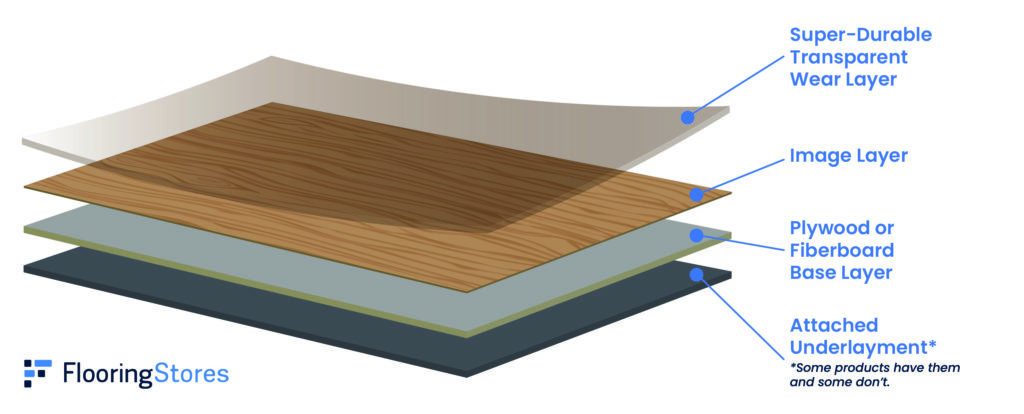
Laminate is a multi-layer flooring made of both natural and synthetic materials. From the bottom, those materials are:

  1. A high-density fiberboard base layer
  2. A photo-realistic image layer
  3. A heavy-duty wear layer
Cross section of laminate flooring

This construction makes laminate both durable and affordable. Like LVP, it does a relatively good job of mimicking hardwood.

Laminate Background

Laminate has been manufactured in the US since the 1970s, when it became popular thanks to a boom in the US housing market. Since it was cheaper than hardwood (and quite durable), it ended up being used extensively and was most commonly installed in sheets or rolls (not planks like today).

Laminate gained a reputation for looking cheap despite it being nearly indestructible at your grandmother’s house!

But that perception changed once laminate was forced to compete with high-quality luxury vinyl flooring. LVP manufacturers, as described earlier in the article, began offering beautiful, inexpensive, and durable alternatives to hardwood—but with the added benefit of being waterproof. In order to compete, laminate flooring manufacturers had to improve as well. Laminate is has a similar installation approach to LVP and in general, is fairly simple.

Laminate Flooring AC Rating

An AC rating (abrasion class) is given to all laminate floors to measure how well they stand up to daily wear and tear. The rating is on a scale of 1–5, with 1 being the least durable.

A laminate floor with an AC rating of 1 is only meant for use in closets and other very light-traffic areas. A floor with an AC rating of 5, on the other hand, can handle heavy commercial use.

Is Laminate Flooring Waterproof?

Now we get to an important question: “Is laminate flooring waterproof?”

The answer is no.

Most laminate flooring is “moisture resistant” but not entirely waterproof. Some waterproof laminate flooring does exist, but it is a specialty product used in special applications.

Many laminates are destroyed by water

Water doesn’t typically damage the wear layer of a laminate plank. However, if water repeatedly get into the core the plank, it will swell and warp.

Comparing Durability and Resilience

When weighing laminate vs vinyl flooring, homeowners often consider durability and resilience as primary factors. Vinyl and laminate flooring both offer longevity, but they handle wear and tear differently. Luxury vinyl tiles, for instance, are waterproof and can handle spills better than laminate planks. However, neither vinyl nor laminate flooring can compare to the lasting resilience of engineered hardwood floors. When considering high-traffic areas or rooms with moisture, the choice between vinyl or laminate flooring can significantly impact the lifespan of your floors.

Distinct Aesthetic Appeal

The aesthetic variations between vinyl and laminate flooring are undeniable. Laminate flooring differ in appearance from luxury vinyl tiles primarily because of the way they are manufactured. While vinyl replicates the look of natural materials through printed designs, laminate planks are made using a photographic layer that offers a genuine representation of wood, stone, or ceramic. This nuance can influence the overall ambiance and visual appeal of a room, making the decision between laminate and vinyl flooring a pivotal one for design-conscious homeowners.

Installation and Versatility

The debate doesn’t stop at appearances. Another aspect to ponder when comparing laminate vs vinyl flooring is the ease of installation and versatility. Both laminate flooring and vinyl offer user-friendly installation methods, suitable for DIY enthusiasts. However, while laminate might require underlayment or a moisture barrier in some cases, many luxury vinyl tiles come with an attached backing, simplifying the process further. It’s essential to consider both the upfront investment and the long-term benefits when choosing between these two popular flooring options.

Conclusion

In general, vinyl flooring is ideal for laundry rooms, wet bathrooms, and mudrooms. Think of vinyl in a similar context to ceramic tile flooring due to its moisture resistance.

For areas that are typically dry, such as living rooms, dining rooms or bedrooms, laminate flooring works well. In terms of styles and selection, you’ll usually find more style choices with laminate flooring versus vinyl flooring.

Top 10 Best States to Retire In (2023)

Retirement is an exciting milestone, but finding the perfect place to settle down can be overwhelming. With a plethora of options to choose from, you want to make sure your decision takes into account factors such as the cost of living, healthcare, and recreational activities.

To help you find the ideal destination for your golden years, we have compiled a list of the top 10 best states to retire in. This guide will provide you with a comprehensive look at each state’s unique offerings, so you can make an informed decision for a blissful retirement.

The Guide for a Blissful Retirement

Retirement Income and State Income Tax

1. Florida

No State Income Taxes

Florida has long been a popular retirement destination for its warm climate, white sandy beaches, and abundance of leisure activities. The Sunshine State boasts no state income tax, making it an attractive option for retirees looking to maximize their savings.

Additionally, Florida is home to a large number of 55+ communities, ensuring that you will have plenty of opportunities to socialize and make new friends.

2. South Dakota

Housing Costs

While South Dakota may not be the first state that comes to mind when planning retirement, it has plenty to offer. The state has no income tax, a low cost of living, and a stable housing market.

In addition, South Dakota’s picturesque landscapes, including the Black Hills and Badlands National Park, provide countless outdoor activities for nature enthusiasts.

3. Tennessee

Low Living Expenses

Tennessee‘s mild climate, scenic beauty, and rich cultural heritage make it an excellent choice for retirees. Music lovers will appreciate the state’s vibrant music scene, with Nashville being the heart of country music.

Furthermore, Tennessee has no state income tax and a relatively low cost of living, making it an affordable option for retirees on a budget.

4. New Hampshire

No Sale Taxes

New Hampshire offers retirees a high quality of life with excellent healthcare and low crime rates. The state is known for its picturesque landscapes, including the White Mountains, which provide ample opportunities for outdoor recreation.

While New Hampshire does have a higher cost of living compared to other states on this list, it compensates with no state income tax or sales tax.

5. Alabama

Tax Social Security Income

Alabama is a hidden gem for retirees, offering a low cost of living and affordable housing options. The state has a mild climate, beautiful beaches along the Gulf Coast, and numerous historic sites to explore.

Additionally, Alabama boasts a strong sense of community and southern hospitality, ensuring that you will feel welcomed in your new home.

6. North Carolina

Public Health

North Carolina provides a diverse range of options for retirees, from the stunning Blue Ridge Mountains to the picturesque beaches of the Outer Banks. The state has a relatively low cost of living and is known for its excellent healthcare facilities, including the renowned Duke University Medical Center.

North Carolina also offers an array of cultural and recreational activities, such as golfing, hiking, and world-class museums.

7. Idaho

Health Care Costs

Idaho is an outdoor enthusiast’s paradise, with its stunning mountain ranges, lush forests, and pristine rivers. The state has a low cost of living, affordable housing, and a strong healthcare system.

Additionally, Idaho’s low crime rate and friendly communities make it an ideal destination for retirees seeking a safe and welcoming environment.

8. Utah

Strong Economy

Utah’s breathtaking landscapes, including the iconic red rock formations of Arches National Park, make it a desirable destination for nature lovers. The state has a strong economy, a low cost of living, and excellent healthcare facilities.

Moreover, Utah is home to numerous 55+ communities, providing ample opportunities for socializing and leisure activities.

9. Georgia

Property Taxes

Georgia is an attractive option for retirees due to its mild climate, charming southern towns, and diverse cultural offerings. The Peach State boasts a low cost of living, affordable housing, and quality healthcare facilities.

From the bustling city of Atlanta to the coastal beauty of Savannah, Georgia offers a wide range of options for retirees seeking a balance of urban and rural living.

10. Arizona

Quality Health Care

Arizona has long been a favorite destination for retirees, thanks to its warm climate, striking desert landscapes, and multitude of golf courses. The state has a low cost of living and a variety of 55+ communities that cater to active retirees.

Moreover, Arizona’s healthcare system is highly regarded, with top-notch facilities such as the Mayo Clinic and Banner Health.

Conclusion

In 2023, choosing the best places to retire is an equation balanced between tax advantages, affordable living, and quality healthcare. Notably, states like West Virginia stand out, presenting lower housing costs than the national average and a tax-friendly state profile. It’s relieving to retirees that many top-ranking states neither impose estate or inheritance taxes nor heavily tax retirement income.

Moreover, in the pursuit of well-being, one should not overlook the importance of reasonable healthcare costs. Several states, backed by their efficient Medicaid services office, ensure medical facilities are both accessible and affordable. Also, according to the census bureau, the increasing number of retirement age communities in these states vouch for their suitability for senior citizens.

Another vital parameter in this decision-making process is the local sales tax and overall state taxes. While many states offer a lower cost of living, it’s crucial to ensure that day-to-day expenditures won’t dent the retirement savings due to high local sales taxes. Prospective retirees also prioritize safety; hence, reviewing crime data provides an insight into the tranquility and security of these destinations. In summary, as retirees seek locations with the perfect blend of financial ease, healthcare accessibility, and overall quality of life, these top 10 states, each offering unique benefits, are deserving of their spotlight.

How To Make Your Move Cheaper and More Comfortable

Moving doesn’t have to be a hassle. Check out our tips for a comfortable, affordable and smooth move.

1.Understand That It Is Not A Good Idea To Make A Move Yourself

Moving house or office is usually a lot of work, which is why doing it yourself is not usually an option, and in most cases you have to turn to a company specialized in moving such as H2H Move to take care of everything.

Many times we think that if we do the move ourselves we will save money, but the truth is that this is not usually the case, since making a move on our own can be a big headache. 

Take care of packing all the furniture and belongings, rent a van, make multiple trips in the van to carry all the things, organize work teams to carry out all the tasks, request permits from the town hall to enter streets that are not free movement, finding where to park near the origin and destination of the move, dealing with last minute problems such as not being able to fit a piece of furniture and having to dismantle it, etc.

All this without counting the valuable time that we will have to take away from rest, family or work to make the move, and the planning problems that may arise that mean that instead of completing the tasks in one day, the time of the work takes two or three days.

And then recover from the fatigue that the physical effort hustle and stress of moving leaves us with. This supposed, misunderstood savings is simply not worth it.

2.Assume That You Have To Hire A Moving Company And Find A Serious One

When we have already assumed that we must hire a moving company, the next step is to find a company that will hire suitable movers near me for the short and long distance moving tasks that we must perform.

Be very careful with the supposed bargains out there. Make sure you hire a real moving and shipping company and not one of those “companies” that only have a van and a worker who actually does shipping, since what is supposedly cheap can be very expensive.

Make sure that the companies you contact are established such as H2H Move LA, with a track record, a known address and with the necessary infrastructure so that they can carry out your move without setbacks.

To know if it is a serious company and not a weekend transporter involved in a moving company, you can ask it, among other things:

  • What is the address of the company and then search for it on the Internet?
  • See if they have a website and if there are opinions from other customers on the Internet.
  • Find out how many trucks and vans they have.
  • Find out if they have furniture lifts (those elevators that can lift and put things through the windows of buildings) since only large companies have this type of equipment.
  • Ask what insurance they have in case of accidents.
  • Follow your intuition and if something smells bad to you regarding a moving company just don’t take risks.

And, when you have already discovered 2 or 3 serious candidates to make your moves ask them for written estimates so you can study and compare them. In any case, in order to request quotes, you must have previously defined your needs; keep reading and now we’ll tell you how.

3.Define More Less The Needs Of Your Move

In order to speak with the moving companies that you have selected a priori and request a tight quote, you must be clear about the needs of your move. This means that you will have to have a more or less clear idea of everything you have to transport.

You will have to decide if you and your family will be in charge of packing everything at origin as well as disassembling the furniture or if you prefer that these activities be done by the moving company.

Likewise, you must be clear about the origin and destination addresses of your move, as well as another series of aspects that will influence the price of your move: Are there elevators in the origin and destination addresses or will everything have to be taken down and up by stairs? Do larger things fit in the elevator or will it be necessary to hire a furniture lifter to take them out or put them through a window?

4.Plan The Move In Advance

All things that are contracted urgently are more expensive. We can check this when we call an emergency locksmith or when we have a water leak and we have to hire a plumber to come running to fix the pipe that is leaking water.

So, to make our move cheaper, it is advisable to book it in advance. This will be good for us as clients because we will not be rushed and we will be able to compare prices and services calmly to decide based on criteria, but it is also good for the company because it allows it to schedule its work in advance and organize itself better as well.

On the other hand, keep in mind that there are also times known as “high season” for moving. So, as far as possible, try to organize your transfers on dates when there is usually no greater demand. See if your locality has students, summer residences or other activities that significantly and seasonally alter the number of hires.

5.Prepare The Packages And Packages For Transport In Time

Finally, we advise you to have everything less prepared so that when the moving company arrives it is simply load and carry, so that the entire operation can take place in the shortest time possible, since the faster things are taken, the faster they will be in your new destination and that will allow you to organize all the packages as soon as possible in their new location.

Another important tip that will save you a lot of time and effort is to clearly write on the boxes and packages what their location will be at the destination address; Thus, make sure you have clearly written on each package the name of the room or stay where the staff of the company that is moving you should leave it. Likewise, talk to the person in charge of the “on-site” work so that he is also clear about where the different packages should be left at their destination.

6.Our special moving offer for far-sighted clients

At H2H Move we have been doing moves in LA (Los Angeles) for more than 10+ years, and all this time has helped us get to know our clients and their needs.

This experience has also taught us that it is easier to work with forward-thinking clients than with clients who improvise on the fly, and that is why we have designed an unbeatable offer for those clients who organize themselves in advance and that allow us to also do our job more quickly and efficiently.

How to Become a Notary in Florida

Becoming a notary is a convenient and rewarding full-time or part-time job. Notary appointments last four years and can be renewed. If you meet all the requirements, you can apply to become a notary online through a state-authorized bonding agency.

A notary is a public officer authorized to perform the following duties:

  • Administer oaths or affirmations
  • Take acknowledgments
  • Solemnize marriages
  • Attest that photocopies are authentic
  • Verify vehicle identification numbers (VINs)
  • Certify the contents of a safe deposit box

Requirements to be a Notary in Florida

Considering a new career path or a side hustle? Check out the requirements for becoming a notary.

  • Be at least 18 years old
  • Be a legal resident of Florida
  • Not be a convicted of a felony offense

Florida residents who are interested in becoming a Notary Public must complete the following steps:

  1. Take an approved education course. The Department of State’s free course is available online.
  2. Obtain a surety bond from an approved bonding agency.
  3. Complete the application and pay the $39 fee.
  4. Follow the directions of your bonding agency to submit your application documents and fee.
  5. Order your Notary seal. You may choose to order from your bonding agency or another approved provider.
  6. Once your application is approved by the Department of State, you will receive your commission certificate from your bonding agency.

Common Questions About Becoming a Notary

Is training required to become an FL Notary?

Yes, first-time applicants for a Florida Notary Public commission must complete a three-hour course offered by the state or an approved vendor. There are also several online courses that satisfies the state’s requirement.

The course must be completed within one year prior to applying for a Notary commission. You will receive a completion certificate that you need to submit with your application form.

If I live in another state but work in Florida, may I become a Florida Notary?

No, you must be a legal resident of Florida to become a Florida Notary.

Conclusion

In wrapping up the journey to become one of the esteemed Florida notaries, it’s essential to underscore the significance of each step. The Florida notary application serves as the foundational launchpad, often intertwined with the enlightening three-hour Florida notary course that empowers aspirants with the knowledge and confidence they need. The Florida notary commission process may seem daunting at first, but with the right guidance and resources, it’s a clear path to professional growth. Always remember to have your notary supplies ready, and for those seeking a comprehensive solution, considering a notary package can be a wise decision.

The intricacies of the Florida notary application process involve a few critical stops, notably at the county clerk’s office to record the notary bond. This bond, facilitated by accredited bonding agencies, ensures the credibility and trustworthiness of notaries. Lastly, with your notary stamp in hand and notary seals ready to be affixed, you’ll be set to undertake the responsibility and privilege of this esteemed role. Every detail, from the application to the tools, contributes to the integral function and respect that Florida notaries command in their service to the public.