The 7 Best Elementary Schools in Gwinnett County, Georgia

When moving your family to a new home, one of the biggest factors to consider should be the local schools.

Especially with little ones beginning their school career, you want to have them attending the best school possible to ensure their educational success.

While private education is nice, only 10% of students in the United States actually attend a private school. So, when you are choosing a new home, the school district can play a major part in making your decision since it dictates what school they will have to attend.

If you’re looking to buy a home in Georgia, Gwinnett County has one of the highest concentrations of top-ranked public schools in the state. That’s why moving to this area is a no-brainer for many families.

But with so many schools to choose from within such a large school district, how do they compare?

Check out our list of the 7 Best Elementary Schools in Gwinnett County to help make your decision.

Here are the 7 Best Elementary Schools in Gwinnett County, Georgia

Niche, School Digger, and Great Schools are just a few of the different places you can find information, proficiency scores, rankings, and more about your local schools.

To help you easily analyze these schools, we have streamlined the research to help you choose the best school for your family.

Brookwood Elementary

Brookwood Elementary Maker Faire
  • Students: 1,349
  • Student to Teacher Ratio: 15:1
  • Math Proficiency: 78%
  • Reading Proficiency: 73%
  • Overall Niche Grade: A
  • Great Schools Rating: 10/10
  • School Digger Rank: 50th of 1,234 Georgia Elementary Schools

Brookwood elementary is a place where creativity is celebrated. You can see this in their Annual Maker Faire – a celebration of Science, Technology, Engineering, Arts, and Mathematics (STEAM).

At the Maker Faire, Brookwood partners with six other elementary schools to provide a place for students, parents, and the local community to explore more than 50 hands-on interactive activities which include drone races, virtual reality experiences, 3D printing, arts and crafts, CO2 car races, and more.

If this sounds like something your child might be interested in, then Brookwood Elementary would be a great school for your aspiring student.

View Homes for Sale Near the Brookwood Elementary School District

Simpson Elementary School

Simpson Creek Superstars with their mascot Sparky
  • Students: 896
  • Student to Teacher Ratio: 12:1
  • Math Proficiency: 87%
  • Reading Proficiency: 87%
  • Overall Niche Grade: A
  • Great Schools Rating: 9/10
  • School Digger Rank:  28th of 1,234 Georgia Elementary Schools

Every year the U.S. Department of Education seeks out and celebrates great American schools, naming them National Blue Ribbon Schools of Excellence. Simpson Elementary has received this honor, not once, but twice. The honor recognizes schools based on their overall academic excellence or their progress in closing achievement gaps among student subgroups.

With high scores across the board, the award-winning Simpson Elementary is a top pick for the best elementary schools in Gwinnett County.

View Homes for Sale Near the Simpson Elementary School District

Riverside Elementary School

Colonial Day at Riverside Elementary
  • Students: 989
  • Student to Teacher Ratio: 15:1
  • Math Proficiency: 84%
  • Reading Proficiency: 80%
  • Overall Niche Grade: A
  • Great Schools Rating: 10/10
  • School Digger Rank: 13th of 1,234 Georgia Elementary Schools

Riverside Elementary’s mission is to focus on excellence, tradition and leadership in order to educate every student for success in life. What better place to see that being carried out than in the classroom.

In one such classroom, students don’t just read about history, they experience it. In the photo pictured above, you can see how one Riverside Elementary School teacher recreates an annual tradition of an interactive colonial day experience to give students a hands-on presentation of the social studies curriculum – showing them how to make butter, candles and even pick and clean cotton.

If you’re looking for teachers who carry out their mission of preparing your student for success, then Riverside Elementary may be the right place for your family.

View Homes for Sale Near the Riverside Elementary School District

Suwanee Elementary School

Suwanee Elementary Relay for Life
  • Students: 657
  • Student to Teacher Ratio: 16:1
  • Math Proficiency: 80%
  • Reading Proficiency: 75%
  • Overall Niche Grade: A
  • Great Schools Rating: 9/10
  • School Digger Rank:  53rd of 1,234 Georgia Elementary Schools

Passion and dedication to helping others is something that is a huge part of Suwanee Elementary.

Whether it’s organizing a mini Relay for Life where they raise almost $10,000 each year to fight Cancer or becoming #1 in Jump Rope for Heart in Gwinnett County where they raised another $10,000 for the American Heart Association, the students and teachers at Suwanee Elementary put others before themselves and do what it takes to help out.

Suwanee elementary is a great place to guarantee your child a great education and get involved in the local community.

View Homes for Sale Near the Suwanee Elementary School District

Level Creek Elementary School

Level Creek Dual Language Classroom
  • Students: 1,029
  • Student to Teacher Ratio: 16:1
  • Math Proficiency: 85%
  • Reading Proficiency: 80%
  • Overall Niche Grade: A
  • Great Schools Rating: 10/10
  • School Digger Rank:  16th of 1,234 Georgia Elementary Schools

Interested in raising bilingual kids? Level Creek Elementary could be the school for you.

Level Creek Elementary School is one of the few schools to have a Dual Language Immersion program. The program takes two classes of kindergarten students and immerses them in both English and Spanish. These students will spend 50% of their school day learning in English and the other half of their school day learning in Spanish. The goal is to graduate fully fluent bilingual students.

For good reason, Level Creek is on our list of the Best Elementary Schools in Gwinnett County and could be the just the place for you.

View Homes for Sale Near the Level Creek Elementary School District

Camp Creek Elementary School

Camp Creek Elementary Playground
  • Students: 1,310
  • Student to Teacher Ratio: 15:1
  • Math Proficiency: 71%
  • Reading Proficiency: 68%
  • Overall Niche Grade: A
  • Great Schools Rating: 9/10
  • School Digger Rank:  71st of 1,234 Georgia Elementary Schools

Do you want a school that will fight for what they believe in? Camp Creek Elementary is that school.

The parents and teachers have been known to gather and fight not only for a safe school environment, but also for equal opportunities for digital learning for their students.

In need of a new playground for preschool and special needs students? Administrators sought grants and provided a new playground for just that purpose.

Equal opportunity is a strong theme throughout Camp Creek Elementary

View Homes for Sale Near the Camp Creek Elementary School District

Parsons Elementary School

Parsons Elementary Korean Language Program
  • Students: 765
  • Student to Teacher Ratio: 14:1
  • Math Proficiency: 73%
  • Reading Proficiency: 82%
  • Overall Niche Grade: A
  • Great Schools Rating: 9/10
  • School Digger Rank:  56th of 1,234 Georgia Elementary Schools

Parsons Elementary School is a pioneer, at least that’s what it’s being called as they started the first Korean learning program of their kind. Their award-winning teachers lead the way with their passion and commitment in creating lifelong learners

If giving your child access to exclusive programs that include learning the Korean language, then Parsons Elementary might be the best elementary school in Gwinnett County for you.

View Homes for Sale Near the Parsons Elementary School District

Future Education Pathways: Middle Schools and Beyond

Dyer Elementary School, a standout among Gwinnett County Public Schools, lays a solid foundation for future academic success. As students transition to middle school, they benefit from the robust support of the Gwinnett County Board, which oversees one of the largest school systems in Georgia.

Located in Lawrenceville, GA, and feeding into highly regarded middle schools like those in the Peachtree Ridge cluster, Dyer Elementary graduates are well-prepared. Notably, the district’s commitment to excellence is reflected in its Broad Prize recognition, adhering to Georgia law to maintain high educational standards.

Work with our local, Gwinnett County agents + Get $5,000 towards your closing costs

Ready to start exploring your next home in Gwinnett County? Contact us to connect with a SimpleShowing agent who is familiar with these Gwinnett County schools.

Plus, learn how you can qualify for our Buyer Refund program, which could give you up to 1.5% or $5,000 towards closing costs on average.

Conclusion

The quality of education in Gwinnett County, Georgia is indeed laudable, and this is greatly attributed to the contribution of renowned individuals like Christopher Martin, Christopher Ray, and Dion Jones who have tirelessly worked to ensure the standard of education in these schools is top-tier. Their efforts, in tandem with other key stakeholders like Jeff Hall, Craig Barlow, and Kelly Scarborough, have positively impacted the educational landscape of the county.

The stellar performance of these seven best elementary schools is a testament to the commitment these individuals have made in shaping the future of our children. Moreover, Kevin Wood, Toni Ferguson, and Allan Gee, each in their respective capacities, have played significant roles in creating an environment conducive to the holistic development of students.

Thus, as we celebrate these exceptional elementary schools, it is essential to also applaud the efforts of these individuals. They continue to inspire the teaching and learning journey, carving out the best educational paths for the young residents of Gwinnett County. The combined contributions of Christopher Martin, Christopher Ray, Dion Jones, Jeff Hall, Craig Barlow, Kelly Scarborough, Kevin Wood, Toni Ferguson, Allan Gee, and Crystal Cooper truly make Gwinnett County’s elementary schools among the best.

Should You List Your Home on the MLS?

Effective marketing is absolutely essential to selling your home.

No matter how amazing it is, if no one knows it’s for sale, how are you going to sell it?

While there are a number of options for attracting interest in your house, one of the most popular is the Multiple Listing Service (MLS), a concept that has its origins all the way back in the early 1900s.

However, now that you have so many other ways to market your house, should you list your home on the MLS?

The Pros and Cons of the Multiple Listing Service

Today, there are hundreds of different local multiple listing services all over the country. In other words, there isn’t a single, national MLS. Real estate listings get distributed by each local multiple listing service through licensed real estate brokers and licensed real estate agents. Only real estate agents have access for inputting MLS listings on behalf of homeowners.

As popular as the service is, you may still be wondering if it’s actually necessary. Let’s look at the pros and the cons of listing your home on the MLS.

Pro: Increasing Real Estate Agent Visibility

The MLS is accessed by agents and there’s no disputing that the MLS is still the first place real estate agents check when they’re helping their clients find homes. In other words, most agents don’t search on Zillow or other apps. Since they have MLS access, they rely on the it as their source of truth.

In fact, aside from their phones and email, the vast majority of Realtors view their local MLS site as the “most valuable technology” they use for their businesses. So, if you want real estate agents to find your home, you want to list it on the MLS.

Pro: Distribution to Major Real Estate Apps and Websites

All MLS listings are syndicated automatically to 100’s of other real estate websites. This means that once your home is posted on the MLS, it will also go live on many other websites — such as Realtor.com, Trulia, Zillow, Redfin, etc. Lots of these websites actually only allow MLS listed homes on their site too, so you would have no other way to get your listing in front of their viewers unless you chose to list.

Pro: Saving Time

Another big benefit of listing your home on the MLS is how much time you stand to save in selling it. As more realtors will see your listing, it stands to reason that more potential buyers will, too, which means you should start seeing offers a lot sooner.

Furthermore, one of the first things buyers will look at when considering your home is how long it’s been on the market. If the amount of time significantly exceeds the average number of days for comparable homes, most will assume there’s something wrong with it (e.g. maybe the price needs to come down?).

Con: Cost

On the other hand, the above benefits come at a cost. You’ll have to agree to pay your real estate agent a commission on the sale of your house or find a MLS service in order to get your home listed there.

Do you always need a licensed real estate agent? Well, it depends. Agent fees are easily the most expensive aspect of selling your home and represent most of your closing costs as a seller

Typically, the commission paid to work with an agent and get listed on the MLS is around 3%.

If you sell your home for $400,000, that’s $12,000 just for the listing agent’s commissions! That cost doesn’t include the other 3% that you’ll owe the buyer’s agent.

Listing on MLS For 1%

For the vast majority of home sellers, the MLS is an advantage they can’t ignore.

Fortunately, brokers like SimpleShowing provide access to the MLS for a fraction of the standard commission rate.

Not only can do we list your home on the MLS for a 1% commission and a number of other popular listing sites (including ours), but you’ll also get to work with a dedicated agent, get professional photos, an open house, pricing assistance, and contract and negotiation support.

Exploring Flat Fee MLS Services

Opting to list on MLS without a realtor can be a cost-effective alternative to traditional full-service agents. With flat fee MLS services, homeowners can pay a flat fee agent to get their property listed on real estate sites without committing to high commissions.

These flat fee agents provide essential services to get your home in front of buyer agents, ensuring maximum visibility. While flat fee services may not offer the extensive support of full-service agents, they can be an excellent choice for those who want more control over the selling process.

Advice For Selling in 2024

  • Interview several real estate professionals, including flat fee mls service options
  • Talk to a local real estate broker about their listing fees and buyer agent commission rates
  • Compare real estate brokerage offerings, including photography and marketing
  • Find discount real estate broker options in your area
  • If it’s not your first time selling, decide if listing on mls without a Realtor (for sale by owner) is an option
  • Compare differences between a flat fee mls listing service, a flat fee broker and “full service” or traditional real estate agent
  • If you plan on listing on MLS, request a free home valuation (comparative market analysis), so you can price your home accurately and competitively

Conclusion

The home selling process can be stressful if you’ve never sold a property. If you’re a home seller trying to decide between an MLS listing service, a flat fee mls company, or just your neighborhood agent, our advice is to consider the real estate market and the selling fees before signing an exclusive listing agreement. You can still save money and use a nationally known brokerage if you can successfully negotiate the real estate agent commission.

Keep in mind that both the listing agent commission and buyer’s agent commission are negotiable, whether you’re going with a flat fee service or a local agent.

Ways To Improve Your Home & Make It More Beautiful

Being a homeowner is a big responsibility. There’s a lot to think about and take care of on any given day. It’s your job to keep up with updates and make your property a more enjoyable place to live. 

Be glad to know that there are many projects you can consider tackling. Once you get a better idea of what you can do to enhance your property you can get started completing each task one by one. It’s a good idea to put them in priority order and come up with a budget for each. Here you can review some ways to improve your home and make it more beautiful. 

Clean & Declutter

You don’t want to have to stare at a messy home day in and day out. Therefore, it’s wise to get on a regular cleaning schedule. Tackle each room one by one and pick up nightly before bedtime. Now is also your opportunity to get better organized. This will allow you to find what you need in a hurry. You can do so by taking the time to declutter your spaces. Create a pile of items you want to keep, get rid of, and donate. This will make more room for the stuff that you love and want to showcase. 

Boost the Curb Appeal

You should also pay close attention to the exterior of your home as a homeowner. There are both large and small projects you may want to add to your list. For example, you should look over your roof and make sure it’s in good condition. If there are any loose shingles or issues with it that you find then you may want to look into securing professional roof repair services. This will put you at ease knowing your home is well-protected and insulated. You may also want to replace a cracked driveway or install new garage doors to add value. Decorate your front porch and be sure to keep up with your landscaping.  

Upgrade the Kitchen

An essential room in your home is the kitchen space. You likely spend a lot of time in it visiting with family and guests and preparing meals. You want it to not only be a beautiful room but also functional. Upgrade your kitchen by replacing old appliances with energy-efficient options and improving the lighting so you can see better. You may also want to consider installing a colorful backsplash behind the sink area and painting your cabinets a new color. If there is space, then consider putting in a large island in the center of the room. This will offer you more storage options to help you keep your kitchen better organized. 

Focus on the Living Room

Improve your home and make it more beautiful by focusing on the living room. Hang up some artwork and lay down a few area rugs. This will help you make the space more comfortable and cozy for spending time in it. You may also want to put up some curtains which can add texture, warmth, and a pop of color to the area. Invest in furniture pieces that help put you at ease when it’s time to rest and relax. You may want to consider bringing in elements of nature such as plants to add some greenery. Think about putting a fresh coat of paint on the walls in a neutral color that will help brighten up this space. 

Work on the Lighting

You want to be able to see what you are doing when you are around the house. Therefore, consider working on improving the lighting. Do your best to draw in as much natural light as possible during the daytime hours by pulling back shades and curtains. Layer your lighting and put some lights on dimmer switches. This will allow you to set the right tone and mood for what you are doing and the time of day. Go around and replace old light fixtures and covers with more modern options. You should also make sure that you place out plenty of lamps and candles. This will help you illuminate your spaces when the evening hours set in. 

Conclusion

You now have some useful suggestions as to how you can improve your home and make it more beautiful. Take a look around your home and figure out what could use your attention the most. There are some projects you can tackle yourself and others you may want to hire outside help to complete. Be sure to sit back and enjoy your home and these enhancements once all the hard work is done. 

Insects and Termites in Your Home? Here’s What to Do

Discovering insects or termites in your home can be unsettling. These uninvited guests not only cause damage to your property but can also pose health risks to your family. Understanding how to effectively manage and prevent infestations is crucial for maintaining a safe and comfortable living environment. In this blog post, we’ll explore the steps you can take to identify, control, and prevent insect and termite infestations in your home.

Improving Your Home

Hiring professional exterminators is a crucial step in safeguarding and enhancing your home’s integrity. Experienced exterminators possess the knowledge and tools to effectively eliminate pests that can cause significant structural damage and health risks. By addressing infestations promptly, they prevent further deterioration of your property and contribute to a healthier living environment. Whether you are looking for professional exterminators or any other city, exterminators can offer tailored solutions and preventive strategies, ensuring long-term protection against future pest invasions. Investing in professional extermination services not only preserves the value of your home but also provides peace of mind, knowing that your living space is secure from the harmful impacts of pests. Ultimately, this proactive approach leads to a more comfortable and well-maintained home.

Recognize the Signs of Infestation

The first step in dealing with an insect or termite problem is to accurately identify the pests and the extent of the infestation. Common signs of insect infestations include visible bugs, droppings, nests, and damage to food supplies or structures. Termites, in particular, leave behind specific clues such as mud tubes, discarded wings, and hollow-sounding wood. By recognizing these signs early, you can address the issue before it becomes severe.

Understanding the Impact

Once you’ve identified the presence of insects or termites, it’s essential to assess the extent of the damage. Termites are known for their ability to weaken structural components of buildings, which can lead to costly repairs if not addressed promptly. Insects like ants, cockroaches, and bedbugs can also cause significant damage and create unhygienic conditions. Conduct a thorough inspection of your home to determine the areas affected and the severity of the infestation.

Choosing the Right Solution

There are various treatment options available for dealing with insects and termites. These can range from chemical treatments and baiting systems to natural and eco-friendly methods. Chemical treatments, such as liquid termiticides, are effective in eliminating termites, while baiting systems can provide long-term control. For insects, treatments may include insecticidal sprays, traps, and natural remedies like diatomaceous earth. Your choice of treatment will depend on the type of pest, the severity of the infestation, and any environmental considerations.

When and How to Use Them

For minor infestations, DIY methods can be effective in managing pests. Simple actions like sealing cracks and crevices, maintaining cleanliness, and using over-the-counter insecticides can help control the problem. For termites, applying borate solutions to wood and installing termite bait stations can offer some level of protection. However, it’s important to recognize when the infestation requires professional intervention to prevent further damage.

Keeping Pests at Bay

Preventing future infestations is as important as dealing with current ones. Implementing preventive measures can significantly reduce the likelihood of pests invading your home. These measures include:

Maintaining Cleanliness: Regularly clean your home, particularly kitchens and dining areas, to remove food sources that attract pests.

Proper Storage: Store food in sealed containers and dispose of garbage regularly.

Sealing Entry Points: Seal cracks, gaps, and openings around doors, windows, and foundations to prevent pests from entering.

Moisture Control: Fix leaks and ensure proper ventilation to reduce moisture, which attracts termites and other pests.

Regular Inspections: Conduct regular inspections of your home, especially in areas prone to moisture and wood damage, to catch any signs of infestation early.

The Role of Landscaping

Your home’s exterior can also influence pest activity. Maintaining your yard and garden plays a crucial role in pest prevention. Trim trees and shrubs away from your house, remove debris and woodpiles, and ensure proper drainage to reduce moisture levels. By creating a less hospitable environment for pests around your home, you can decrease the chances of them finding their way inside.

Health Implications

Insects and termites not only damage your property but can also pose health risks. Cockroaches, for example, can trigger allergies and asthma, while mosquitoes can transmit diseases like West Nile virus and dengue fever. Protecting your home from these pests also means safeguarding your family’s health. Use protective measures such as mosquito nets, and insect repellents, and maintain a clean and hygienic living environment.

The Importance of Regular Monitoring

Even after treating an infestation, regular monitoring is essential to ensure that pests do not return. Schedule periodic inspections with pest control professionals and stay vigilant for any signs of pest activity. Early detection and prompt action can prevent minor issues from escalating into major problems.

In conclusion, dealing with insects and termites requires a proactive and comprehensive approach. By identifying the problem early, assessing the damage, and choosing the right treatment options, you can effectively manage and eliminate infestations. Preventive measures and regular monitoring are key to keeping your home pest-free in the long term. Remember, seeking professional help when needed can save you time, money, and stress. Take control of your home and ensure it remains a safe, healthy, and comfortable space for you and your family.

What To Consider When Landscaping Your Home

Landscaping can turn your outdoor space into an extension of your living area. A well-planned yard design gives you a peaceful home retreat. It lets you create a spectacular entertaining area.

But there are a few things to consider about landscaping before you begin digging.

Understanding Your Space

Before you begin, you’ll want to take a hard look at your space to understand the right steps to move forward. That way, you’ll make wise choices and save money in the long run.

Assess Your Yard

First, take out your tape measure to get your outdoor area’s accurate size and shape. It helps to make a drawing, but don’t worry, you don’t need artistic skills. Note the size, then take a few minutes to identify existing features. 

  • Existing trees, shrubs, and grassy areas
  • Slopes, hills, and drainage lines
  • Structures, like a tool shed or small patio for garbage cans
  • Shady or sunny areas
  • Garden beds

Soil Type and Quality

Next, consider testing your soil’s pH and composition. This will help you understand its health and the best-suited plants or grass.

Here’s a simple guide on how to test pH:

  1. Buy a Soil pH Test Kit
    1. Available at garden centers or online.
  2. Collect Soil Samples
    1. Use a clean trowel to collect soil from different areas of your yard.
    2. Dig down about 4-6 inches to get a sample.
    3. Mix the samples in a clean container.
    4. Remove any debris like rocks or roots.
    5. Let the soil dry if it’s wet.
  3. Perform the Test
    1. Follow the test kit instructions to mix soil with water and testing solution.
    2. Compare the color change to the provided pH scale.
  4. Interpret Results
    1. pH scales range between 0 and 14 ( where 7 is neutral, lower is acidic, and higher is alkaline)
    2. Many plants prefer a pH between 6 and 7.5.

Next, test the soil composition by filling a jar about one-third full with soil. Then add water until it’s almost full. Next, add a teaspoon of dish soap to help separate particles. Finally, shake the jar before letting it sit undisturbed for 24 hours.

Now, you’re ready to observe the layers.

  • Bottom layer is sand (heaviest and settles first)
  • Middle layer: silt
  • Top layer: clay (lightest and settles last)

Finally, measure each layer’s thickness. Then, calculate the clay, silt, and sand percentages. Understanding the pH and composition of your soil makes it easier to choose the right plants and amendments.

Consider Your Climate

The next step in understanding your garden space is considering your climate.

Hot dry summers mean you’ll want to choose drought-resistant plants. An irrigation system and thick layers of mulch help reduce watering costs and save you time.

But, cold, snowy winters mean selecting plants that can also withstand temperature extremes. Think about planting Russian Sage or Yarrow. Both thrive in hot and dry conditions but are tolerant of cold winters, too.

Native Plants

Since they’ll need less water and maintenance, native plants help save you time and money. One choice is Idaho Blue-eyed Grass with slender green stems that grow in clumps. Its violet-blue star-shaped flowers attract butterflies in late spring and early summer.

Design and Aesthetics

Now that you have a good idea of your yard’s details, composition, and climate, let’s look at design.

Planning Your Layout

Creating a cohesive design makes all your outdoor spaces work together harmoniously. It also enhances their functions, making your yard easier to maintain and enjoy.

  • Create zones for different activities, like gardening, playing, and entertaining.
  • Use focal points, like fountains, swings, or colorful plants, to add interest.
  • Balance hard- and soft-scapes. Soften pathways, patios, or retaining walls with plants and grassy areas.

Budget and Cost Management

One thing to consider when landscaping your home is money. How much can you spend upfront, throughout the project, and on maintenance?

Setting a Budget

When determining your budget, think about extra materials. Consider costs for hardscapes, plant and sod, mulch, irrigation systems, and labor. Whether you hire a professional or do the labor yourself, a price is involved.

Cost-Effective Tips

  • Needs vs. Wants: Focus on the main elements. Foundational plants and necessary hardscapes come before adding optional features.
  • Consider DIY Options: Can you plant smaller shrubs or lay mulch to reduce labor costs?
  • Time of Year: Are there seasonal discounts and sales to help stretch your budget?

Hiring a Professional

Knowing when to hire a professional landscaper makes all the difference to your outdoor success. For example, a pretty complex landscape transformation project may require expertise normal people just don’t have. These are things like designing and installing advanced irrigation systems and retaining walls.

Hiring a professional means you don’t have to watch 50 YouTube videos to learn how to build a retaining wall. So, you save time, and that saves you money.

Beyond the big projects, professional landscaping services have design and plant selection experts. They’ll tell you about native plants that are perfect for your outdoor space. They’ll also maximize how your grounds function to create pocket areas you’ll love spending time in.

Finally, professionals provide ongoing maintenance plans. They’ll mow, feed, and trim your lawn, flowers, and shrubs. So, your property stays healthy and thrives despite a summer drought or winter blizzard.

Choosing the Right Landscaper

Here are three questions to ask potential landscapers:

  1. Can you provide examples of similar lawn projects you’ve completed?
    1. Gauge their experience and get an idea of how your project will look when finished.
  2. How do you handle unexpected changes or circumstances during a project?
    1. It lets you understand their flexibility and problem-solving skills.
  3. What is the project timeline, and how do you meet all deadlines?
    1. Helps clarify expectations around project duration and managing agreed-upon timelines.

Landscaping your home means considering climate, soil conditions, and plant selection. You can create a comfortable and functional landscape by seeking professional guidance. 

Follow these guidelines for unique outdoor spaces. You’ll enhance your property’s value and give you enjoyment throughout the year. So, do a little homework and then start digging.

Boost Your Curb Appeal with a Low-Maintenance Garden

They say you never get a second chance at a first impression, and this is especially true when it comes to selling a home. Potential buyers form an opinion about your property within seconds of pulling up to the curb. A well-maintained and attractive garden is one of the first things they’ll notice, and it can significantly boost your curb appeal. Studies have shown that a beautiful landscape can increase a home’s value by as much as 15-20%, making it a worthwhile investment.

But what if you don’t have a green thumb or the time to spend hours weeding and watering? Fear not! Creating a stunning garden doesn’t have to be a high-maintenance chore. With a few clever strategies and plant choices, you can achieve a low-maintenance haven that will wow potential buyers and add lasting beauty to your own enjoyment.

Planning for Success: The Low-Maintenance Mindset

The key to a low-maintenance garden lies in planning from the start. Consider your lifestyle and the amount of time you realistically have to dedicate to gardening. Here are some key questions to ask yourself:

  • How much sun does your yard receive? Different plants have different sun requirements. Choosing plants that thrive in your specific sunlight conditions will minimize the need for adjustments and ensure their long-term health.
  • What’s your soil like? Understanding your soil type (clay, sandy, etc.) will help you select plants that are naturally adapted to it. This reduces the need for amendments and fertilizers.
  • Do you prefer a formal or informal style? Formal gardens with straight lines and symmetrical layouts tend to require more upkeep. Informal gardens, with their relaxed and natural aesthetic, are often easier to maintain.

Easy, No Fuss Planting Powerhouses

Once you have a handle on your yard’s conditions and your preferred style, it’s time to choose the right plants. Here are some low-maintenance superstars that will add beauty and color to your garden:

  • Perennials: These flowering plants come back year after year, eliminating the need for annual replanting. Opt for varieties known for their long bloom times and low watering needs, such as lavender, daylilies and coneflowers.
  • Native Plants: Native plants are perfectly adapted to your local climate and soil conditions. They typically require less water and are naturally resistant to pests and diseases, reducing the need for pesticides and herbicides. Consider butterfly bushes, black-eyed Susans, or columbine for vibrant options.
  • Groundcovers: Low-growing plants like creeping phlox or sedum create a dense carpet that suppresses weeds and retains moisture in the soil, minimizing the need for weeding and watering.
  • Conversation Starter: For a unique touch, consider adding cucamelon seeds to the mix. These tiny, vine-ripened melons are a fun conversation starter and surprisingly easy to grow. They require well-drained soil and plenty of sunlight, but once established, they are relatively low-maintenance.

Why Mulch is Your Low-Maintenance Ally

Mulch is a gardener’s secret weapon. A layer of mulch around your plants offers a multitude of benefits:

  • Suppresses weeds: Mulch acts as a physical barrier, preventing weed seeds from germinating and establishing themselves.
  • Retains moisture: Mulch helps the soil retain moisture, reducing the need for frequent watering, especially during hot summer months.
  • Regulates soil temperature: Mulch insulates the soil, keeping it cooler in the summer and warmer in the winter, which benefits plant health.
  • Adds visual appeal: A fresh layer of mulch adds a polished look to your garden beds, enhancing curb appeal.

Design with Flair

A low-maintenance garden doesn’t have to be bland. Here are some tips for adding visual interest:

  • Play with Texture: Combine plants with contrasting foliage textures, like feathery ferns next to broad-leaved hostas, to create a dynamic look.
  • Embrace Color: Use flowering plants strategically to add pops of color throughout the season. Consider planting in color blocks or using a color wheel to create a harmonious palette.
  • Think Vertically: Utilize vertical space with climbing vines on trellises or hanging baskets filled with colorful blooms.
  • Add Focal Points: Introduce a birdbath, a decorative pot, or a strategically placed rock to draw the eye and add a touch of personality.

Beyond Plants: Low-Maintenance Hardscaping

While plants are a cornerstone of any garden, hardscaping elements can also contribute to a low-maintenance landscape. Here are some ideas:

  • Gravel Paths: Gravel paths are a beautiful and low-maintenance alternative to traditional walkways. They require minimal upkeep and provide good drainage.
  • Paved Patios: A paved patio creates a designated space for entertaining or relaxing. Opt for permeable pavers that allow rainwater to drain back into the soil.
  • Decorative Stones: Decorative stones can be used to create dry creek beds or borders around garden beds. They add visual interest and require no watering.

Remember: A low-maintenance garden doesn’t mean neglecting it altogether. Schedule some time for basic upkeep, like deadheading spent flowers to encourage further blooms, removing any weeds that sprout through the mulch and giving your plants a deep watering during periods of extended drought. With a little planning and these smart strategies, you can create a stunning low-maintenance garden that will boost your curb appeal, add value to your home and bring you joy for years to come.

How to Prepare Your Home for Sale in Florida

Selling your home in Florida can be a great opportunity. The market is often busy, with a 5% increase in home sales over the past year. To get the best price and sell quickly, you need to prepare your home properly. Here are some essential steps to get your Florida home ready for sale.

Home Prices in Different Florida Cities

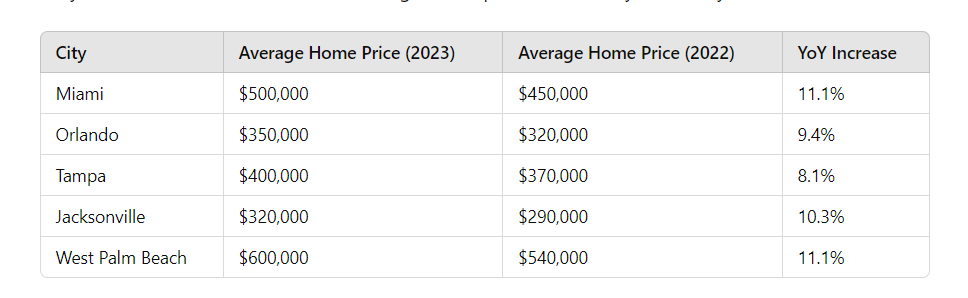
Understanding the real estate market in different Florida cities can help you set a competitive price for your home. Here’s a look at the average home prices and their year-over-year (YoY) increase:

Source: https://snipboard.io/4STFVD.jpg

Miami

Miami’s average home price in 2023 is $500,000, up from $450,000 in 2022. This represents an 11.1% increase. Miami’s vibrant lifestyle and strong economy make it a popular choice for buyers.

Orlando

In Orlando, the average home price is $350,000, a 9.4% increase from $320,000 last year. The city’s theme parks and entertainment options attract many families and investors.

Tampa

Tampa’s average home price is now $400,000, compared to $370,000 last year, reflecting an 8.1% increase. Tampa’s growing job market and waterfront properties are major draws.

Jacksonville

Jacksonville has seen a 10.3% increase in home prices, with the average home now costing $320,000, up from $290,000. Jacksonville’s affordability and expanding infrastructure make it appealing.

West Palm Beach

West Palm Beach leads with an average home price of $600,000, up from $540,000 last year, an 11.1% increase. The area’s luxurious lifestyle and beautiful beaches are significant factors.

12 Steps To Prepare Your Home For Sale

1. Clean and Declutter

First impressions matter. A clean and tidy home attracts potential buyers. Start by removing any unnecessary items. Pack away personal belongings, such as family photos and personal collections. This helps potential buyers envision their own belongings in the space.

Clean every room thoroughly. Pay special attention to kitchens and bathrooms. These areas should sparkle. Don’t forget to clean windows and floors. A clean home, with an average size of 2,000 sqft, looks well-maintained and inviting.

2. Make Necessary Repairs

Fix any obvious issues in your home. Buyers notice small problems, and they can affect their decision. Check for leaky faucets, broken tiles, and squeaky doors. Ensure that all lights are working. Repair cracks in walls and ceilings.

If your home has bigger issues, consider hiring a professional. Problems with the roof, plumbing, or electrical systems can be deal-breakers. Fixing these issues upfront can save time and prevent lost sales. For example, repairing a roof leak can cost around $500, but ignoring it might cost you a sale.

3. Enhance Curb Appeal

The exterior of your home is the first thing buyers see. Make sure it looks appealing. Mow the lawn, trim hedges, and plant flowers. A well-kept yard can make a strong impression.

Clean the exterior of your house, including windows and gutters. Consider a fresh coat of paint if necessary. Pay attention to the front door. A new door or a fresh coat of paint can enhance the entrance. These improvements can add up to 5% to your home’s value.

4. Neutralize and Depersonalize

Buyers need to imagine themselves living in your home. Use neutral colors for walls and décor. Bold colors can be off-putting. Paint walls in soft, neutral shades like beige or light gray, which are popular choices in homes valued at $300,000 and above.

Remove personal items such as family photos, trophies, and personalized décor. This helps create a blank canvas for buyers. They can then visualize their own style and belongings in the space.

5. Stage Your Home

Staging your home can make a significant difference. Arrange furniture to highlight the best features of each room. Ensure that each room has a clear purpose. For example, set up the dining room as a dining area, not an office.

Use tasteful decorations to create a welcoming atmosphere. Fresh flowers and tasteful art can make rooms more inviting. Consider hiring a professional stager if you are unsure about how to proceed. Staging can increase your home’s value by up to 10%.

6. Optimize Lighting

Good lighting makes your home feel warm and inviting. Open curtains and blinds to let in natural light. Ensure that all rooms are well-lit, even during daytime showings. Replace dim or broken light bulbs.

Use a mix of lighting sources. Overhead lights, lamps, and natural light should all work together. Proper lighting can make rooms look larger and more attractive. A well-lit home can sell up to 20% faster.

7. Highlight Key Features

Identify and highlight the best features of your home. This could be a beautiful fireplace, a spacious kitchen, or a stunning backyard. Make these features stand out.

Use furniture and décor to draw attention to these areas. For example, place comfortable seating near a fireplace. Set the dining table to showcase the kitchen’s eating area. Highlight outdoor spaces with patio furniture and plants. Features like these can add up to 15% to your home’s value.

8. Take High-Quality Photos

High-quality photos are essential for online listings. Most buyers start their search online. Make sure your home looks its best in photos.

Hire a professional photographer if possible. They know how to capture your home’s best angles and lighting. Clear, bright photos can attract more buyers to your listing. Homes with professional photos sell 32% faster.

9. Set the Right Price

Pricing your home correctly is crucial. Overpricing can deter buyers, while underpricing can lead to a quick sale but less profit. Research the market to understand what similar homes in your area are selling for.

10. Market Effectively

Effective marketing is key to selling your home quickly. Use online platforms to reach a broad audience. List your home on popular real estate websites. Use social media to spread the word.

Professional photos and a well-written description can make your listing stand out. Highlight the best features of your home and the benefits of the location. Consider creating a virtual tour to give buyers a detailed view of your home. Proper marketing can increase your selling price by up to 6%.

11. Be Flexible with Showings

Make your home available for showings as much as possible. Buyers often want to see homes at different times, including evenings and weekends. Being flexible with showings can increase the number of potential buyers.

Keep your home clean and ready for showings at all times. You never know when a buyer might want to visit. A well-prepared home can make a great impression on short notice. Flexibility can reduce your time on the market by up to 25%.

12. Work with a Real Estate Professional

Selling a home can be complex. Working with a real estate professional can make the process smoother. They can handle the paperwork, negotiations, and marketing.

A seasoned expert in Florida real estate can provide valuable advice and support throughout the selling process. It would be wise to contact a trusted real estate team to learn how they can help you sell your home.

Conclusion

Preparing your home for sale in Florida requires effort and attention to detail. Clean and declutter your home, make necessary repairs, and enhance curb appeal. Neutralize the décor, stage your home, and optimize lighting. Highlight key features and take high-quality photos. Set the right price and market effectively. Be flexible with showings and consider working with a real estate professional. Following these steps can help you sell your home quickly and at a good price.

The Importance of Timely Foundation Inspections and Maintenance

Your home’s foundation is its backbone, holding everything together. Just like you wouldn’t ignore a problem with your own health, you shouldn’t neglect your home’s foundation. Regular foundation inspections and maintenance are crucial to keeping your home safe and sound. Let’s discuss why this is so important and share some tips to keep your foundation in great shape.

Why Foundation Inspections Matter

Think of foundation inspections as regular check-ups for your home. These inspections help spot any early signs of trouble, such as cracks, uneven settling, or water damage. Catching these issues early means you can fix them before they become big, expensive problems.

When you schedule regular foundation inspections, you’re not just looking for visible damage. Inspectors also check for hidden problems, like soil erosion or ground shifts that can gradually harm your foundation. By addressing these early, you save yourself from hefty repair bills down the road. Plus, keeping your foundation in good shape helps maintain your property’s value and ensures it’s safe to live in.

The Importance of Maintenance

Once an inspection reveals any issues, prompt maintenance is key. This could involve sealing cracks, fixing drainage problems, or reinforcing weak spots. Regular maintenance keeps your foundation strong and extends the life of your home. It’s a proactive step that saves you money and stress in the long run.

Foundation repair services often highlight how crucial good drainage is. Poor drainage can lead to water pooling around your foundation, which causes the soil to expand and contract. This pressure can crack and shift your foundation. Keeping your gutters clean and making sure water flows away from your home can prevent these problems.

Handy Tips for Homeowners

1. Watch for Warning Signs

    Keep an eye out for signs of foundation trouble. Sticking doors and windows, cracks in the walls or floors, and uneven floors are all red flags. Spotting these early means you can act quickly.

    2. Keep Moisture Levels Consistent

      Extreme moisture changes can harm your foundation. During dry spells, watering the soil around your home can prevent it from shrinking too much. Proper drainage during wet periods stops water from pooling.

      3. Get Professional Help

        When it comes to foundation repair, it’s best to call in the pros. They have the expertise to diagnose and fix issues correctly. Professional foundation repair services can save you from making costly mistakes.

        4. Set a Maintenance Schedule

          Plan regular checks, especially after severe weather. A little routine care can go a long way in keeping your foundation in top condition.

          5. Mind Your Landscaping

            Plant trees and large shrubs away from your foundation. Their roots can mess with the stability and drainage around your home.

            Climate Considerations

            Climate plays a significant role in foundation health. In areas with heavy rainfall, excess moisture can seep into the ground and create pressure against the foundation walls. Conversely, in arid regions, the soil can dry out and contract, causing the foundation to settle unevenly. Understanding the specific challenges posed by your local climate can help you take preventative measures. For instance, installing a proper drainage system in wetter climates or using soaker hoses during dry spells can mitigate climate-related risks.

            The Impact of Foundation Damage

            Ignoring foundation issues can lead to more severe structural problems over time. What starts as a small crack can expand, leading to uneven floors, misaligned doors and windows, and even walls pulling away from the house. These problems not only affect the safety and comfort of your home but also its market value. Prospective buyers are often wary of homes with foundation issues, and repairs can become a significant negotiating point during the sale process.

            The Role of Modern Technology in Foundation Maintenance

            Advancements in technology have made foundation inspections and maintenance more effective than ever. For example, infrared thermography can detect moisture issues that are not visible to the naked eye, while laser leveling tools provide precise measurements of foundation settling. Utilizing these modern tools can enhance the accuracy of inspections and the effectiveness of repairs, ensuring a more stable and secure foundation.

            Wrapping Up

            Taking care of your foundation is about more than just preventing big repair bills. It’s about keeping your home safe and maintaining its value. Regular inspections and maintenance are simple steps that make a huge difference. By staying proactive, you ensure your foundation remains strong for years to come.

            Low Down Payment Mortgages in 2024: What To Know

            Realtors predict the 30-year mortgage rate will fall below seven percent in the second half of this year. Although the trend is downward, the decline will have significant up-and-down swings.

            Still, this is good news for first-time homebuyers and low-income earners looking for low down payment mortgages.

            During the second quarter of 2023, the nationwide down payment average for houses was 14.4 percent—around $34,248. Meanwhile, the average down payment for second homes is 27 percent of the purchase price.

            These down payment rates may be unaffordable for some.

            So, what are the available low-down payment mortgages and their pros and cons? How can you qualify for these benefits?

            Types of Available Low Down Payment Mortgages

            The standard mortgage down payment is at least 20 percent. If this seems out of reach, you could qualify for the following low-down-payment mortgage programs:

            FHA loans

            Federal Housing Administration (FHA) loans are government-backed mortgages. These loans have lower down payment and flexible credit requirements.

            The minimum down payment for these loans is only 3.5 percent of the purchase price. However, your credit score must be at least 580.  

            Meanwhile, a 10 percent down payment is required for credit scores between 500 and 579.

            Also, your debt-to-income ratio should be no more than 50 percent.

            USDA loans

            The USDA—U.S. Department of Agriculture—offers direct and guaranteed loans with zero down payments through its single-family housing programs in rural areas. You can build, purchase, improve, relocate, or rehabilitate a property in an eligible rural area with 100 percent financing.

            Although there’s no down payment, you’ll pay an annual fee and an upfront guarantee fee. Still, USDA mortgages have more flexible requirements. For instance, most lenders can accept credit scores as low as 640.

            VA loans

            VA loans are government-backed mortgages to servicemembers, veterans, and their families.

            These VA-guaranteed home loans don’t require a down payment as long as the sales prices don’t exceed the appraised value. They are available for manufactured homes, can limit the closing costs, and give you the right to prepay without penalties.

            The VA may also offer some assistance if you experience temporary financial difficulties.

            Other government-sponsored low-down-payment mortgages are HomeReady by Fannie Mae and Freddie Mac Home Possible loans.

            Mortgage loans from private lenders

            Private lenders offer their own low-down-payment mortgages and assistance programs.

            For example, online mortgages from lenders like SoFi offer competitive low down-payment options for first-time homebuyers. You can put down as little as three to five percent. The online application is straightforward, and you have flexible term options.

            Moreover, you can reduce the overall costs of your existing mortgage with competitive rates when you choose to refinance.

            Benefits and Drawbacks of Low Down Payment Mortgages

            Low-down-payment mortgages entail the following pros and cons:

            Benefits

            Accessibility

            Low-down-payment mortgages lower the financial barriers that usually prevent potential buyers from purchasing properties. With a reduced initial financial commitment, more people can afford to purchase homes despite not having substantial savings.

            Retains more cash on hand

            Low-down-payment mortgages provide greater flexibility. Rather than saving for a large down payment, you can allocate your financial resources toward investments or other essential expenses.

            This flexibility helps ease economic burdens, enabling you to manage your finances more efficiently while gaining the perks of homeownership.

            Additionally, you can leverage low interest rates and favorable market conditions, enabling you to enter the market opportunely instead of waiting and potentially facing higher costs.

            Potentially higher returns

            You have additional financial growth opportunities because you retain and invest more cash elsewhere. You can diversify your investments by putting the saved money into bonds, stocks, and other potentially high-return assets.

            Moreover, the return on investment, or ROI, can be substantial when you sell your property.

            For example, if you invest a lower upfront amount and the property value increases, the ROI percentage can be higher than the down payment.

            Drawbacks

            Private mortgage insurance (PMI)

            PMI is mortgage insurance that you might be required to purchase if you take out a conventional loan with a down payment of less than 20 percent. This insurance protects the lenders when you stop making loan repayments.

            Besides the down payment, PMI costs depend on the following factors:

            • Your premium plan
            • Loan term
            • The amount covered by the lender
            • Whether the interest rate is adjustable or fixed
            • Your credit score
            • Risk factors, e.g., second home, cash-out refinance, or investment property

            The types of PMI include:

            • Borrower-paid: This insurance adds a monthly fee to your mortgage payment. You’ll pay it until you have 22 percent equity based on the original purchase price.
            • Single-premium: You’ll pay an upfront mortgage insurance amount. The payment can be made in full when closing or financed into the mortgage.
            • Lender-paid: The lender pays the insurance premium, but you’ll pay for it through higher interest rates over the life of the loan.
            • Split-premium: This premium combines borrower-paid and single-premium mortgage insurance. You don’t have to pay more upfront, but you won’t increase your monthly payment as much.
            • FHA mortgage insurance premium: This premium is required for all FHA loans. You must meet specific livability criteria. Otherwise, your home is considered uninsurable.

            Higher monthly payments

            Low-down-payment mortgages may lead to higher monthly payments. This can strain your monthly budget, making managing debt, expenses, and financial goals more challenging.

            Higher monthly payments can also affect a property’s affordability. You might find yourself paying more over the life of the loan, making it less financially advantageous. Your debt-to-income ratio may even be impacted, affecting your ability to qualify for other credit and loan applications.

            Increased interest rates

            Some lenders view mortgages with low down payments as riskier because borrowers have less equity from the start. As a result, they may incur higher interest rates to compensate.

            Even a slight increase in the interest can add thousands to the total amount paid over the life of the loan, making homeownership more costly.

            Higher interest rates can also yield higher monthly payments.

            What You Should Remember

            Your current financial situation plays a significant part in determining what percentage of down payment is appropriate for you.

            At the same time, lenders weigh many requirements before approving mortgage applications. Remember that these requirements vary, so you must understand and meet them to get your desired down payment terms.

            Make Informed Financial Choices

            You don’t have to give up on your dream home if you can’t meet the 20 percent down payment. However, choosing the most suitable terms and conditions requires careful consideration.

            As such, making informed financial choices is the key to maximizing low-down-payment mortgages without straining your financial resources. Being realistic about your financial capability will help you achieve homeownership while meeting your financial goals.

            Navigating First-Time Homebuyer Challenges

            A first-time homebuyer’s journey can be exciting and terrifying. Although there are challenges and potential pitfalls when purchasing properties, the benefits can make it all worth it. A survey shows that the average age of first-time homebuyers in the USA is 36, hitting an all-time high in 2022.

            Buying your first house is a milestone you can achieve with the right strategies. Let’s delve into common pitfalls, how to avoid them, and what financial strategies you can implement to afford your dream home.

            Budgeting for a Down Payment

            The primary hurdle most first-time homebuyers face is saving enough money for a down payment. Note that when you pay a higher percentage of down payment, you can increase your likelihood of paying lower monthly payments. Fortunately, there are ways for you to budget your funds effectively.

            Setting a realistic savings goal

            You can get an estimate of the ideal down payment based on the prices of houses in your target area. Let’s say you have your eyes set on a $300,000 home. You have to save at least $60,000 to achieve your goal. Additionally, consider approximately two to five percent additional costs, including moving expenses and closing fees, to prepare yourself completely financially.

            If you want to cut costs, aim to save at least 20 percent of the home purchase price. Doing so will help you avoid private mortgage insurance (PMI). For example, aim to save $50,000 if you plan to buy a $250,000 house.

            Strategies for saving

            Choose a high-yield savings account instead of opening a regular savings account. The former offers better interest rates, which you can add to your dedicated down payment fund. You can also automate transfers to this savings account for consistency. Even a fixed amount of $500 or anything you can save monthly will add up eventually.

            Cut down on unnecessary expenses by assessing your monthly budget. You can also take up side jobs or freelance work to gain additional sources of income. Simple side hustles like being a tutor or virtual assistant can help augment your funds.

            Understanding Mortgage Options

            The right mortgage can be pivotal to your financial stability. Statistics show that the income and debt of first-time homebuyers increased in 2023. Applications for property purchases surged up to 39 percent in 2020 compared to the 29 percent reported in 2015. However, it is best to remember that different mortgages exist, each offering its own set of pros and cons.

            Fixed-rate vs. adjustable-rate mortgages

            Fixed-rate mortgages offer stable monthly payments perfect for long-term planning. For example, if you have a 30-year fixed-rate mortgage at a 3.5 percent interest rate, your loan payment will remain unchanged for the loan term.

            Adjustable-rate mortgages have lower initial rates that increase over time. They are best for buyers who plan to sell or refinance soon. For example, a 5/1 adjustable-rate mortgage can start at 2.5 percent for the first five years of the loan term and gradually increase annually.

            Consider the current interest rate environment and your financial situation when choosing between these mortgages. If you prefer stability, a fixed-rate mortgage may be ideal. On the other hand, if you expect to get a raise over the years, you can select an adjustable-rate mortgage.

            Government-backed loans

            You can benefit from the Federal Housing Administration (FHA) loans if you’re searching for lower down payments and easier credit qualifications. With FHA loans, you can get approved even with a 3.5 percent down payment.

            The Department of Veteran Affairs (VA) offers VA loans to the country’s veterans. They provide competitive rates and no down payment. If you’re a veteran, you can grab the opportunity to experience different benefits, including no PMI.

            The U.S. Department of Agriculture (USDA) loans are offered to rural homebuyers. They have low interest rates and zero down payment. If you plan to buy a house in a rural area, consider getting a USDA loan to cut costs.

            Importance of a Strong Credit Score

            If you have a good credit score, you’ll see a significant impact on your approval chances and mortgage rates. Improving your credit score is crucial, especially as a first-time homebuyer. You must observe the ideal practices to maintain a good credit score. Here are a few ways to start building it up:

            Checking and monitoring your credit score

            Create a habit of monitoring your credit report to spot errors and changes. You can take advantage of some reputable websites’ free credit monitoring services. This will help you stay informed about your credit score health and make prompt disputes about any inaccuracies you discover. For instance, if your report has an incorrect late payment, you can have a credit bureau correct it immediately.

            Improving your credit score

            To get or maintain a good credit score, you must pay your bills on time and keep your credit card balance low. Setting up automatic payments can prevent missed due dates. It would be best if you refrained from opening a new credit account close to the date of your house purchase since it could temporarily lower your score.

            Remember to pay off any outstanding balances to improve your debt-to-income ratio. Prioritize paying off any high-interest credit card debt to reduce your overall financial burden.

            Common Pitfalls To Avoid

            Sometimes, first-time homebuyers fall trapped in mistakes that cost money and time. It’s best not to overextend yourself financially and stick to your budget. This ensures you have enough to spare for unexpected expenses. Here are other common mistakes most first-timers make and how to avoid them:

            Not getting pre-approved for a mortgage

            Pre-approval helps sellers see you as a serious buyer. It also enables you to assess your budget. Getting a pre-approval letter from your chosen lender would be best before you start looking for a house for sale. For better chances, gather and prepare all the necessary documents, including tax returns, income statements, and credit reports.

            When choosing a lender, compare what each one offers. Then, use online tools to help you compare mortgage rates and find the best deal.

            Skipping the home inspection

            A home inspection can help uncover hidden issues that could cost you thousands of dollars in repairs. You can have a professional home inspector do the job for you. Be present during the inspection to ask questions and better understand potential problems. If there are any cited issues, you can use those findings to negotiate repairs or price reductions.

            Wrapping Up

            There are many strategies to help you address property purchase challenges and afford the house of your dreams. From budgeting to mortgage options, there are many solutions at your disposal. So, improve your credit score, avoid common pitfalls, and be prepared so you can make informed decisions during the home-buying process. Good luck with your house hunting!

            Boost Property Value with Outdoor Fitness Spaces

            Enhancing your property value can be easier than you think. Outdoor fitness spaces are not just a trend; they are a lasting investment. Discover how to create the perfect outdoor gym and why it is relevant for today’s market.

            In recent years, homeowners have increasingly turned their attention to outdoor spaces. This is due to the rising popularity of health and wellness trends. Creating an outdoor fitness area can significantly increase your property’s value and attract potential buyers.

            The Appeal of Outdoor Fitness Spaces

            Outdoor fitness areas provide a versatile and appealing addition to any home. Potential buyers are often attracted to properties that offer unique amenities, especially those promoting a healthy lifestyle. Incorporating features such as a calisthenics gym in your backyard not only enhances aesthetic appeal but also serves as a functional area for exercise.

            Moreover, these spaces can be designed to fit various budgets and preferences. Whether you opt for a simple setup with basic equipment or a more elaborate design with multiple workout stations, the value addition to your property remains substantial. It is important to tailor these spaces to meet the needs of potential buyers in your area.

            Why Outdoor Fitness Areas Are Relevant

            The relevance of outdoor fitness areas extends beyond mere aesthetics. Homebuyers today are increasingly health-conscious, seeking properties that offer opportunities for physical activity within the comfort of their homes. In addition, creating an inviting and functional outdoor space can set your property apart in a competitive real estate market.

            Many people now prefer outdoor workouts over indoor gyms due to fresh air and natural surroundings. This preference has been accentuated by recent global events where public gym access has been restricted, highlighting the convenience of having personal fitness areas at home. Consequently, investing in such features makes your property more appealing and marketable.

            Designing Your Ideal Outdoor Gym

            When designing an outdoor gym, consider factors like space availability, budget and target buyer demographics. Start by assessing the available space in your yard and determining the types of equipment that would best suit that area. Choose durable materials that can withstand varying weather conditions to ensure longevity.

            A well-planned layout enhances usability and visual appeal. Incorporate elements such as shaded areas for rest, storage solutions for equipment, and adequate lighting for evening workouts. Additionally, consider adding versatile equipment like pull-up bars, resistance bands and free weights that cater to different exercise routines.

            The Financial Benefits of Adding Fitness Spaces

            Investing in an outdoor fitness area offers significant financial benefits. Properties with unique amenities often command higher prices in the market, leading to increased returns on investment. Furthermore, this addition can expedite the selling process by attracting more interested buyers.

            According to industry reports, homes with well-maintained outdoor amenities tend to sell faster and at higher prices compared to those without. The initial investment in setting up an outdoor fitness area is relatively modest when weighed against the potential increase in property value it brings.

            Enhancing your property with an outdoor fitness space is a strategic move that caters to modern lifestyle demands while boosting property value. By thoughtfully designing these areas and incorporating versatile features, you make your home more attractive to health-conscious buyers looking for convenience and functionality.

            The Art of Outdoor Opulence: Elevating Your Living Space

            Creating an outdoor living space that exudes luxury and sophistication requires a careful balance of elements and every detail matters. It’s an art form that harmonizes aesthetics with functionality, and comfort with style. Join us as we explore the art of elevating your outdoor living space to new heights through carefully curated furnishings and thoughtful integration of natural elements.

            Setting the Stage

            The first step in crafting an opulent outdoor oasis is to define the boundaries of your space. Whether you have a sprawling backyard or a cozy patio, clearly delineating the area sets the stage for your design vision. Consider incorporating architectural elements such as pergolas, trellises, or decorative fencing to establish a sense of enclosure and intimacy. These structures not only add visual interest but also provide functional benefits, like shade and privacy.

            Curating Luxury Furnishings

            At the heart of any outdoor living space is furniture which serves as the canvas for your desired ambiance. You‘ll want to invest in high-quality, weather-resistant pieces that seamlessly blend comfort and sophistication.

            Opt for hand crafted outdoor seating that’s made from exquisite materials, such as teak or wrought iron. Not only will these pieces elevate the aesthetic but they’ll stand the test of time.

            Enhancing with Textiles and Accents

            Textiles and accents play a crucial role in infusing your outdoor space with warmth and personality. You can use strategically placed throw pillows and cushions in luxurious fabrics like velvet or silk to add a touch of luxury and encourage lounging in style. Additionally, consider incorporating decorative elements such as lanterns, sculptures, or water features to add depth and visual interest to your outdoor retreat.

            Embracing Nature’s Elegance

            Make use of the natural beauty that surrounds you by incorporating lush greenery through well-manicured gardens, potted plants, or vertical gardens to bring life and vibrancy to your space. Consider incorporating a water feature, such as a fountain or a small pond, to introduce the soothing sounds of running water and create a sense of tranquility.

            Illuminating Your Outdoor Oasis

            Lighting can help set the mood and ambiance of your outdoor living space. Strategically placed outdoor lighting not only enhances visibility but also creates a warm, inviting atmosphere.

            Consider incorporating string lights or lanterns, as well as path lights or spotlights, to highlight architectural features or focal points. You may also use dimmable lighting options to adjust the intensity to suit different occasions and moods.

            Creating Outdoor Entertaining Spaces

            If you enjoy hosting outdoor soirées, incorporating dedicated entertaining spaces is essential. Consider an outdoor kitchen or bar area with top-of-the-line appliances and ample counter space for food preparation and serving. Alternatively, an outdoor dining area with a luxurious table and chairs can elevate your alfresco dining experiences to new heights of sophistication.

            Embrace Sustainability

            Incorporating sustainable and eco-friendly elements into your outdoor living space not only demonstrates a commitment to preserving the natural world but also adds a unique and contemporary flair. Consider using recycled or repurposed materials, incorporating solar-powered lighting, and choosing native plants that require minimal water and maintenance.

            Pay Attention to Detail

            Pay close attention to the small touches that can make a big impact, such as carefully selected throw blankets, decorative trays for serving refreshments, or even personalized outdoor cushions embroidered with your initials or a family crest. These thoughtful details not only add a luxurious touch but also reflect your personal style and create a sense of exclusivity.

            Fostering Sensory Experiences

            Outdoor living spaces should engage all of the senses, creating a truly immersive experience. Include fragrant plants or essential oil diffusers to fill the air with delightful aromas. Introduce soothing background music through outdoor speakers or a water feature to create a calming ambiance. And, of course, don’t forget to indulge in the visual delights of your beautifully curated outdoor sanctuary.

            Embrace the Art of Outdoor Opulence

            Creating a space that harmonizes luxury, comfort, and nature is a true art form. It’s a celebration of refined living, where every detail is thoughtfully curated to evoke a sense of indulgence and relaxation. So, whether you’re seeking a tranquil retreat or a stunning backdrop for outdoor entertaining, make sure you create a space where you can spend time outdoors, surrounded by nature’s beauty.