Becoming A HOA Board Member: Steps For Success

Homeowners associations (HOAs) are increasingly popular in the United States, with around 28% of the population now living in an HOA, Global News Wire reports. HOAs also increase property values – a home in an HOA is worth between 5%-6% more than a home not in a HOA. If you live in an HOA and are considering becoming a board member, this can be a rewarding yet challenging role that allows you to give back to your community. That said, training for new members can be lacking. By taking time to understand your role and responsibilities, you can do your part to create a thriving and peaceful community.

Get clear on your responsibilities

You can only be an effective and proactive board member if you understand your role and responsibilities. Although different members have different responsibilities, no individual has absolute authority over the HOAs policies and affairs. Ultimately, you should all be united in your responsibility to act in the best interests of your HOA. Keep in mind, board members are the only individuals that should be privy to official board business. Sharing such information with people outside of the board can be a serious violation.

When it comes to specific roles, the board president is the community leader. In addition to being briefed on governing documents, the president should also be community-orientated; the ability to actively listen, resolve problems, set goals, and respond to feedback and complaints from board members and homeowners appropriately is key. The vice president shares these responsibilities, and acts as a stand-in whenever the president is absent. Secretary is another important role. As secretary, you’re responsible for maintaining and updating records as needed, taking minutes during meetings, and protecting the HOA from liability lawsuits. As for the treasurer, this member takes care of the financial side of things. The treasurer is tasked with creating the association’s budget and working alongside the accountant.

In some cases, it may also be beneficial to hire a HOA management company to take care of the HOA’s daily operations. HOA management services can perform a range of responsibilities, including, administration, accounting, landscaping, and building maintenance, Kuester Management Group, an experienced HOA management company in Huntersville NC, explains. So, take time to research management companies in your local area, and contrast and compare services offered. Board education, 24/7 homeowner service, and proactive property preservation are some of the key services to look out for.

Foster community spirit

Getting your HOA members proactive and involved is essential if you want to create a strong community. In addition to having good turnouts at community events and meetings, a thriving community should also have members interested in policy changes as and when they occur. So, to create a strong community, focus on prioritizing transparency every step of the way. The board and HOA must embrace open and complete lines of communication – and, be warned, this can involve hearing criticism. Although negative feedback isn’t always easy to listen to, it’s important to remain friendly, receptive, professional, and open. Pay careful attention to points raised by residents (taking notes is helpful), and be empathetic and understanding both as a board member and neighbor. When members feel valued and listened to, they’re more likely to get involved in community events.

Get the most out of board meetings

Board meetings are usually held monthly and annually, and cover a host of topics, including, community living, property maintenance, and finances. Overly lengthy, unorganized, or boring meetings indicate your HOA isn’t being run as efficiently as it could be. So, aim for orderly, concise, and valuable sessions. Meeting agendas should be drafted and sent to each member beforehand – this ensures members are given enough time to show up to the meetings prepared. Delegate a chairperson responsible for ensuring the meeting sticks to the planned agenda, and putting a quick stop to irrelevant discussions. It’s also important to establish parliamentary procedures – this means using motions to propose issues, questions, or decisions. Whenever a decision is made, it must be heard by all members, and made public shortly after.

Before the meeting adjourns, the chairperson should summarize all decisions made, and next steps going forward. Ultimately, members should leave with a complete understanding of all points discussed and agreements made. Remember, board members also have the authority to expel members who are being disruptive or acting in any way contrary to the smooth and efficient running of the meeting.

Being a HOA board member can be an enjoyable and rewarding role, yet it comes with a learning curve. By getting clear on your role and responsibilities, fostering community spirit, and getting the most out of board meetings, you can help your community thrive now and well into the future.

The Different Types of Heating Systems to Invest In (From Radiant Heating to HVAC)

There have been plenty of advances in home heating systems over the last few decades. Whether you’re replacing an old heater or buying something new, you’ve got more options than ever before when it comes to keeping your new home warm.

However, this does create one major problem. How can you pick the right heating system for your home?

We’re going to cover the most popular types of home heating systems looking at everything from vintage radiators to the latest in geothermal heating.

Old-School Radiators

Old school radiators are a great way to combat the winter chills while keeping a vintage feel throughout your home.

Even the oldest cast iron radiators can be installed in a brand-new build or retrofitted into an existing home. They’re a wonderful way to invest in your property, keep things warm, and add a historic charm to your home.

If you’ve already mastered some basic DIY home improvement projects, you can even install old-school radiators on your own.

Furnaces

There are a variety of furnaces out there that can be a great investment for the heating system for your home.

The most common types of furnaces use natural gas to heat your home. However, there are also electric furnaces which make a great alternative that could be more environmentally sound depending on where you live.

Furnaces tend to be more affordable to repair when damaged due to their popularity and availability of parts.

Heat Pumps

Heat pumps are an interesting choice when it comes to investing and how you keep your home at a good temperature.

This heating system works by using a refrigerant to cycle hot air out of the home in the summer and into the home in the winter.

It’s worth pointing out that heat pumps might not be right for every climate. Heat pumps are best for climates that rarely drop below freezing during the winter. A heat pump will be less effective in northern climates that tend to spend most of their winters at or below freezing.

You can also save a lot of money by using a heat pump. If you do happen to live in one of these areas with more mild climates, heat pumps can save you a good amount of money on your energy costs.

If you’re considering a heat pump for your home in Allentown, consulting with a reputable heating and cooling company in Allentown can provide you with tailored advice and installation services. Their expertise can help you determine if a heat pump is the most efficient choice for your specific needs and climate.

Radiant Heating

Radiant heating is one of the most efficient options that you can install on your home. This makes it one of the best investments for new builds that haven’t yet put in the infrastructure for other HVAC or heating systems.

It works by running heating tubes underneath the floor of your home. Hot water is then cycled through those tubes which radiates heat upward throughout the home. This is a very efficient way to keep your home warm and can heat up your home more effectively than forced air or baseboard heaters, which offer a more inconsistent heat distribution.

Radiant heating might not be the right investment for your home if you happen to live in high efficiency green housing. Radiant heating is just overkill for homes that were built to those standards which might make it cost more than it’s worth to install.

Fireplaces

Fireplaces are a great investment for your home. It’s common knowledge in the real estate market that adding a fireplace can increase the value of your property by somewhere between 6 to 12%.

This is more than just a way to add aesthetic and property value. This heating method can also be a great way to keep your house warm during the winter or cooler summer nights.

A fireplace can also give you the opportunity to selectively heat a single room while keeping the rest of your HVAC system on a much more moderate temperature. You can enjoy a romantic night by the fireplace while saving some money on the heating for the rest of your home.

Solar Heating

Attics represent some of the most underutilized space in our homes. If you’ve been working on ways to improve your attic, you might want to also consider adding some solar heating while you’re up there.

Solar heating works very similarly to solar panels. A solar collector panel will be installed on your roof that will heat up cool water and return it to a storage tank.

This hot water could be used for different purposes throughout the home.

Geothermal Heating

The temperature on the surface of the earth goes through some pretty significant swings. It can get freezing cold during the winter and be blistering hot during the summer.

However, only a few feet beneath the earth’s surface things remain a near constant temperature throughout the year.

Geothermal heating harnesses that consistent temperature to help regulate the temperature of your home. Geothermal heating can be used for a variety of purposes including a consistent supply of hot water.

This is also a very environmentally friendly heating system making it a great opportunity for a green investment.

HVAC

HVAC systems are the gold standard for Home Heating and cooling. They represent the most common air conditioning systems throughout the country.

However, an HVAC system might not be right for your home. Older homes, condos or apartments, and cramped spaces just might not have the room required to install a new HVAC system.

An HVAC system can go far beyond the traditional air conditioning units and forced air heating. You can buy modular systems that are perfect for heating your garage or other spaces like an attic where running a new duct work would be too costly or complicated.

Conclusion

Any of these heating systems would be a smart investment for your home.

Whether you are looking for something eco-friendly like solar or geothermal, or you want the traditional vibes of an old school radiator, you can improve the value of your property by upgrading your heating and cooling to something more intentional.

Best Brokerages for New Real Estate Agents

Starting out as a new agent and getting your real estate license can be a daunting task, but finding the right brokerage can make all the difference.

The brokerage you choose will not only provide you with the training and resources you need to succeed, but they will also be your support system as you navigate the real estate industry. In this blog, we’ll take a closer look at some of the best brokerages for new real estate agents.

Best Brokerages for New Real Estate Agents

To begin, it’s important to note that no brokerage, firm or company should define you as an agent. Any veteran agent will tell you that you can’t rely on a brokerage for 100% of your leads, nor can you depend on commission just because you joined a certain broker team. To survive and thrive, you’ll need to grow your sphere of influence, build awareness in your local market and deploy lead generation tools.

No matter which brokerage you join, you’ll have to hustle to drive new listing appointments and discover new buyers that want to tour properties.

Keller Williams

Keller Williams Realty is one of the top brokerages for new real estate agents. They offer a comprehensive training program called Keller Williams University that covers everything from lead generation to contract negotiation. Keller Williams also has a unique profit-sharing program that allows agents to earn a percentage of the company’s profits based on their performance. This provides a strong incentive for new agents to work hard and succeed.

Keep in mind that your exact commission split may depend on the specific Keller Williams team that you join. A single Keller Williams office may have multiple different teams.

RE/MAX

Another great brokerage for new agents is RE/MAX. RE/MAX has a strong reputation in the real estate industry and is known for its supportive and collaborative culture. They offer a comprehensive training program for new agents, as well as ongoing education and mentorship opportunities. RE/MAX also provides a wide range of tools and resources to help agents grow their business, including a customizable website, a CRM system, and access to marketing materials.

Coldwell Banker

Coldwell Banker has a presence in over 40 countries with over 100,000 agents worldwide, so new agents are likely to gain a big network when joining this brokerage. For their agents, Coldwell Banker offers their CBU Learning Center to help agents develop and sharpen their skills. According to their website, this resource has helped their agents see a 33% increase in closed volume and 11% increase in closed units within 12 months of completion. Coldwell Banker also provides agents with a full technology suite to help their performance including concierge services for design and listings, social media help, a CMA software and more.

Century 21

Century 21 is another brokerage that is popular among new real estate agents. They offer a comprehensive training program that covers everything from lead generation to contract negotiation. Century 21 also provides agents with access to a wide range of marketing materials, including a customizable website and a mobile app. They have a strong brand recognition and reputation, which can help new agents establish credibility with potential clients.

Other Top Brands

Depending on your market, you might also want to take a look at Compass, eXp or Sotheby’s – which are all great options.

National Brokerage vs Independent & Boutique Brokerages

When it comes to choosing a brokerage, one of the biggest decisions new real estate agents will need to make is whether to work with a big, national brokerage or a small boutique or independent brokerage. Both options have their advantages and disadvantages, and the right choice will depend on the individual agent’s needs and preferences.

Big, national brokerages are typically well-known names in the real estate industry, with a strong brand recognition and reputation. They often have a wide range of resources and tools available for their agents, including advanced technology, comprehensive training programs, and marketing materials. This can be especially helpful for new agents who are just starting out and need guidance and support as they build their business.

On the other hand, small boutique or independent brokerages may offer a more personalized experience for their agents. They often have a tight-knit community and a strong emphasis on mentorship and support. This can be especially beneficial for new agents who may need more one-on-one guidance and support as they navigate the real estate industry. Additionally, smaller brokerages may offer more flexibility and autonomy for their agents, allowing them to build their business in a way that works best for them.

Another key difference between big, national brokerages and small boutique or independent brokerages is their commission structure. Big brokerages may have a more rigid commission structure that leaves less room for negotiation, while smaller brokerages may be more flexible in their commission agreements. This can be an important consideration for new agents who are still building their client base and may need more flexibility in their earnings.

Tech-Enabled and Online Brokerages

The final category, which represents the smallest segment of the brokerage industry includes companies that operate online or mostly online. Many of these models also have unique, hybrid compensation which may include salary in lieu of a commission.

Opendoor
Offerpad
Redfin
SimpleShowing
Houwzer
Trelora

Several of those companies also offer discounted commission or specialized fee structures for sellers or home buyers.

Conclusion

Ultimately, the best brokerage for a new real estate agent will depend on their individual needs and preferences. Some new agents may prefer a brokerage that offers comprehensive training and mentorship programs, while others may be more interested in a brokerage that provides access to advanced technology and marketing materials. It’s important to do your research and carefully consider your options before making a decision.

Once you pass your state real estate exam, we suggest interviewing with several broker teams and if possible, meet with individual agents from various companies.

How to Install Solar Panels on a Roof

As concerns over the environment continue to rise, solar energy has become an increasingly popular way for homeowners to reduce their carbon footprint and save money on their electricity bills. Installing solar panels on your roof is a great way to take advantage of this renewable energy source. However, the process can be intimidating if you’ve never done it before.

How to install solar panels on a roof

In this article, we’ll walk you through the steps involved in installing solar panels on your roof.

1. Determine the feasibility of solar panels for your home

Before you begin the installation process, it’s important to make sure that your home is a good candidate for solar panels. There are a few factors to consider, including the size and orientation of your roof, the amount of shade your roof receives, and the local weather conditions. You’ll also need to make sure that your roof is in good condition and can support the weight of the solar panels.

If you’re unsure whether your home is a good fit for solar panels, it’s a good idea to consult with a solar installer. They can assess your home’s potential for solar energy and provide recommendations for the best system size and placement.

2. Choose the right solar panels

Once you’ve determined that solar panels are a good fit for your home, it’s time to choose the right panels for your needs. To do this, all you need is perform an internet search for local solar companies and pick the one that best meets your needs. Solar panels come in a range of sizes and efficiencies, so it’s important to choose panels that will provide enough power for your home without taking up too much space on your roof.

You’ll also need to consider the cost of the panels and the warranty that comes with them. Look for panels that have a good warranty and a proven track record of performance. It’s also a good idea to choose a reputable brand with a strong customer service team.

3. Get the necessary permits

Before you begin the installation process, you’ll need to obtain any necessary permits from your local government. The requirements vary depending on where you live, so it’s important to check with your local permitting office to find out what you need.

In general, you’ll need to submit plans and specifications for your solar panel system, as well as information about the electrical work that will be involved. Your installer can help you with this process and make sure that you have all the necessary documentation.

4. Install the mounting system

Before you can install the solar panels themselves, you’ll need to install a mounting system on your roof. This system will hold the panels in place and ensure that they’re stable and secure.

The type of mounting system you use will depend on the type of roof you have. If you have an asphalt shingle roof, you’ll likely use a flashing-based mounting system that attaches to the roof deck. If you have a tile roof, you’ll use a bracket-based mounting system that attaches to the tiles.

Your installer will determine the best mounting system for your roof and make sure that it’s installed correctly.

5. Install the solar panels

Once the mounting system is in place, it’s time to install the solar panels themselves. This process involves wiring the panels together and connecting them to your home’s electrical system.

Your installer will place the panels on the mounting system and make sure that they’re properly aligned and oriented. They’ll also connect the panels to an inverter, which will convert the DC power generated by the panels into AC power that can be used by your home.

6. Connect to the grid

Finally, you’ll need to connect your solar panel system to the grid so that you can start generating electricity. This involves installing a net meter, which measures the amount of electricity your system generates and sends back to the grid.

Your installer will work with your local utility company to make sure that your system is connected correctly and that you’re set up to receive any incentives or credits that are available for solar energy.

Final Tips for Installing Solar Panels

In conclusion, installing solar panels on your roof is an excellent way to support solar power and reduce your carbon footprint. By following the steps outlined in this article, you can successfully install solar panels and create a solar power system that will save you money on your electricity bills.

Whether you have a flat roof or a sloped roof, it’s possible to mount solar panels and connect them to your electrical sub panel and meter. With the right solar panels and solar inverter, you can generate your own solar power and support a sustainable future. Don’t forget to obtain any necessary permits and choose a reputable brand for your solar panel installation. By doing so, you can support solar energy and enjoy the benefits of having your own solar panel system that supports the environment and saves you money.

Four Point Inspection in Florida

If you’re planning on buying a home in the state of Florida, one term that you might come across is “four-point home inspection.” This type of inspection is a specialized service that evaluates four key systems in a home.

In this blog post, we’ll take a closer look at what a four-point home inspection is and why it’s important for homebuyers in Florida.

What is a Four Point Home Inspection?

A four-point home inspection is an assessment of four key areas of a home:

1- Electrical system

2- Plumbing system

3- HVAC system

4- Roof

These are the four areas that are most commonly associated with insurance claims and liability issues, which is why many insurance companies require a four-point inspection before they’ll issue a homeowners policy.

During a four-point inspection, a licensed inspector will evaluate each of these four areas to determine their condition, age, and potential hazards. The inspector will also look for any signs of wear and tear, damage, or other issues that could impact the safety and functionality of these systems. For example, because of inclimate weather risks in Florida, the inspector may not give a passing grade if roof repairs are needed. As a result, you won’t be able to close until these repairs are completed and documented.

Why is a 4 Point Home Inspection Important in Florida?

If you’re planning on buying a home in Florida, a four-point home inspection is essential for several reasons. First and foremost, it can help you identify any potential safety hazards in the home, such as faulty wiring or outdated plumbing systems. By identifying these issues before you buy the home, you can avoid costly repairs and ensure that you and your family are safe and comfortable in your new home.

In addition to safety concerns, a four-point home inspection is important for insurance purposes. As mentioned earlier, many insurance companies in Florida require a four-point inspection before they’ll issue a policy. This is particularly important for older homes. This is because the four areas evaluated during the inspection are the most common sources of insurance claims and liability issues. By identifying any potential issues with these systems, the insurance company can better assess the risk associated with insuring the home.

The seller may need to make repairs before you can close on your new home

Finally, a four-point home inspection can help you negotiate the price of the home. If the inspection reveals that the home’s electrical, plumbing, HVAC, or roofing systems are in poor condition, you may be able to negotiate a lower price with the seller. Alternatively, you could ask the seller to make the necessary repairs before closing on the home. For example, you may get the seller to cover the cost of a new HVAC system prior to closing as a result of a failed four point inspection.

How to Schedule a 4 Point Home Inspection in Florida

If you’re interested in scheduling a four-point home inspection in Florida, the first step is to find a licensed inspector who specializes in this type of inspection. You can ask your real estate agent for recommendations, or you can search for inspectors online.

Keep in mind that the four point inspection typically is an additional fee on top of the general home inspection. Once you’ve found an inspector, you’ll need to schedule an appointment. After the inspection, you will receive a detailed report of the findings.

In conclusion, a four-point home inspection is a specialized type of home inspection that evaluates the electrical, plumbing, HVAC, and roofing systems in a home. It’s essential for homebuyers in Florida because it can help identify potential safety hazards, satisfy insurance requirements, and help negotiate the price of the home.

Florida is a fabulous state to buy a home, with some of the best places to live. If you’re planning on moving to Florida, be sure to schedule a four point home inspection once you find your dream home.

How to Sell a House in Houston Fast and Easily: 3 Essential Tips for Newbies

Just imagine a situation where you urgently need to sell your house, and time does not wait because you need to do it right here and now. Anything can happen: from financial difficulties, job change, bankruptcy or divorce. Selling a house is a delicate and often slow process.

Here are a few tips for selling your property fast:

1) Improve the curb appeal

The most important thing when selling any home is to create a first impression. And it should be good. Do you know what buyers pay attention to first of all? They look at the exterior of the house, the courtyard, and the plants. Experts from Christian House Buyers talk in detail about the importance of the attractiveness of a building and its surroundings in general. The quick sale of a house largely depends on this.

Consider all aspects, from the paving, garden, brickwork, and driveway. Another important aspect you shouldn’t sleep on is any roof repairs. Roof disrepair can be costly to resolve, and potential buyers know that. Be sure to have a roofer check over your property to ensure everything is structurally sound.

Of course, you may need to invest a lot to put everything in order, but it’s worth it!

2) Meticulously clean the inside of the house

No matter how obvious it may sound, the cleaner inside the house, the more you want to buy it as soon as possible. It is important to clean the floors clean (preferably with a pleasantly scented product), wipe the dust everywhere, walk with fragrances, and remove fingerprints and grease stains. Depersonalizing a home before selling it is an important step towards a quick deal. No photos or plants should be left in the house. Remember that cleanliness and free space is the key to success.

3) Accurately price the home

Pricing is an important part when selling a home. It is not the one who sets the high price that is strong, but the one who knows how to trade on a light note. But here, it is worth remembering that setting a low price (below the norm) is also not worth it. The same thing happens with too high a price (above the norm). Often people are faced with the situation that, setting a high price, they simply cannot sell the house and are waiting for their buyer. Waiting, by the way, can last from a month to several years. That is why, when setting a price, it is necessary to contact knowledgeable people who have been working with the sale of real estate for several years.

4) Contact cash buyers

You can search online for investors or learn about professional buyers through Realtors, property managers or acquaintances who have sold their home to cash home buyers.

Conclusion

All four of these tips have important benefits. If you want to prioritize the speed of selling a house, then you have to be prepared to invest in the property’s appearance. If you opt to sell off-market, you may be able to attract a cash offer from an investor, which will allow you to sell much faster.

What Prospective Buyers Actually Notice During a Showing

So you decided to put your house up for sale in the open market. Welcome to the beauty contest! Right now, higher interest rates are making buyers choosier than ever before. With decreased affordability, more is at stake for buyers who want something move-in ready and with low risk. Understandably, you need to bring something outstanding to the table. At the same time, you don’t need to over-fix your home compared to comparable homes in your price bracket.

What do people have time to notice during a home’s first showing? Too often, sellers repair their homes beyond what’s necessary, cutting into their future profits. Today, we’ll reveal what you should clean or fix – and what to leave alone unless requested.

What do you actually need for your house to show well? What are must-haves vs. nice-to-haves that your real estate agent will recommend? Let’s get down to it.

√ What They Notice: Awesome Curb Appeal

Curb appeal matters much more than you think. Having a clean exterior with a well-kept lawn gives a wonderful first impression to buyers. Since they often have to wait for a real estate agent to gain access to the interior, they spend more time gazing at your house’s exterior than expected. So, powerwash your siding and mow the lawn before they come over.

✖️ What They Don’t Notice: Minor Driveway Cracks

Cracks in asphalt naturally happen and aren’t a big concern to prospective buyers. These can be easily fixed with some sealcoating after the move-in, so buyers aren’t too concerned about this during the first showing. In fact, most don’t even notice it until months later – or even care after they notice.

√ What They Notice: A Dirty House

Once they step into your home, they get another first impression. The buyer will surely notice if there are bad smells or obvious signs of untidiness, such as dirt on the floor, food stains on walls, and pet hair on furniture. Investing in professional cleaning before showings will help you get the best offer and more interest in your home.

✖️ What They Don’t Notice: Minor Cosmetic Defects in Flooring

The occasional crack or scratch on your flooring isn’t usually a deal breaker. These defects don’t typically announce themselves as buyers try to rule out bigger issues, like the age of your HVAC or roof. However, missing grout or floor panels will be noticed.

√ What They Do Notice: Functional Plumbing & Appliances

It’s common for the choosy buyer to turn on the tap water and flush toilets to see if they work. The same goes for inspecting appliances (at least visually) to see if they are modern and in relatively good condition. Make sure the bones of your house are good so that there are no significant plumbing or appliance issues.

If this isn’t the case, ask yourself what needs doing. Sometimes, quick fixes like tightening a tap or getting rid of limescale will be enough to secure a sale. Other times, especially if you’re dealing with persistent leaks or mold problems in areas like your bathroom, you may find that looking into bathroom remodeling could be a simpler way than you expect to add home value and ensure plumbing that impresses even the most exacting buyers that come through your door. 

✖️What They Don’t Notice: Outdated Faucets

Even if a faucet may have some years on it, if it works, it’s not a deal breaker. This piece is easy to install and costs little. Leave them alone since homeowners often change these out of their own volition after move-in day.

√ What They Do Notice: Jammed & Broken Windows

While some buyers will just make a visual inspection, the choosier buyers of today’s market may test to see if the windows open easily. If they are jammed or warped, that foretells a future expense on their end. They will either negotiate new windows on the contract or move on to a house that is more move-in ready.

✖️ What They Don’t Notice: Functional, Older Windows

At this same time, your windows don’t have to be brand new. As long as they don’t have cracks, are jammed, warped, or lost all their low-E sun protection, then your windows should not be an issue.

√ What They Do Notice: Things That Blatantly Don’t Work

If the buyer tries to open a door and finds it jammed, or if knobs are falling off, or if there are missing light bulbs or fixtures that don’t work entirely – think again before saying yes to a showing. Buyers will notice these obvious flaws and run. After all, if you don’t fix these things, what else are you hiding?

✖️ What They Don’t Notice: Slightly Retro Elements

We’re seeing a pattern here. If it’s clean and it works, then the buyer is not going to get red flags. When you own an older home, there will be some well-loved parts of the home. However, if they are well-maintained, it won’t matter at first glance. Whether it’s wood panel walls, a golden light fixture from the 90s, or formica countertops, retro but functional elements usually pass the first showing.

  • Note: Your eyesore can be someone else’s treasure, so don’t waste time replacing something that works. You never know what the buyer’s plans are.

√ What They Do Notice: Good Paint

A fresh coat of paint can make a world of difference in a showing. It makes a house look younger, updates the interior design, and just adds value to it as a whole. And, best of all, paint is an affordable DIY that you can do before listing. The keyword here is good paint. If you need a professional touch, hire a painter for this task.

✖ What They Don’t Notice: A Random “Dud” Outlet

If you have one outlet in the house that doesn’t work, it’s truly a minor electrical issue that’s not worth the expense of an electrician. Unless the plug is somewhere important, then a minor inconvenience like this can most likely slide.

Showing your house well is an important first step to getting the highest and best offer for your home. Follow these tips to make the best first impression. For more pro tips on showing well, check out the rest of Simpleshowing’s blog.

Things To Keep in Mind for New Homeowners

Congratulations on your new home! Becoming a homeowner is a major milestone in life but can also be overwhelming. As a new homeowner, there are a few important things to remember, and one wrong move can become an expensive mistake.

There are many things to consider when purchasing a home and moving in for the first time. Here are some important things to keep in mind for first time homeowners.

Create a Budget

Before making any major purchases or renovations, it’s important to create a budget. This will help you keep track of your expenses and ensure you are living within your means. Include all your monthly expenses, such as mortgage payments, utilities, insurance, and property taxes.

Invest in Home Security

As a new homeowner, home security should be one of your top priorities. Invest in a good security system that includes alarm monitoring, surveillance cameras, and motion detectors. Make sure all windows and doors have secure locks. Finding the best home security for your needs should be the top priority.

Plan for Repairs and Maintenance

Homes require regular maintenance and repairs. Create a maintenance plan that includes things like gutter cleaning, furnace inspections, and air conditioning tune-ups. Keep a budget for unexpected repairs such as a leaky roof or broken furnace.

Get to Know Your Neighbors

Getting to know your neighbors is a great way to feel more connected to your community. Introduce yourself to your neighbors and attend community events. It’s important to have a good relationship with your neighbors, especially if you need to borrow tools or help in an emergency.

Prioritize Energy Efficiency

Energy costs can add up quickly. Prioritize energy efficiency by replacing old appliances with energy-efficient models, installing weather stripping, and adding insulation to your home. Consider upgrading energy-efficient windows and doors, which can save you money on heating and cooling costs.

Keep Important Documents Safe

As a homeowner, you’ll have important documents such as mortgage papers, insurance policies, and property deeds. Keep these documents in a secure place, such as a fireproof safe or safety deposit box. Make sure to keep copies in case the original documents are lost or damaged.

Check Your Insurance Coverage

Homeowners insurance is essential to protect your investment. Make sure you have adequate coverage for your home and personal belongings. Review your policy annually to ensure it still meets your needs.

Make a Home Inventory

Creating a home inventory is important in case of theft, fire, or natural disaster. Make a list of all your belongings and their value. Take photos or videos of your home and belongings. Store the inventory in a safe place.

Stay Organized

Moving into a new home can be chaotic. Stay organized by creating a moving checklist, labeling boxes, and keeping track of important dates such as utility connections and change of address. This will help ensure a smooth transition into your new home.

Take Time to Enjoy Your New Home

Finally, take time to enjoy your new home. Host a housewarming party, decorate your new space and make memories with family and friends. Owning a home is a big accomplishment, so celebrate your achievement and enjoy your new space.

Becoming a new homeowner can be an exciting but overwhelming experience. By keeping these things in mind, you can help ensure a smooth transition into your new home. Create a budget, invest in home security, plan for repairs and maintenance, get to know your neighbors, prioritize energy efficiency, keep important documents safe, check your insurance coverage, make a home inventory, stay organized, and take time to enjoy your new home. With a little preparation and planning, you can enjoy your new home for years to come.

When is the Right Time to Buy into Real Estate?

Real estate can be an ideal choice for those seeking a promising investment opportunity thanks to its potential for long-term returns and income. But it can be tricky to know when to buy into the market—you don’t want to buy a property at a high price only to see prices later go down, or to invest in a vacation rental only for the city to take a hit in tourism.

So how do you know when it’s the right time to invest in real estate? With a bit of research into the local market and your own finances, you increase your odds of success.

Analyzing the Real Estate Market

The real estate market is constantly changing and can be difficult to keep up with. To make sound investments, investors must stay on top of the ever-evolving real estate market. Here are some key areas of focus when analyzing the real estate market:

Location:

Location plays a major role in determining the value of a property, so investors need to research local markets and understand how different locations may affect their investments. Investors should assess various elements, such as the local economy, population, and access to amenities before buying an investment property.

Supply & Demand:

Understanding the balance between supply and demand is essential for predicting future values of properties within certain markets. If supply is scarce but demand high, then prices can be expected to climb; on the other hand, if availability is plentiful yet interest low, prices could go down. Analyzing rental trends can also provide insight into potential changes in pricing due to shifts in housing needs or preferences among renters versus buyers.

Economic Conditions:

Economic conditions play a large role in determining home values and influencing consumer confidence which affects purchasing decisions related to buying or selling homes. Investors should pay attention not only locally but also nationally since economic conditions at both levels have an impact on housing markets across the country. For example, rising interest rates or increasing unemployment could discourage potential buyers from purchasing more expensive homes.

It’s also important for investors to familiarize themselves with government regulations and policies before investing. These policies may include taxes on property sales/purchases, zoning laws limiting development opportunities, restrictions on mortgages or other financing options, etc. Knowing what type of return they can expect from their investments based on existing rules governing will help investors make more informed decisions.

Assessing Your Financial Situation

Before investing in real estate, assessing your financial situation is important. Examine your income and expenses to gauge your fiscal state and get an idea of what kind of budget you can work with when it comes to buying property. Additionally, if you’re considering taking out a loan for the purchase, make sure that the monthly payments will be manageable for your budget. In the case of a loan, you’ll also want to ensure you have a good credit score and DTI.

Think about if the current moment is an opportune time to invest in real estate. It might be wise to delay investment until life settles if changes are on the horizon. It’s also important to consider whether or not owning investment properties fits into your lifestyle and goals long-term.

Weighing your financial state before investing in real estate is key for a successful venture and to dodge any potential risks.

But When Should You Invest?

There is no one answer for when you should invest in real estate. Researching the local market and checking your finances can help you have a guideline, but the answer is different for everyone. And this answer is important, as your timing can impact returns and should be factored into any exit strategy. While markets may appear favorable now, they could turn sour tomorrow, so always take precautions against sudden price shifts by having an exit strategy ready before committing any capital.

Other points to consider include:

  • Do you want to invest in real estate by buying a property, or is something more passive better?
  • Is the property going to be rented out most of the year?
  • Are there construction plans near the property?

Ultimately, the “right” time to invest is whenever you feel comfortable, based on all the research you’ve done.

Find the Right Time to Invest

People can build wealth through real estate investments, yet it is essential to conduct thorough research before committing. Evaluate the current market situation, your finances, and anything else that may impact your purchase. By answering these questions about investing, you can ensure that buying into real estate will be an informed decision—so ask yourself: is it a good time to invest in real estate?

Should You Fix Your Home Or Sell As Is?

Selling your home can be one of the most significant decisions you may have to make. There are several things that you need to consider. One is whether you should sell your home as is or fix it before putting it on the real estate market. In most cases, there’s no specific answer to that question because your decision may depend on many factors, such as your budget, timeline, and financial situation.

So, if you’re trying to decide whether to invest in repairs or sell your home as-is, keep reading this article to help you choose the best route to sell your property.

When To Sell Your Home As Is

Generally, selling as-is refers to a process wherein your home is in its current condition without making any repairs or upgrades. Under this arrangement, the buyer understands that you won’t make any repairs as part of their offer, even if the home inspector finds some major issues.

Moreover, there are also many circumstances wherein you may want to sell your home as it is. These include:

  • You need more budget to complete significant repairs or upgrades.
  • Your home’s structure and major systems are still working perfectly.
  • You have to sell your home as soon as because of some reasons, such you’re transferring out of state or just wanting to speed up the sales process to purchase a new home.
  • You want a cash offer.
  • You’re willing to sell your home at a lower price.

These are some instances when selling your home, as it will make a lot of sense. Thus, if you deal with the abovementioned situations, start looking for genuine cash buyers to facilitate the sales process as quickly as possible. Many reliable house buying companies can purchase any house in any condition using their funds and can complete the transaction within days.

When To Repair Your Home Before Selling It

You should fix your home before selling it for many reasons. For instance, it can help boost the sales price to balance the necessary repair costs. But when should you consider making the repairs before selling?

Below are some instances wherein you may want to fix your home first before selling it:

  • Your home has significant repair issues, making it unattractive to potential buyers.
  • You want to get the most out of the purchase price.
  • You plan to sell your home in a buyer’s market, which means there are more homes for sale than homebuyers. Because of this, move-in-ready homes are more appealing to prospective buyers, increasing your chances of selling your property as quickly as possible.
  • You have enough budget and time to complete the necessary repairs before undergoing the sales process.

If you encounter these scenarios, fixing your home may be the best option.

Pros And Cons Of Selling Your Home As Is

Now that you know when you should sell your home in its current condition, it’s time to familiarize yourself with the pros and cons of selling as is. These include:

Pros:

  • More Straightforward Process: Selling your home as-is is simpler because you can skip the lengthy mortgage approval and closing processes. Since most buyers of as-is homes buy in cash, the sale can be completed in a few days.
  • Fewer Contingencies: Most traditional home sale transactions have several contingencies, meaning the buyer must fulfill the requirements before the sale becomes final. But when you sell your property as is, you can reduce the contingencies you must comply with to proceed with the sale.

These are the advantages you can get if you sell your home in its current state.

Cons:

  • Low Price: You can’t get the most out of your home’s market value if you dispose of it in its current condition. That’s because you need to lower the price to compensate for the repairs you should do to make it more livable.
  • Less Available Buyers: Selling as-is means asking for a cash offer for your property. However, not all homebuyers are willing to buy your property in cash. As such, you’ll have to deal with a reduced buyer pool, making the sales process time-consuming if you can’t find a buyer soon.

These are some disadvantages you may experience if you choose to sell your property as is.

Pros And Cons Of Fixing Your Home Before Selling

Like selling as is, fixing your home before selling also has pros and cons that you should consider to help you make a good decision. These include:

Pros:

  • Eliminate Buyer Objections: When a potential buyer examines your home, they’ll probably look at some reasons why they shouldn’t buy it. Hence, if you fix your home before the sale begins, you can remove buyer objections and streamline the process from the start.
  • Competitive Edge: Repairing your home before selling can make it a competitor in the real estate market. It means you can compete with similar homes available for buyers and, in turn, improve your chances of attracting a potential homebuyer as soon as possible.

These are some of the best things about fixing your home before selling it.

Cons:

  • Costly: Depending on the extent and severity of the damage, the repairs or upgrades may require a considerable amount of money upfront, which is not readily available, especially if you’re on a budget.
  • Time-Consuming: If you want to complete the sale quickly, fixing your home before selling may not be a good choice. The renovation can take time, depending on the repairs or renovations you should do to make your house presentable in the eyes of potential homebuyers.

You should consider these disadvantages when deciding if fixing your home before selling suits your situation.

Conclusion

Only you can decide whether it’s in your best interest to sell your home as is or fix it before selling. However, to ensure you make the right decision, remember the information mentioned above. This way, you can pick the best method to sell your home.

How to Escape the Rat Race (Tips & Advice)

In today’s fast-paced world, the concept of the rat race is something that many people can relate to. The rat race means living paycheck to paycheck, working long hours, and seeking more money without ever achieving financial independence.

What is the Rat Race?

The rat race is a metaphorical term used to describe the daily grind of modern life, where people work tirelessly to make ends meet, often without realizing that they are caught in an endless cycle of consumption and debt.

It can be exhausting and demotivating, and many people are looking for a way out. If you are one of them, here are some tips on how to escape the rat race and achieve financial freedom.

Best Ways to Escape the Rat Race

Saving money and spending wisely are key to escaping the rat race. But, truly the best path to financial freedom is achieving multiple streams of income that will enable you to break free from the 9-5 job. Here are a few great options for getting started:

1- Become a part-time freelancer

2- Start a blog

3- Rent out a room on Airbnb

4- Sell stuff online with Etsy, Poshmark or OfferUp

5- Get a roommate

6- Buy a rental property

7- Become a content writer or proofreader

8- Rent out your car on Turo

9- Become a virtual assistant

10- Become a part-time babysitter

11- Pet sit or walk dogs

12- Sell services and templates on Canva

12- Be a handyman through Thumbtack

Steps for Escaping the Rat Race

Even if the ideas above look like attractive options, you still need to form a plan and define your goals in terms of financial metrics, as well as a timeline for getting started.

  1. Define your goals: To escape the rat race, you need to know what you are working towards. Define your goals and create a plan to achieve them. It could be starting your own business, traveling the world, or simply achieving financial stability.
  2. Live below your means: One of the biggest reasons people get stuck in the rat race is that they spend more than they earn. Living below your means is crucial if you want to escape the cycle of debt and consumerism. Focus on your needs instead of your wants and prioritize your spending accordingly.
  3. Build multiple streams of income (per list above): Build multiple streams of income (per list above): Relying on a single source of income is risky, especially in today’s uncertain economy. Building multiple streams of income, such as starting a side business, investing in the stock market, or earning passive income from rental properties, can help you achieve financial stability and security.
  4. Invest wisely: Investing your money wisely is essential if you want to escape the rat race. Consider working with a financial advisor or doing your research to learn about different investment options and strategies.
  5. Practice mindfulness: Finally, it’s essential to practice mindfulness and take care of your mental health. Find ways to reduce stress and improve your overall well-being, such as meditation, yoga, or regular exercise.
  6. Implement healthy spending practices: To escape this vicious cycle, take control of your personal finances by focusing on increasing monthly cash flow and reducing monthly expenses. One effective way to save money is by cutting impulse purchases and making your money work for you.

Final Advice

Escaping the rat race requires commitment, hard work, and a willingness to change your habits and priorities. It also requires a combination of discipline, strategic investments, and efficient management of your finances.

Consider our recommendations to invest in real estate or develop a side hustle to create extra money while you spend time doing what you love. Strive for early retirement by calculating your annual expenses and aiming to generate enough money through passive income sources. Becoming self-employed may also provide you with the flexibility to dictate your work hours, making it easier to pursue financial independence.

Following these tips and staying focused on your goals, you can achieve financial freedom and live a fulfilling life outside the cycle of consumption and debt. You’ll be well on your way to becoming financially independent and enjoying a life free from the constant pursuit of more money.

Affordable DIY Home Improvement Projects That Can Save You Money

DIY projects can be a great way to get the home renovations and improvements you’ve always wanted without breaking the bank or needing to obtain an instant loan. With some effort, dedication, and patience, DIY home improvement projects allow you to take costly material and labor expenses into your own hands.

Whether you’re looking for small adjustments that will save you money long-term or large overhauls that will pay off over time, there are plenty of ways Americans can make DIY upgrades around their homes while also keeping costs never escalating out of control. Read on to learn more about how to tackle creative DIY projects at home!

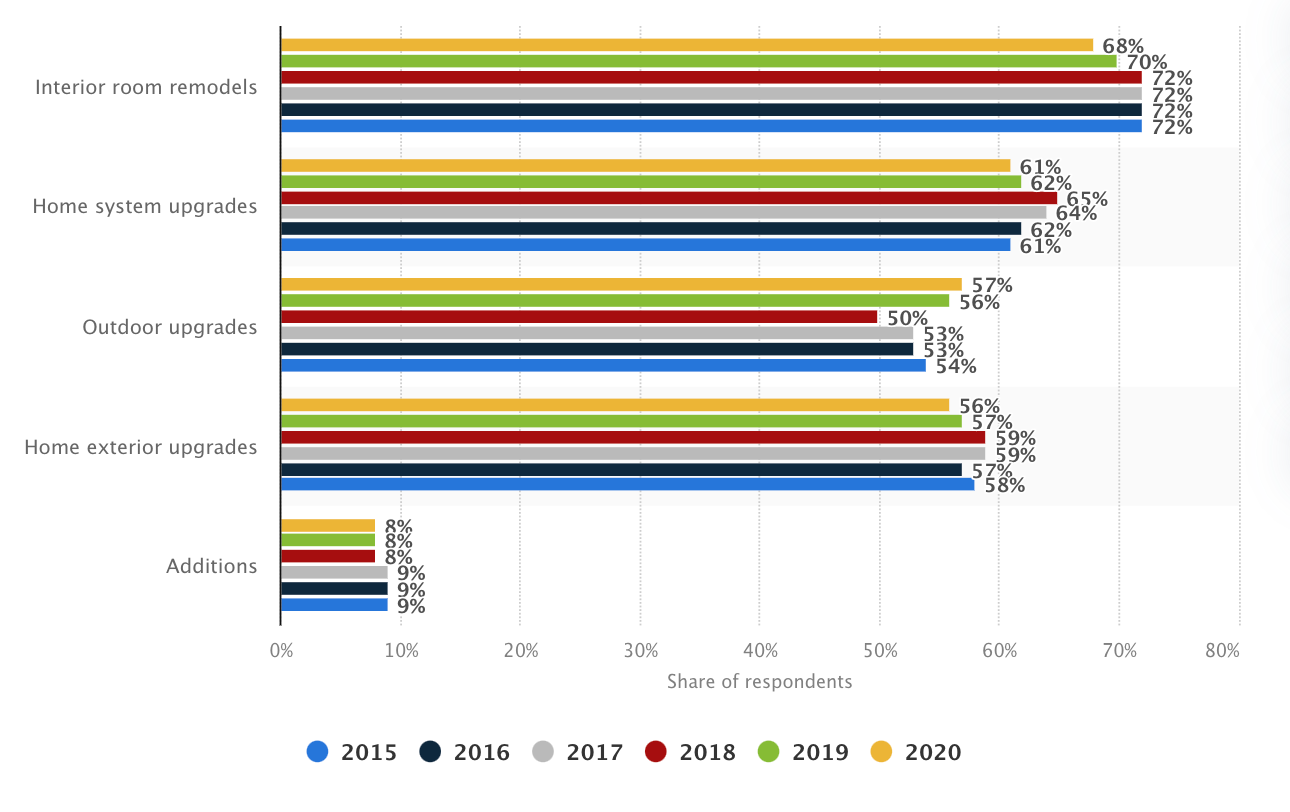
Frequency of renovations among homeowners

Home renovations are becoming increasingly popular among homeowners in the United States. According to Statista, from 2015 to 2020, the frequency of renovations among homeowners who renovated increased from 70% to 68%. This means that more and more people are investing in their homes and making improvements.

Source: Statistica

In 2020, the most common type of home renovation was exterior features such as painting, siding, and landscaping. Other popular projects included kitchen remodels and bathroom updates. If you want to make home improvements, read our propositions on how to do it in order to save money!

Change Outdated Fixtures

Transforming the look and feel of your home can be as simple as updating outdated fixtures. Replacing old light fixtures, door handles, and switch plates not only modernizes the appearance of a room but also serves as an effortless way to refresh its style.

Opting for contemporary designs, materials, and finishes can help you create a cohesive and aesthetically appealing atmosphere within your living space while additionally elevating it to current design standards.

This cost-effective home improvement approach enhances your experience in your own space and may increase the overall appeal to potential future buyers, making your home more marketable.

By investing in some simple updates, you can significantly impact, unify, and refresh your home’s overall aesthetic.

Refresh the Walls

There’s something incredibly transformative about the power of a fresh coat of paint, especially when it comes to the walls of your home. Simply applying a new coat in a neutral color can instantly brighten up the space, creating an inviting atmosphere that welcomes everyone who enters.

This aesthetic upgrade goes beyond just enhancing the visual appeal, as it also has the potential to positively impact the overall mood and energy of the room. Choosing a neutral color provides a timeless, versatile backdrop that seamlessly accommodates any style or décor preferences.

Ultimately, refreshing the walls with a paint update is an investment in both the beauty and functionality of your living space, so go ahead and let the magic of color transformation work its wonders.

Repurpose Furniture

Breathing new life into old furniture can be incredibly rewarding and environmentally conscious. Repurposing furniture not only allows you to show off your creative skills but also gives you the opportunity to transform items that might have otherwise been destined for a landfill.

By refinishing an aged piece, whether sanding down rough edges or repainting a worn surface, you can preserve its unique character while giving it a fresh, personalized look.

Alternatively, you can repurpose a piece by transforming its function within your home: a vintage suitcase could become a quirky side table, or an old sewing machine base could support a modern glass top, marrying vintage charm with contemporary design.

The possibilities for repurposing old furniture are truly endless, limited only by your imagination and resourcefulness.

Add Artwork

Incorporating artwork into your living space is a fantastic way to imbue the room with personality while simultaneously adding a dash of color and flair without breaking the bank. The creative process of selecting and displaying meaningful pieces allows you to express your individual tastes and passions, transforming your surroundings into a unique, curated environment that reflects your essence.

Moreover, the strategic use of artwork can draw the eye to specific areas, making smaller rooms appear more spacious or even conceal imperfections.

As you explore the myriad of possibilities in the art world, remember that there is no ‘right’ or ‘wrong’ choice – the key is choosing pieces that resonate with you personally, ensuring your space is filled with an aura of authenticity and originality.

Rearrange Furniture Pieces

Rearranging furniture pieces can drastically transform the overall ambiance of a space without burning a hole in your pocket. One of the most effective ways to give any room a fresh and rejuvenated feel is to simply move around your existing furnishings.

Playing with different layouts and experimenting with various configurations can dramatically change a space’s perception, even without investing in new items.

Mastering the art of organizing and reorganizing your furniture sparks creativity and allows you to reevaluate the room’s functionality, making it seem like you’ve stepped into an entirely new space.

So go ahead and channel your inner interior designer and discover the endless possibilities that await you with just a bit of rearranging!

Update Light Bulbs

Have you ever considered the significant impact that updating your lightbulbs could have on both your home’s lighting and your wallet? Making the switch from old incandescent bulbs to energy-efficient LEDs is not only a simple process but one that can yield numerous benefits.

LED bulbs are renowned for their brilliant and versatile lighting capabilities, elevating the atmosphere and aesthetics of any space. More importantly, they are highly energy-efficient and have a longer lifespan compared to traditional incandescent bulbs.

It means you’ll spend less on energy bills and replacements over time. If you’re looking for an easy way to enhance your lighting while making an environmentally conscious choice, upgrading to LED bulbs is the way forward.

Conclusion

In the end, revitalizing your living room doesn’t need to break the bank. With a few well-thought-out changes, you can create a look that is both stylish and inviting. By making these smart decisions, you’ll be able to upgrade your living room without sacrificing comfort or style.