What’s the Difference Between Milton and Crabapple?

Crabapple, Georgia, is one of the oldest parts of Fulton County, Georgia. but was originally part of Cherokee County, Georgia, as early as 1832.  

At a 5-way intersection intersection – Crabapple Road, Mayfield Road, Birmingham Highway, Mid Broadwell Road and Broadwell Road — the small and quaint, downtown Crabapple and also is called “Crabapple Crossing”.

In 2006, a portion of Crabapple was one of several communities incorporated into the new city of Milton. “Downtown” Crabapple now sits within the Milton city limits, while the surrounding Crabapple area is split between the cities of Roswell, and Alpharetta.

A Crabapple resident living in Milton can use Alpharetta city facilities and programs — and vice versa — without having to pay non-resident fees that can add up to 75 percent to the cost of participating, thanks to a regionalized park system established by the two cities.

History of Crabapple

Crabapple was part of the land contributed in 1857 to form Milton County, Georgia. The first permanent settlement at Crabapple was made in 1874, with the community taking its name from a crabapple tree near the original town site.

As a result of the Great Depression, Milton County was later absorbed into Fulton County in 1932. The historic heart of Crabapple is anchored by an historic brick building at the crossroads of Crabapple Road-Mayfield Road, Birmingham Road-Broadwell Road, and Mid-Broadwell Road.

Crabapple was once home to Cherokees Indians who lived in North Georgia and eventually early settlers who established farms in the area. One of those early settlers, James Dorris, operated a store from which he traded with the Indians, and he married a Cherokee woman. He and other Crabapple pioneers, including the Rucker family, have roads named after them.

The community itself got its name from the crabapple trees once grown in the area. But cotton became the dominant crop, and one 19th century settler, John B. Broadwell, developed a strain of high-yield cotton seed that was hugely successful.

Crabapple became part of Milton County, which later merged with Fulton County in 1932. By the early 20th century, several of the buildings at the Five Corners intersection had been erected, including a cotton gin next door to Milton’s Cuisine & Cocktails that is now occupied by a marketing consultant, and a two-story brick building now used by a design firm.

Crabapple Today

Eventually, metro Atlanta’s growth exploded northward to places like Sandy Springs and Alpharetta. That opening of Ga. 400 in the 1970s spurred additional growth along the western side of Alpharetta and eventually the Crabapple community in the 80’s and 90’s.

The city of Milton adopted a building code for Crabapple as a means of maintaining walkability within the downtown area. It requires residential and commercial development to undergo a design review to ensure building height, architectural styles, materials and parking placement are done in ways that encourage walking and are compatible with the area’s history.

Conclusion

Milton, GA, has often been a focal point for those seeking a serene yet dynamic lifestyle, with its perfect mix of pastoral scenes and modern amenities. The distinction between Milton and Crabapple can be subtle, but it’s this fine line that adds depth to the charm of the region.

While Crabapple offers the allure of Johns Creek’s amenities, downtown Milton exudes a quaint charisma that appeals to those who yearn for both tradition and progress. For prospective homeowners, Milton continues to entice with new construction opportunities that beautifully blend the past and the present.

In essence, whether one is drawn to the historic vibes of Crabapple or the evolving elegance of downtown Milton, both areas promise a harmonious balance of the old and the new.

Do Hardwood Floors Increase Home Value?

Every home is different, but one thing every house has in common – whether it’s a three-bedroom craftsman or a sprawling colonial – is flooring.

Of course, floors don’t always get a lot of credit when people are considering their favorite styles of architecture, but there’s no escaping that they play one of the most prominent roles in any house. They’re literally in every single room.

So, it shouldn’t come as a surprise that many homeowners eventually consider how to spruce theirs up a bit. Hardwood is easily the most popular consideration, especially when the owner is thinking about selling soon.

But do hardwood floors actually increase a home’s value?

Are Hardwood Floors Worth It?

The average cost for hardwood floors is about $4-6 per square foot, plus another $4-8 per square foot for installation. Depending on how many square feet you intend to cover, it could also take a few days or even a week before installation is complete.

Still, every year, countless homeowners will have them installed because they really do look amazing.

As CNN reported, hardwood floors can also increase home value by 3-5%. This makes them a very attractive prospect for anyone looking to sell their house in the near future. You can even go one step further and install heated hardwood floors in your home, further increasing your property’s value.

However, even if you don’t plan on moving any time soon, hardwood floors may still be a good investment. Interestingly, when the National Association of Realtors (NAR) conducted their 2017 Remodeling Impact Report, they found that after homeowners install hardwood floors:

“Eighty percent of homeowners have a greater desire to be home since completing the project, 68 percent have an increased sense of enjoyment when they are at home, and 79 percent have a major sense of accomplishment when they think of the project.”

So, the value of these floors goes far beyond the asking price for your house.

3 Factors to Consider About Hardwood Floors and Home Value

With that being said, don’t rush into installing hardwood floors. Even though they’ll improve your home in more than one way, it’s still a big decision.

To make sure it’s the right one, consider these three factors before proceeding.

1. Not All Hardwood Floors Are the Same

As we touched on at the beginning, the average cost for hardwood floors per square foot can fluctuate a bit. The main reason for this fluctuation is the type of wood you choose.

For example, using pine might only cost you $3 per square foot, whereas Brazilian walnut, mahogany, or tigerwood could run you as much as $14.

Also, keep in mind that hardwood floors will only contribute to the value of your home if they’re well-maintained. So, if you already have hardwood floors, don’t expect them to boost your asking price if they’re in poor condition. In fact, that might actually do more harm than good, as potential buyers will need to factor in the cost of replacing them.

Fortunately, the aforementioned NAR report points out that refinishing hardwood floors produces a similar amount of satisfaction in homeowners as installing them for the first time. Therefore, it might be worth it to have yours redone even if you won’t be selling for some time.

2. Other Updates May Be More Valuable

The NAR report also concluded that, while hardwood floors are almost always a valuable addition to any home, there are plenty of other projects that tend to add more to a home’s value.

For example, in terms of both “appeal to buyers” and “likely value to home for resale”, the top three projects were the same:

In terms of projects that are likely to be more valuable if you sell, adding a new bathroom or master suite also beat out “new wood flooring.”

You also need to think about your unique home. Maybe it has certain weak points that you should address before adding hardwood floors or any of those other upgrades we just listed.

There is a long list of home-improvement options that homeowners can use to improve everything from perceived square footage to curb appeal to energy efficiency.

If you’re hoping to sell in the near future, it’s worth considering where your money might be better invested before putting it toward hardwood floors.

3. The ROI of New Hardwood Floors

It’s extremely important that you consider the return-on-investment (ROI) of any home renovation, especially hardwood floors.

As we’ve already touched on, new hardwood floors could increase your asking price by as much as 5%.

However, the keyword in ROI is investment.

Again, if you choose a cheaper material, your investment will be less, but the returns you can realistically expect will be, as well.

ProBuilder puts the ROI of hardwood floors at 70-80%. So, if you spend $15,000 on installing them, you could expect a little over $10,000 back when you sell – maybe more. Depending on how much you paid for your house, that could easily add 5% to its price.

That’s exciting, but you have to keep the actual “investment” in mind when you’re deciding whether or not hardwood floors are worth it. Look at how much you have in your budget and then the estimated ROI it would produce when you decide to sell. You might find it’s better to spend the money on something else or simply keep it in your savings.

Hardwood floors vs LVP

While the return on investment is attractive for hardwood flooring, you may be able to achieve a similar or higher ROI when installing LVP (luxury vinyl plank) flooring, which can resemble hardwood.

For example, a theoretical spend of $5,000 on LVP flooring might increase the value of your property by $10,000 (a 200% ROI). It’s important to consider the overall value of your home before deciding the % of spend on flooring.

Speak to an Experienced Real Estate Agent About Improving Your Home’s Value

Few would argue that hardwood floors don’t look incredible.

Most would also agree that there’s a certain allure to them, as well. People simply associate hardwood floors with greater value.

Nonetheless, it’s a bit more complicated than that.

If you’re thinking about selling your home in the near future, it makes sense that you’d consider spending some money to increase its price. It’s just that hardwood floors aren’t guaranteed to be your best option.

At SimpleShowing, we’d be happy to connect you with an experienced real estate agent who can help you with this decision. Best of all, they only charge a 1% commission when you sell.

Contact us today and we’ll explain exactly how it works.

Final Thoughts

Wood floors have long been a sought-after feature in homes, and as our understanding of home valuations has evolved, their significance in resale value has become clearer. Whether it’s the timeless elegance of solid hardwood flooring or the versatility of engineered hardwood, installing hardwood flooring can be a prudent investment. While laminate flooring offers a budget-friendly alternative, there’s no denying the unparalleled aesthetic and durability that solid hardwood brings to a home.

Hardwood flooring costs can indeed be an initial concern for homeowners. However, when considering the long-term benefits and the potential increase in a home’s worth, the expenditure often justifies itself. If you’re contemplating whether to install hardwood flooring, remember that while trends may come and go, the allure of wood floors in enhancing a home’s appeal remains steadfast.

In summary, adding hardwood flooring to your property is not just about aesthetics; it’s an investment that could significantly boost the resale value of your home. Whether you opt for solid or engineered varieties, the charm and longevity of hardwood are undeniable and can make your home stand out in a competitive real estate market.

What is Feng Shui?

Feng shui has been practiced in China for thousands of years, and its goal is to create balance and harmony by maximizing the flow of qi, or energy. Some people believe that feng shui can also improve mental health, and there is some scientific evidence to support this claim.

Feng shui practitioners believe that our environment can impact our mood and wellbeing, and that by making small changes in our living spaces, we can encourage the flow of positive energy. This may help to reduce stress levels and promote a sense of calm. While feng shui is not a cure-all, it may be worth considering if you are looking for ways to create a more peaceful and harmonious home.

One study found that feng shui practices increased self-esteem and feelings of control in a group of Chinese women with postpartum depression. Another found that feng shui was ineffective in treating symptoms of ADHD in children, but it did improve their daily functioning.

There are many different feng shui principles, but some common ones include decluttering your space, choosing calming colors, and adding plants. If you’re interested in trying feng shui, there are plenty of resources available to help you get started.

5 Elements of Feng Shui

  • Water: Abundance, prosperity, insightfulness, wisdom
  • Wood: Creativity, new life, growth, intuition
  • Earth: Grounding, security, stability, balance
  • Fire: Passion, enthusiasm, boldness, expressiveness
  • Metal: Clarity, focus, logic, critical thinking

Some people believe that a home must have each of these elements and that the elements need to be balanced to promote success and advancement at work and in life.

Feng Shui Tips for the Home

Strategic Placement of Mirrors

According to feng shui experts, mirrors are thought to bounce energy around the bedroom, which may result in restlessness and amplify worries.

“The front door is our connection to the world,” and by hanging a mirror directly opposite the entryway, you risk losing good vibes. The point of a mirror is to reflect positive energy so putting one in this spot will “push away” the nice flow that’s trying to come into your home. Instead, place your mirror off to the side.

It’s also important not to hang a mirror on the wall opposite your bed. Feng shui consultants say this can promote the intrusion of a third party into a couple’s relationship and possibly encourage infidelity.

Create an Open Space for Entryways

Hang a mirror on the wall to help open smaller spaces, symbolic of opening the space for more opportunities to enter into your life. For darker entryways, install a light that illuminates it so you can see more clearly.

Place the Stoves, Couches and Desks in a Commanding Position

A commanding position is thought to help you feel more secure and in control and involves facing the door to the room, which is where the stove should be. In this position, you can see the door when cooking, with the best position being diagonal from the door versus directly in line with it.

It’s not always practical to move a stove, so, if you can’t see the door while cooking, consider putting up a mirror that allows you to see the door in the reflection.

Choose Relaxing Paint Colors

According to feng shui, warm colors reminiscent of skin tones—such as cream, peach, beige, yellow, coral, tan, and cocoa—are ideal on bedroom walls because they’re thought to be soothing. Light blue, green, and lavender are cooler colors that are also considered restful and conducive to sleep.

Too many cool colors, such as grays or stark whites, are believed to interfere with relaxation. Aim for 50% warm skin tones and 50% cool colors for good balance.

Strategic Bed Placement

The ideal bed placement allows you to see the bedroom door while you’re in bed without being directly in front of or in line with it (in the commanding position). Having a view of the door without being too close gives a sense of safety and promotes relaxation and good sleep according to feng shui.

In contrast, some believe that placing a bed near a door—where energy is rushing in and out—negates the vibe you’re trying to create in the bedroom.

The head of the bed should be against a wall, but not under a window which could allow qi to flow outside and cause restless sleep. If there are two people sleeping in the bed, there should be equal space on both sides so each person can get into and out of bed easily. It’s also best not to place a bed under a structural or decorative beam or ceiling fan. Bummer – no fans!

Dual/Double Furniture

Duplicating or mirroring furniture is symbolic of balance. For example, two identical nightstands, one on each side of the bed.

Keep The Toilet Seat Down

This one’s pretty straight-forward! The toilet’s opening is like a drain, and exposing it can mean your home’s good fortune might escape.

“Not only will shutting it keep the energy stronger in your bathroom, but it’s also more pleasing to see when you enter the room,” says Dana Claudat, an interior designer and Pyramid School Feng Shui consultant.

Green is Good, But not in the Bedroom

A bunch of potted plants in this space can rob the room of its positive atmosphere, and might even affect your relationship if you’re sharing the space with a partner, according to Feng shui experts. Since plants are actively growing (unlike dead roses in a vase), they aren’t giving off restful energy that’s needed in the bedroom.

Sound, scent, and light are important for good feng shui, so you can add music, chimes, and candles or firelight in the bedroom. But save the plants and greenery for the living room and patio.

Avoid mixed flooring

Choosing a floor design that’s continuous throughout the house is good practice as this gives the place strong, supportive qi, according to Feng shui experts.

When each room has different flooring, the energy is dispersed and weak.

Conclusion

The ancient feng shui practice is much more than just a decorative approach—it’s a philosophy rooted in creating a mindful and peaceful home environment. Those who practice feng shui consistently often report feeling a tangible difference in their living spaces, attributing positive changes to the various feng shui techniques and strategies they employ. By understanding and implementing the principles of feng shui, from the balancing of the five elements to selecting the right colors and objects, one can achieve harmony and a rejuvenated sense of well-being in their personal spaces.

Moreover, for those serious about fully integrating these principles into their homes, seeking the guidance of feng shui masters can be a transformative experience. These professionals, often recognized as a certified feng shui consultant or a feng shui master, have spent years mastering the nuances and intricacies of this ancient art. They can pinpoint bad feng shui areas in one’s home and offer tailored solutions to address them.

If you ever feel that something is amiss in your living environment, don’t be quick to dismiss the power of feng shui. Just as the wood element can signify growth and vitality, a simple change in feng shui might be all you need to usher in a fresh wave of positivity and balance in your life. Dive deeper, explore the richness of this tradition, and let your home be a haven of tranquility and prosperity.

Quick and Easy Tips for Organizing Your Small Flat or Apartment

Whether you can’t afford a bigger home or you seek a minimalist lifestyle, it’s very widespread for people to live in small apartments these days. Big cities such as New York also offer a wide range of small apartments, and if you live in one, you know that every square foot counts.

How can you make this tiny place functional and comfortable? You need to be creative and learn about these quick and easy ways to organize your small space. Keep on reading to find out our top tips for small living areas.

Top Tips to Organize Your Small Apartment

Invest in Dual-Function Furniture

Dual-function furniture can help you be more creative with limited space without taking up too much of your floor space. Are you short on cash? You can easily get fast cash loans online same day deposit to invest in furniture that may be utilized for more than one purpose. For instance, you can purchase an ottoman to serve as an extra seat, a coffee table, or additional storage space while reducing your clutter. It doesn’t mean you only need to invest in new dual-function furniture. You may think of ways to adapt existing pieces of furniture for additional purposes. Your small old bookcase may also serve as a nightstand.

Declutter the Living Space

There are several options to avoid clutter in this area. Firstly, you can hang organizers for your shoes inside the closets. This trick will free up some space. There is plenty of room inside your closets, which can be utilized for shoes.

Secondly, you may attach hooks to the wall in the hall. Remember that your clothes and accessories, such as bags or purses, may take up quite a lot of space. If you install hooks inside the front door, you will not only free space but also have a special spot for these things.

Moreover, you may buy some space-saving corner shelves and put them throughout your flat to maximize storage space. Finally, get rid of things you don’t need anymore. Don’t throw them away but donate these items to charities or homeless shelters.

Make Extra Space in Your Bedroom

Another useful strategy is to invest in a bed with built-in storage space. If your apartment is tiny and you don’t have room for a separate wardrobe, such a bed may help you get extra storage without buying a cabinet or dresser.

Choose a bed with built-in drawers or an Ottoman bed with additional storage room under the mattress. Such beds can be more expensive than regular ones, so you may also decide to use slide boxes underneath them if you have a raised bed.

Are you planning to rent your first apartment? It can be one of the most daunting tasks unless you know the secrets of how to avoid stress during this process. For instance, getting a Murphy bed may help you free up some space in your bedroom.

Get Extra Space in Your Kitchen

Another important tip is to maximize your space in the kitchen. Your pans and pots may be hung on the wall hangers. It’s a great tactic for small flats without enough room for cabinets and cupboards. If you don’t have where to put your cooking supplies and storing utensils, you may simply hang them up vertically.

Even if you aren’t in the mood to drill the holes in the kitchen walls, you may utilize screws instead. Moreover, now your pans and pots can be accessed faster. Spice racks can also be mounted to the wall.

It will save some space for various ingredients if you don’t have many drawers. Why don’t you use the space above the fridge as well? This unutilized room can be suitable for additional shelves or a wine rack.

Separate Your Space into Zones

Do you have an open-plan area in your flat? Then you need to define separate zones. Smart zoning can really make a difference. You may define the seating zone with a small coffee table or a rug. You may use the furniture in the same way.

The bedroom zone can be defined with cubby hole units. Besides, they are useful for storage. Separating your home into zones works great for studio apartments. After all, you actually need separate areas for eating, working, and sleeping to feel comfortable.

Do a Frequent Declutter

Every person wants to live in a tidy and clean space. Having a small apartment to deal with may seem to be easier to maintain.

However, if you don’t declutter on a regular basis and stay on top of things, you may easily have too many items in your home without having enough room for all of them.

Hence, it’s important to do a regular declutter and review your belongings on a daily basis. Put each item where it belongs to ensure you have only essential items around.

Is It Possible to Fit Everything in a Small Apartment?

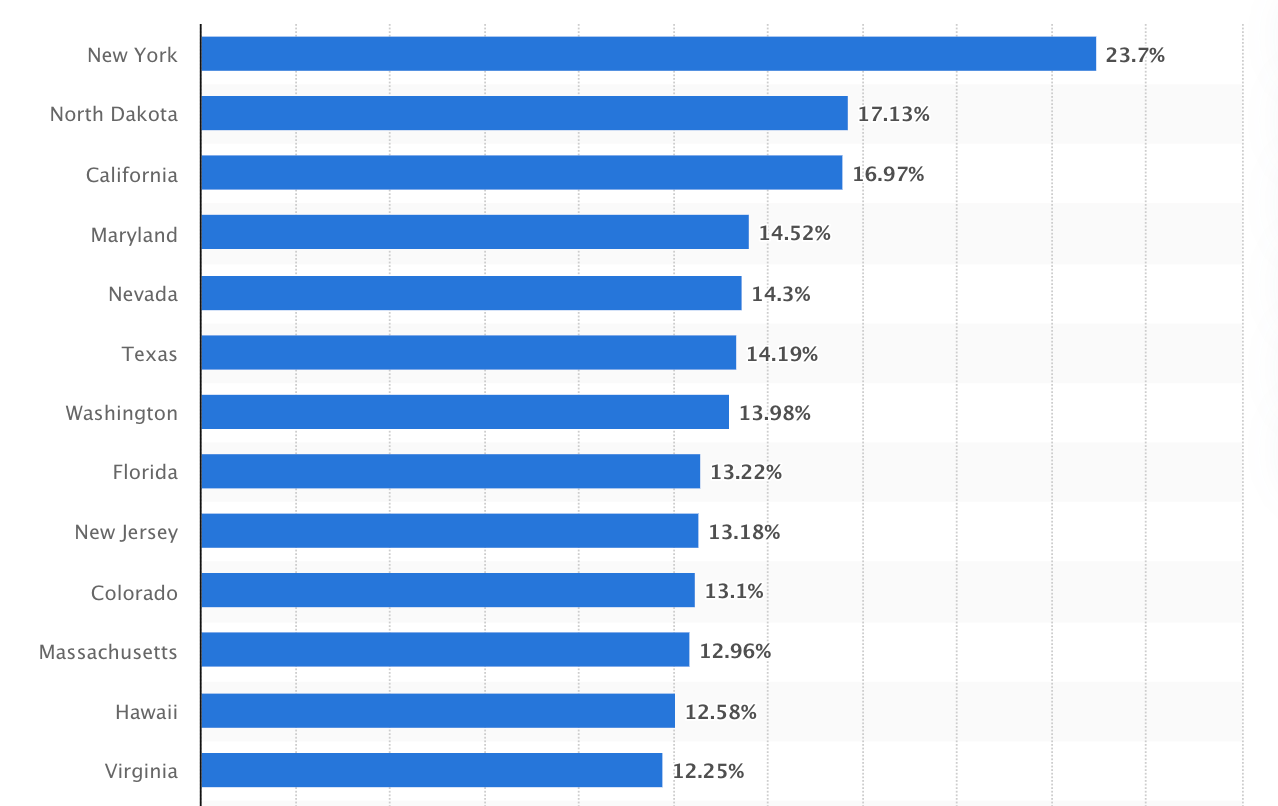
The reality of modern life is that plenty of people are living in tiny living areas without having the luxury of space for everything. Speaking of the share of the population living in apartments in the USA in 2019, about 24 percent of New Yorkers lived in them, 17 percent of the population of North Dakota, and almost the same number of people from California.

Source: Statistica

Just six percent of New Mexican residents lived in apartments, though. Statistics show that residents of New York had to earn 30.76 U.S. dollars an hour or more to be able to afford the rent of a two-bedroom apartment in 2019.

Are you willing to organize your small flat? In reality, you can find enough space for everything you need without having too much space.

Make certain every item has a home in your flat, even if you live in a compact space. After all, you can’t afford to have additional room for your clutter.

The Bottom Line

In conclusion, it doesn’t consume much time to organize your home and have a minimalist lifestyle, especially if you live in a tiny apartment. Follow our tips to turn your small space into a functional, comfortable living area.

What Are My Options If I Want To Sell My House Fast?

Selling a house can take time and effort. However, it can be pretty seamless if you have an effective selling strategy. You need to meticulously assess the market, create a plan, and prepare for the selling process before executing it. The good thing is that you can have several options for selling your house, which makes the process frictionless. This article lists and discusses these options to help you sell your house fast:

Find Companies That Buy Houses

Some companies buy houses from sellers and add them to their real estate inventory. These companies can be your go-to option if you’ve asked yourself, ‘How can I sell my house fast in Orlando, Miami, or Tampa in Florida?’ It can be any other state where you want to get your house on the market for a shorter span. These companies usually operate locally and give a fair cash offer that matches your house’s value.

However, they have criteria that your house must meet before they buy. Therefore, it’s best to know what they want, the quality that resonates with them, your house’s condition, and whether or not it appeals. Notably, some of these firms buy homes as-is, meaning you don’t have to do any repairs on your house, no matter how dilapidated it might be. A quick house-purchasing company can bring the deal to a close within only a few days, which is fast enough.

Find The Right Real Estate Agent

Realtors can be an easy route to selling your home quickly. They’re usually registered, legally operate within localized areas, and can offer much-needed expertise to sell your house quickly. However, you should know that you may have to pay a nominal service fee, usually a percentage of your house’s value. That shouldn’t bother you much if it means getting a quick buyer at a reasonably high price. An excellent real estate agent should have the following attributes:

  • Professionalism: An ideal real estate agent should be honest, respectful, and punctual to show professionalism. They should treat you and other involved parties with utmost professionalism.
  • Experience: A real estate agent should have the right experience with real estate dealings and a track record of success to help you sell your house quickly.
  • Attention to Detail: A thorough understanding of all real estate financial and legal aspects makes an excellent agent. They should be detail-oriented and be able to handle transactional operations with ease.
  • Excellent Communication and Negotiation Skills: An ideal real estate agent should have enviable communication prowess and be an excellent communicator. That’s handy in ensuring that you score better house prices.

These attributes make a real estate agent perfect at their job and can help you grab the best house deals and sell your home highly.

List On The Multiple Listing Service (MLS)

A practical alternative to working with house purchasing companies and real estate agents can be listing your house with the MLS. This service is ideally a database of homes currently on sale and constitutes a collection of local databases from areas all over the country.

You’ll need to list your house with a real estate agent. You’ll need to get pictures taken and all essential information gathered before price comparisons happen. Then, go to the MLS database listing, and a tag should display information about your house as you wait for buyers to storm in. This option can take quite a little while, depending on how the market is. However, it should go beyond 75 days on average.

Consider For Sale By Owner (FSBO)

Although not as quick as other house-selling options, for sale by owner (FSBO) can be more feasible. However, it’d help if you were adequately versed with this process as you may need to match virtually every attribute a professional real estate agent has. The advantage is that you may not need to pay agent commissions and cater to other costs that might increase your house prices beyond the competitive levels.

You must ensure you correctly price your house and market the property effectively. And essentially, you should be willing to negotiate for the best prices, sometimes compromising if it doesn’t evaluate your house’s worth. If possible, you can try listing your house as an FSBO seller on MLS if that seems more straightforward. However, using the other house-selling options should be best if you don’t know your way around this FSBO option.

Conclusion

Selling your house can be more seamless if you understand the options you can use. Most of these house-selling options let you sell your house quickly and probably at higher evaluations. However, not every route can guarantee that, so you should assess which option works best.

Average Realtor Commission in the US

In the United States, real estate commission generally average a TOTAL of 5%–6% of the home’s sale price. The total commission is typically split between the listing agent and the buyers agent. However, both fees are usually paid by the seller. This article describes how you could potentially save 1-3% in overall commissions paid, depending on how you structure your listing agreement and which brokerage you choose to list with.

First, agent commissions can vary by region and by state. For example, some parts of Florida have 5% commission across the board, while neighboring states in the Southeast rarely see commissions lower than 6%.

Unfortunately, real estate commission is generally the biggest expense you’ll face when you sell your home. On average, U.S. home sellers spend $20,900 on realtor fees on average. For example, if the average home is $380,000 and the average national commission is 5.5%, this yields a commission of $20,900.

Luckily, you can always negotiate commissions, which could mean saving thousands of dollars. For example, if you sold a $400,000 house, working with a 1% commission realtor like SimpleShowing, you would save you $8,000 compared to the 3% listing fee many seller’s agents charge.

How much is the average real estate commission?

Across the state of Texas and Southeast states (Georgia, Florida, Carolinas, Tennessee), we’ve observed typical realtor commission rates were in the range of 4.50% to 6.25%.

These rates only represent a range. The median is closer to 5.5%.

Most brokers and agents will claim that commission rates are not negotiable. However, this is NOT true. If you were to visit a car dealership these days, the car salesperson might claim that the price of the vehicle on their lot is not negotiable but that “the sticker price is what you pay”. If you’ve bought a car in the last 10 years, you know that this is not true. Real estate commissions are similar.

Commission rates aren’t standardized in any official capacity and you can always negotiate realtor fees with your Realtor, or list with a discount brokerage that offers pre-negotiated low commission rates.

Get an experienced agent and sell for 1%

SimpleShowing operates throughout the Southeast and we also have partners in other states.

Average realtor commission for listing agents

According to our research typical commission rates for listing agents nationwide are in the range of 2.26% to 3.17% (2.720% on average).

For a home sold for $355,852 (which is around the national median home value), this translates to $8,042-$11,281.

We also found that listing commission rates can vary by as much as 40% depending on where you live. Here’s how buyer’s agent commission rates can vary:

According to Clever Real Estate, buyer’s agents typically collect 2.19% to 3.17%, or 2.65% on average. This translates to $7,793-$11,281 in buyer’s agent commission costs for a home sold for $355,852.

These figures represent the national average, though we found that buyer’s agent commission rates varied by 0.88 percentage points depending on which state you live in — which is a significant cost difference.

Average real estate commission by state

Commission rates can vary dramatically depending on where you live. Clever Real Estate found that average real estate commission rates by state can vary by as much as a full percentage point. For example, in Massachusetts, rates were 4.84%. Live in Ohio? You could pay up to 5.81%. On most home sales, that’s a difference of thousands of dollars!

Keep reading to see average commission rates by state. But remember that, although these fees are typical for each state overall, they’ll likely vary between cities.

Also, every brokerage sets its own rates, and an agent may quote you a higher or lower listing fee based on your home’s estimated sale price and how quickly they expect it to sell.

Find your state below to learn more about average commission rates near you.

State
Rank
Rates
1
4.85%
2
4.91%
3
4.96%
4
4.97%
5
4.99%
6
4.99%
7
4.99%
8
5.02%
9
5.11%
10
5.12%
11
5.12%
12
5.12%
13
5.12%
14
5.12%
15
5.13%
16
5.22%
17
5.24%
18
5.30%
19
5.36%
20
5.36%
21
5.36%
22
5.36%
23
5.40%
24
5.41%
25
5.43%
26
5.44%
27
5.44%
28
5.44%
29
5.44%
30
5.44%
31
5.44%
32
5.44%
33
5.44%
34
5.52%
35
5.53%
36
5.59%
37
5.59%
38
5.59%
39
5.60%
40
5.63%
41
5.65%
42
5.66%
43
5.66%
44
5.66%
45
5.66%
46
5.66%
47
5.66%
48
5.67%
49
5.72%
50
5.76%
51
5.81%
National Average
N/A
5.37%

* Data compiled by Clever Real Estate. Due to insufficient data, commission rates in these states were inferred from regional averages.

How do realtor fees work?

When you sell a home, there are typically two realtors involved: the buyer’s agent and the listing agent. As the name implies, the buyer’s agent represents the home buyer, and the listing agent represents the home seller.

The listing and buyer’s agents get paid a portion of the home’s price at closing, which is called the real estate agent commission — they are also referred to as realtor fees.

Realtor fees are not typically paid upfront — instead, they are factored into the sales price of the home and are only paid out when the home’s sale is finalized.

Here’s how a realtor commission rate of 5.37% — which we found to be the national average — breaks down in terms of real dollars when you sell your house:

Home sale price
Real estate commission cost*
$50,000
$2,685
$150,000
$8,055
$350,000
$18,795
$700,000
$37,590

* Commission costs are calculated assuming a commission rate of 5.37%.

How realtor fees are split between the listing and buyer’s agent

Real estate commission rates are commonly talked about as a single percentage (e.g. 5%). However, this figure is actually split to cover the cost of both the buyer’s agent commission and the listing agent commission.

For example, you pay a total of 5% in real estate commission fees, then each agent would typically get around 2.5%:

  • Listing agent commission: 2.5%
  • Buyer’s agent commission: 2.5%
  • Total realtor commission: 5% (2.5% + 2.5%)

Commissions are often split evenly between the buyer’s agent and the listing agent. However, this can vary based on what is customary in your area.

We found that depending on what region you live in, commission splits could range from 49.7-50.3% to 52.2-47.8% for the listing and buyer’s agent respectively.

Who pays realtor fees?

Home sellers pay real estate fees for both their own agent, and the agent representing the home buyer.

Why would home sellers pay for the buyer’s agent? Well, there are a couple of ways to look at it:

Buyer’s agent commission is a marketing cost for your home

  • Almost all buyers — nearly 90% — work with an agent to help them buy a home.[1]
  • These agents are more interested in showing homes to their clients that offer a competitive buyer’s agent commission.

The buyer actually is paying for this cost, because it’s baked into the sale price

  • Buyer’s agent commission is factored into the sale price of the home.
  • If this commission wasn’t offered, the home seller could lower their listing price while netting the same amount.
  • So you can argue that the cost is actually passed onto the home buyer.

Why are real estate agent commissions so expensive?

Realtor fees are a huge cost when you sell your home, so it makes sense to wonder why it’s so expensive and if it makes sense to pay so much.

However, there are some justifiable reasons that agents charge what they do for their services:

  • On average, agents help you sell your home for more money than if you were to sell without the use of an agent
  • Agents don’t get to keep all of the commission they earn from a home sale — they split it with the buyer’s agent and their brokerage
  • Realtors take on risk by covering home-marking costs upfront

On the other hand, most agents also spend a lot of money on things that don’t offer customers much direct value. Paying for TV ads and billboards helps agents generate new business, but it doesn’t help you sell your home faster or for more money.

Instead, companies like Clever help realtors reduce their marketing costs, which allows them to charge lower rates while providing the same level of service.

Never pay the full 6% commission again

The “standard” 6% commission predates the internet, when realtors had to work harder to find clients and potential buyers.

At Clever, we connect top-rated real estate agents with sellers like you at zero upfront cost to the agents — so they’re willing to pass savings along to you.

You’ll get full-service support for pre-negotiated listing fees of just 1% or $3,000, saving you thousands!

Real estate agents help you get more for your home

In addition to helping you navigate your real estate transaction, one of the most important things that agents do is ensure that you get the highest possible price for your home.

Studies have shown that homes sold by real estate agents net 5.82% more than comparable homes sold without an agent.[2] With that in mind, it’s fair to say that many home sellers come out ahead by working with an agent, even after paying realtor fees.

» MORE: How to find the best real estate agent to fit your needs

Most real estate agents have to share their commission with their broker

Most agents don’t get to keep all of their commission when a home sale closes. A portion of their commission is paid to their principal broker— which are real estate professionals that supervise real estate transactions done by agents that aren’t qualified to process deals independently.

On average, a broker keeps 10- 12% of the agent commission.

For example, if a listing agent sells a home for $300,000 where the total commission rate is 6%, they may actually walk away with $15,000 not $18,000.

Listing agents take on minimal upfront cost or risk to list your home

Real estate agents take on some risk when they agree to help you list your home, which factors into the cost of realtor fees. However, these fees are not significant, despite what they might claim.

By far, the biggest risk is time investment from the agent. In terms of other costs, such as marketing fees are neglectable compared to the commission they receive. For example, the agent may spend $300 on property photos but earn $20,000 in commission.

Very rarely do agents spend money on “advertising” beyond simply listing the property on the MLS. And MLS syndication fees are covered by the broker, not the agent.

Another potential cost is staging fees. These fees can be substantial, if covered by the agent. However, less than 20% of homeowners stage their property. However, if the agent pays for staging fees and fail to sell your home, they don’t collect any commission, aren’t compensated for their time, and don’t recoup any of the marketing costs they incurred. Most agents will either ask for the homeowner to pay for a portion (or all) of the staging costs.

Factors that influence commission rates

In addition to regional trends, there are a number of factors that influence how much you end up paying in realtor fees when you sell your home.

Most of the factors that affect how much an agent might charge for a given home sale stems from the fact that realtor fees are negotiable. Agents will lower or raise the amount they charge depending on:

  • The home
  • The client
  • The current state of the real estate market

In terms of obtaining a better commission rate as a homeowner/seller, a “repeat client” discount seems to be the most common reason that real estate agents agree to accept lower rates. So, if you buy and sell homes regularly (particularly as an investor), you certainly have a better chance of getting a discount on agent fees. That said, most people only sell a property once every 7 years. Keep reading to hear other ways to save on commissions.

How home value affects average real estate commission rates by state

Another condition that can lead to lower fees is the listing price. Realtors are often more willing to accept lower commission rates for homes that have high values. Particularly when the home value is 2-3x the average price in the region.

A study by Clever Real Estate found that commission rates were generally lower in expensive markets.  For example, commission rates across the states with the highest median home values were markedly less than the national average of 5.37%. This may also be influence by greater competition in large, expensive metros.

So why would high home values cause agents to lower their rates? Mainly, it’s because the work that agents have to do to sell homes is not significantly different for high and low value homes.

Agent’s earn commission based on the home’s selling price, so they stand to earn a lot more money selling higher value homes — relative to their effort and time investment — than lower value homes.

Furthermore, even if they have to spend more time or money marketing a high cost home, it may be worth it for that agent.

Consider the following example, where the listing agent earns 57% more per hour selling a $500,000 home than they would selling a $250,000 home, even after factoring in the marketing costs and time commitment:

Realtor fees are by far the most expensive part of selling your home. By lowering the rate you pay by just a small margin, you can save thousands of dollars when you sell.

For real estate agents, having consistent streams of clients is crucial to their livelihood. After all, real estate agents typically only process around 12 real estate transactions per year— meaning that gaining a deal has a large impact on their income.

To agents, there is more value in having reliable repeat business, than there is in maximizing their commission they earn on any single deal. Because of this, agents often lower rates to attract clients that are likely to use them for future transactions.

Can you negotiate Realtor commission fees?

There are no laws or regulations in the U.S. dictating commission rates, so agents may be willing to negotiate lower rates depending on the type of transaction, the required services, and the relationship. Some agents will also lower their commission fees if they are representing both the buyer and the seller in a home sale.

Keep in mind that a lower commission is not necessarily the best option. Part of the agent’s fee covers the marketing budget and other business expenses for the home sale. A smaller budget could mean your agent can’t properly market your home. So while it’s important to consider an agent’s fee, it’s also important to consider the value you will be receiving.

How to save big on commission fees

If you want to save on real estate commission, you have a few different options:

Try to negotiate a discount yourself

Realtor commissions are always technically negotiable, and you can always ask your agent for a discount.

If you’re selling an expensive home in a hot market — or if you’re planning to buy and sell with the same agent — you may be able to negotiate a small discount.

However, many realtors won’t budge on their rates for individual customers.

Sell your home for sale by owner (FSBO)

Another way to lower realtor commissions is by cutting out the listing agent altogether and selling your home DIY. However, we don’t recommend this route for most sellers.

Most FSBO sellers end up selling their homes for less than market value, which can drastically limit your actual savings. And selling on your own is a time-consuming process that can open you up to substantial legal and financial risks.

List for 1% with SimpleShowing

We offer low fees and full service in Texas, Florida and Georgia. Visit our site to learn more or to speak to a local agent.

Conclusion

In the evolving landscape of the real estate industry, understanding the nuances of real estate agent fees is vital for both buyers and sellers. The seller’s agent typically shoulders a significant portion of the marketing and outreach, ensuring that the property captures the attention of prospective buyers. On the other hand, the buyer’s real estate agent plays a pivotal role in ensuring their client finds a property that fits their needs and budget, guiding them through the complexities of property acquisition.

Dual agency, where one agent represents both the buyer and the seller, presents its own set of challenges and considerations when it comes to commission distribution. The balance between ensuring fair compensation for the realtor, while also providing value to both parties in the transaction, underscores the intricacy of this arrangement. It’s always recommended that parties involved understand these dynamics fully before proceeding.

To wrap it up, while average realtor fees can vary based on location, property value, and the agents involved, a grasp of these numbers and how they function in the broader context of the sale process ensures informed decision-making. Whether you’re a seller seeking the services of a seller’s real estate agent or a buyer looking to secure a new home, clarity on commissions is a cornerstone of a smooth real estate transaction.
How Much Does it Cost to Flip a House?

Are you ready to dive into the exciting, sometimes nail-biting, and always entertaining world of house flipping? In today’s post, we’re going to answer the million-dollar question (or at least we hope it’s not a million dollars): how much does it cost to flip a house?

Cost to Flip a House

Flipping houses is a bit like going to Vegas – sometimes you win big, and sometimes you lose your shirt. But don’t worry, I’ve got you covered with tips and advice on how to flip a house without spending a bundle of money.

Let’s talk about the most significant aspect of house flipping costs: renovation and rehab costs. These can vary greatly depending on the property’s condition and your desired after-repair value (ARV). Cosmetic repairs, such as paint and flooring, may be relatively affordable. However, if structural or mechanical issues arise, you’re budget can evaporate quickly. Labor costs can add up when hiring contractors for extensive renovations, so it’s essential to budget accordingly.

Demolition and debris removal

Flipping a house means major renovation work, and that means money – lots of it. Let’s start with everyone’s favorite: the demolition phase. You may find yourself living out your childhood dreams of being a superhero, smashing through walls with a sledgehammer like the Hulk. But beware, with great power comes great responsibility (and a great hole in your wallet).

This will normally cost anywhere from $2,000 to $5,000. To save money, rent a dumpster and buy a sawzall. With a little sweat, you could perform the demo on your own for less than $500.

Foundation repairs

Next up, it’s time to address the foundation and structural issues. Fixing these bad boys is essential when it’s time for the buyer’s inspection. Foundation repairs can cost anywhere from $5,000 to $10,000. And if you discover structural issues? Well, let’s just say you might want to start practicing your deep breathing exercises. Those can cost up to $30,000. Our advice is to avoid homes that have foundation or structural problems unless you’re truly a home flipping veteran or have deep experience in construction.

New roof

It’s common for a home flip project to need a new roof. Luckily these can be tackled in a couple days. A new roof will set you back $10,000 to $15,000 for a typical 2,500 square foot home.

Kitchen & baths

Of course, you can’t forget about the all-important interior renovations. Kitchens and bathrooms are where you can really make your house shine (and fetch a higher price). You might be surprised at how quickly those stainless steel appliances and marble countertops add up, though. A full kitchen remodel can cost $20,000 or more, and bathrooms renovations can range from $6,000 to $15,000. If we have to add in more plumbing or electrical work, tack on another $5,000.

Exterior

Now, let’s not forget about the exterior. Curb appeal, baby! This is where first impressions are made, so you’ll want to invest in some landscaping, painting, and maybe even a white picket fence. This can cost anywhere from $5,000 to $15,000, depending on how fancy you want to get.

Total cost to flip a house

So, let’s do some quick math (ugh, math). If we add up all these costs, we’re looking at a ballpark figure of around $60,000 to $70,000 for flipping that $300,000 house. But hey, who’s counting?

Keep in mind that you’ll need to consider the TOTAL acquisition cost of your investment property, not just the purchase price. This includes the down payment, loan origination fees, and closing costs. Closing costs often encompass property taxes, title insurance, and title company or attorney fees.

Once you’ve purchased the property, carrying costs come into play. As a result, you’ll also need to budget for financing costs, such as interest payments during the time you own the property.

After you’ve completed the flipping process, you’ll have to consider selling costs. These include real estate agent fees, transfer taxes, and any additional closing costs.

Lastly, you should also account for potential capital gains taxes if you sell the house for a profit – which is certainly the goal!

Conclusion

Don’t let these numbers scare you away, though. The steps to flip a house can be a thrilling, rewarding, and sometimes hilarious experience (like the time I accidentally painted myself into a corner – literally). With patience, planning, and a bit of luck, you just might end up on top, with a freshly flipped house and a pocketful of profit.

Happy flipping, folks!

How to Add Money to Venmo: A Step-by-Step Guide

Venmo, a popular peer-to-peer mobile payment app, makes sending and receiving money a breeze. However, before you can start using Venmo to its full potential, you’ll need to add funds to your account. In this instructional blog, we’ll walk you through the process of adding money to your Venmo account step-by-step, so you can effortlessly transfer funds to friends, family, or even pay for goods and services.

Fund Your Venmo Account for Seamless Money Transfers

Step 1: Create a Venmo Account

If you haven’t already, you’ll need to create a Venmo account to get started. Download the Venmo app from the App Store or Google Play Store, open it, and follow the prompts to sign up. You can choose to sign up with your Facebook account or email address.

To add money to your Venmo account, you’ll first need to link a funding source, such as a bank account, credit card, or debit card. Follow these steps to link your bank account or card:

  1. Open the Venmo app and log in to your account.
  2. Tap the three horizontal lines in the upper-left corner to open the menu.
  3. Select “Settings” and then “Payment Methods.”
  4. Tap “Add a bank or card…” and choose between adding a bank account or a card.
  5. Enter the required information, such as your bank account number, routing number, or card details, and tap “Add.”

Keep in mind that adding a credit card may result in fees for certain transactions, while using a debit card or bank account typically doesn’t incur fees.

Step 3: Verify Your Bank Account (If Applicable)

If you’ve linked a bank account, you might need to verify it before you can add money to your Venmo account. Venmo will make two small deposits (less than $1 each) into your bank account, which you’ll need to confirm. This process usually takes 1-3 business days. Once the deposits appear in your bank account, follow these steps to verify:

  1. Open the Venmo app and log in to your account.
  2. Tap the three horizontal lines in the upper-left corner to open the menu.
  3. Select “Settings” and then “Payment Methods.”
  4. Locate your bank account and tap “Verify” next to it.
  5. Enter the amounts of the two small deposits and tap “Submit.”

Step 4: Add Money to Your Venmo Account

Now that you’ve linked and verified your bank account or card, you can add money to your Venmo account. Here’s how:

  1. Open the Venmo app and log in to your account.
  2. Tap the three horizontal lines in the upper-left corner to open the menu.
  3. Select “Manage Balance.”
  4. Tap “Add Money.”
  5. Enter the amount you’d like to add to your Venmo account and tap “Done.”
  6. Review the transfer details and tap “Add Money” to confirm the transaction.

Transfers from your bank account to your Venmo account usually take 1-3 business days, while transfers from a debit card are typically instant. You can also transfer money from Venmo to Cash App if you plan to use a second payment app.

Conclusion

In conclusion, adding money to your Venmo account is a straightforward process that allows you to unlock the full potential of this convenient payment platform. Once you’ve added funds to your account, you’ll be able to use Venmo for quick and easy peer-to-peer payments, as well as to pay for goods and services with participating merchants. With this step-by-step guide, you’ll be well on your way to making the most of the Venmo app and enjoying seamless money transfers. Happy sending and receiving!

Best Places to Invest in Real Estate in Florida

Florida has always been a popular destination for real estate investors, thanks to its sunny weather, beautiful beaches, and favorable business climate. While fast growing cities like Orlando and Ft Myers tend to be popular choices, there are plenty of smaller cities that offer fantastic investment opportunities.

Larger metros like Miami and Tampa also provide an excellent investment path for residential high rise opportunities such as buying preconstruction condos.

We’ve analyzed the latest census data, projected job and population growth, and considered various factors to compile a list of the top 10 best places to invest in real estate in Florida for 2023. Let’s dive in!

Hidden Gems: The Best Places to Invest in Florida Real Estate in 2023

1) Panama City

Panama City, located in the Florida Panhandle, offers a beautiful blend of white-sand beaches and a bustling downtown area. The city is in the midst of a revitalization following the impact of Hurricane Michael in 2018. With new developments, infrastructure improvements, and a growing tourism industry, Panama City is poised for a strong comeback. Furthermore, Tyndall Air Force Base, a major employer in the region, is undergoing a multi-billion-dollar reconstruction project, which is expected to bring an influx of jobs and population growth to the area.

2) Melbourne

Melbourne, located on the Space Coast, is a city with a booming tech and aerospace industry. With major employers like Northrop Grumman and L3Harris Technologies expanding their operations, the area is set to experience a significant job growth in the coming years, making it a prime spot for investment.

3) Fort Myers

Fort Myers, located on the southwest coast of Florida, is a rapidly growing city with an increasing population and job market. With a projected 3.7% job growth, it’s a great location for those looking to invest in real estate for both rental and property appreciation purposes.

4) Lakeland

Lakeland, situated between Tampa and Orlando, offers a lower cost of living and affordable real estate. With easy access to major cities and a growing logistics and distribution industry, Lakeland is a smart choice for real estate investment.

5) Cape Coral

Cape Coral, known for its beautiful canals and waterways, is experiencing rapid population growth and a strong housing market. With a projected 2.9% job growth, investing in Cape Coral’s real estate market is a great opportunity for long-term appreciation.

6) Pensacola

Pensacola, located in the Florida Panhandle, offers beautiful beaches and a rich history. With a growing tourism industry and expanding military presence, Pensacola is a solid choice for real estate investment.

7) Port St. Lucie

Port St. Lucie, on the east coast of Florida, is a rapidly growing city with a strong focus on eco-friendly initiatives. With new developments and a projected 3.4% job growth, Port St. Lucie is an ideal location for investing in sustainable real estate projects.

8) Ocala

Ocala, known as the Horse Capital of the World, is a charming city with a diverse economy. With a growing healthcare sector and a revitalized downtown area, Ocala is a prime spot for real estate investment, particularly in the residential market.

9) Palm Coast

Palm Coast, located in Northeast Florida, is a beautiful coastal city with a growing population. With a projected 2.7% job growth and an expanding healthcare industry, investing in Palm Coast’s real estate market is a smart move.

10) Sarasota

Situated on the Gulf Coast, Sarasota is an attractive destination for both tourists and new residents. With a thriving arts scene, excellent schools, and a projected job growth of 3.5%, this city is an excellent choice for real estate investors looking for long-term growth. It’s also listed as one of the safest places to live in Florida, which should give investors additional peace of mind.

Conclusion

Florida’s smaller cities offer unique investment opportunities that are often overlooked. By investing in these up-and-coming areas, you can capitalize on the growth potential and enjoy the benefits

Where is Milton, Georgia?

Milton, Georgia is a charming city located in the northwestern part of the state about 45 minutes north of Atlanta. The city is named after John Milton, an English poet, and philosopher, and was incorporated in 2006 after it was previously a part of Fulton County. With a population of around 40,000 people, Milton has become a popular destination for those looking for a peaceful and scenic place to live.

Milton’s history dates back to the early 1800s when it was originally settled as a farming community. The area became known for its fertile soil and was a major producer of cotton and other crops. Throughout the 19th and early 20th centuries, Milton remained a small, rural community until it became a part of Fulton County in 1932. In the late 1990s and early 2000s, the city experienced significant growth, and in 2006, it was officially incorporated as a city.

Where is Milton, GA Located?

Milton located about 45 minutes north of Atlanta and to the west of Alpharetta. It can be access via Highway GA400.

One of the main reasons why Milton has become such a popular destination is its location. The city is located in the heart of North Georgia’s horse country, surrounded by rolling hills, horse farms, and other picturesque scenery. Milton is also just a short drive away from major metropolitan areas like Atlanta and Alpharetta, making it an ideal location for those who want to live in a peaceful, rural setting but still have easy access to big-city amenities.

In addition to its natural beauty and convenient location, Milton is also home to a variety of attractions and activities. The city boasts several parks and nature trails, including Bell Memorial Park and the Big Creek Greenway, which offer residents and visitors the opportunity to hike, bike, and enjoy the great outdoors. The city is also home to a vibrant downtown area, referred to as Crabapple, which features a variety of restaurants, shops, and entertainment options.

-> View homes in Milton, GA

Overall, Milton, Georgia is a beautiful and thriving city that offers residents and visitors alike a peaceful and scenic place to live or visit. Whether you’re interested in exploring the city’s rich history, taking in the natural beauty of the area, or enjoying the many attractions and activities the city has to offer, Milton has something for everyone.

How to Negotiate the Price of a House

Buying a house is one of the biggest purchases you’ll ever make, and it’s important to get it right. Negotiating the price of a house can be intimidating, but with the right strategy, you can get a great deal.

When it comes to negotiating the price of your dream home, there’s more to consider than just the home purchase price. Other factors, such as the local housing market and closing costs, can greatly affect the home’s final selling price.

How You Can Negotiate the Home Price

Here are some tips on how to negotiate the price of a house. In a buyer’s market, you may have more negotiating power at the negotiation table, but in a seller’s market, it’s important to have the support of experienced real estate professionals, including a local real estate agent and mortgage lender.

Determine Your Maximum Offer

When it comes to negotiating the purchase price, it’s important to remember that the original asking price can often be just a starting point in a hot market. If there are multiple offers, consider using an escalation clause. This could help you beat other prospective buyers and allow you to set a cap on your offer.

Use your research on the local market and the house’s condition to make a strong offer that’s realistic and fair.

It’s important to have a solid understanding of what you can afford when it comes to your down payment and monthly mortgage payments and closing costs.

Understand the Stipulations and Contingencies

Understand how a financing or appraisal contingency could hurt you if not structured properly in the offer. And when it comes time to other terms, such as closing costs, make sure you understand what they are and who is responsible for paying them.

Make a Strong Offer

When you’re ready to make an offer, make it strong. A strong offer is one that is competitive, but not excessive. Consider offering a little more than the asking price, but not so much that you’ll be stretching your budget. Include a pre-approval letter from your lender to show the seller that you’re serious about buying the house.

Be realistic about what you can afford and what the seller is willing to accept. Don’t waste your time (or the seller’s) with lowball offers that are unlikely to be accepted. Similarly, don’t make an offer that is higher than what you can afford just to secure the deal. Be honest and reasonable, and you’ll have a better chance of reaching an agreement that works for everyone.

Consider Days on Market

If the home has only been on the market one or two days, be prepared to make a full price offer with strong terms. If the home has been on the market for more than two weeks, you’ll have some room to negotiate with the price as well as the terms.

Consider Inventory in the Area

If there are virtually no comparable, substitute homes for sale (or very few), you can expect to have very little negotiating power as the buyer. Conversely, if there is an abundance of similar properties, you will have a significant adavantage when it comes to structuring your offer.

Keep Emotions in Check

Once you’ve made your offer, it’s time to negotiate. This is where your research will come in handy. If you’re making an offer that is below the asking price, be prepared to explain why. Use your research to back up your offer, and be prepared to compromise. For example, you might offer to close the deal quickly or waive certain contingencies to sweeten the deal for the seller.

Buying a house can be an emotional experience, but it’s important to keep your emotions in check when negotiating. Don’t let your attachment to the house cloud your judgment or cause you to make an offer that is higher than what you can afford. Remember, there are other houses out there, and you’ll find the right one eventually.

Consider Hiring a Real Estate Agent

Finally, consider hiring a real estate agent to help you negotiate the price of a house. A good agent can help you navigate the complex process of buying a house and negotiate on your behalf. They can also provide valuable insights into the local real estate market and help you find the right home at the right price.

Have Your Pre approval Letter Ready

By being prepared and working with a knowledgeable mortgage lender, you can be better equipped to negotiate a house price that fits within your budget and how much you could theoretically go over asking price, if necessary. A good lender can show you how to get you pre-approved even if you have a challenging credit profile.

Conclusion

Before making an offer on a house, do your research. Look at comparable homes in the area and see what they sold for. Check out the current real estate market and see if it favors buyers or sellers. This information will help you determine what a fair price is for the house you’re interested in.

Negotiating the price of a house requires research, realism, and strategy. By doing your homework, making a strong offer, negotiating wisely, and keeping your emotions in check, you’ll increase your chances of getting a fair deal. And if you need help, don’t hesitate to hire a real estate agent to guide you through the process. Good luck!

How Is the Real Estate Market Right Now? (2023)

You should never make the decision to buy or sell a house in a vacuum.

The market matters – a lot.

So, whether you’re currently thinking about selling or buying, you simply can’t afford not to know how the real estate market is right now. Fortunately, there are only a few trends you really need to understand in order to make the right decision about a home.

Selling your home is a big decision, which is why you should take a moment to understand the three biggest trends impacting the market right now. If you’re on the fence, this may make all the difference.

1. Demand Is Still Strong

For the past few months, the vast majority of real estate markets throughout the country saw a cooling-off period for sellers. Prior to that, aggressive bidding wars and climbing prices had become the norm.

That’s beginning to change as there are now fewer available houses at the same time that more millennials are deciding they want to buy.

In fact, there’s plenty of reason to believe that we’ll soon be seeing a strong seller’s market across the entire country. Even better, those market conditions should stick around well through 2023 and perhaps even beyond.

Millennials now represent the largest demographic of homebuyers, making up 51% of all mortgages. That is a massive amount of homebuyers who will continue fueling the market for years and years to come.

2. Days on Market (DOM) Is a More Important Metric Than Ever Before

That being said, it’s still important to understand that your local real estate market can still differ greatly from the national market. Although it may still be a seller’s market where you live, it would be wise to gauge just how much demand there is before deciding to sell. You might need to wait a bit longer for your local market to heat up before putting your house on the market.

While an experienced real estate agent can assist (e.g. with the help of a competitive market analysis), you can also gauge your local market’s temperature simply by looking at its average days on market (DOM).

The longer you’re seeing homes in your area stay on the market, the more reason to wait until you see that trend reverse. Otherwise, you risk paying to keep your home listed for far longer than necessary while you wait for it to sell. Even worse, the longer your house stays on the market, the more unattractive it looks to buyers, which means extending the wait even longer.

3. Pricing Counts for a Lot in Slower Markets

Finally, if you do find yourself in a slower market, it doesn’t necessarily mean no one will buy your house. It doesn’t even mean you’ll have to accept a loss.

However, you will definitely need to be much more careful about the price you choose.

If you are tempted into pricing your house too high, you could find your house passed over until you bring the amount down. In the meantime, your DOM will increase, dropping your home’s perceived value.

Despite what a lot of people assume, the real estate market can be good for both buyers and sellers.

In fact, if it’s too lopsided for one or the other, many economists would warn it can’t possibly last and that both groups will end up worse off.

So, the good news is that it’s a great time to be a buyer, but you still need to understand what to expect from the current real estate market.

1. First-Time Buyers May Struggle with Costs

Housing prices are still on the rise throughout the country, but even where they remain stable, the houses that are on the market are toward the mid-to-high end in terms of price.

Savvy buyers that do their research and are able to remain flexible about some of their demands should still be able to purchase homes within their budget, but they shouldn’t feel too confident about negotiating prices down.

2. Mortgages Rates Are At Record Highs

When purchasing a home, majority of home buyers take out a mortgage loan. With this loan, they must also do research to try to get the best rate since this affects your monthly payment — and ultimately how much home you can afford.

Unfortunately, for buyers mortgage rates have been increasing substantially since mid-2022.

Currently, you can find 30-year loans around 6.0%.

3. Smaller Cities Are Where the Deals Are At

Remaining flexible could mean something as simple as considering a smaller city than what you had originally wanted.

Big cities are becoming more and more expensive, which is why, as Millennials enter the real estate market, many are heading to the suburbs.

So, consider suburbs nearby that will still give you easy access to the city without the same price tag for a house. You may even find you’re able to buy much more house with your budget thanks to smaller-city prices.

Are You Ready to Buy a New Home?

Time’s running out to buy a house before we see a seller’s market emerge.

At SimpleShowing, we’d love to help you purchase the home of your dreams before the market shifts. Even better, you could earn up to $15,000 for doing so thanks to our Buyer Refund Program.

Contact us today and we’ll explain exactly how the simple process works.